LPN to RN Programs: Advanced Standing Is the Easy Part
LPN to RN bridge programs grant advanced standing for the training you already hold, which shortens the coursework. What they cannot shorten is the change in scope: an RN creates and revises the plan of care rather than carrying one out, and the NCLEX-RN is written to test exactly that shift.
Editorial
Last reviewed · August 10, 2026
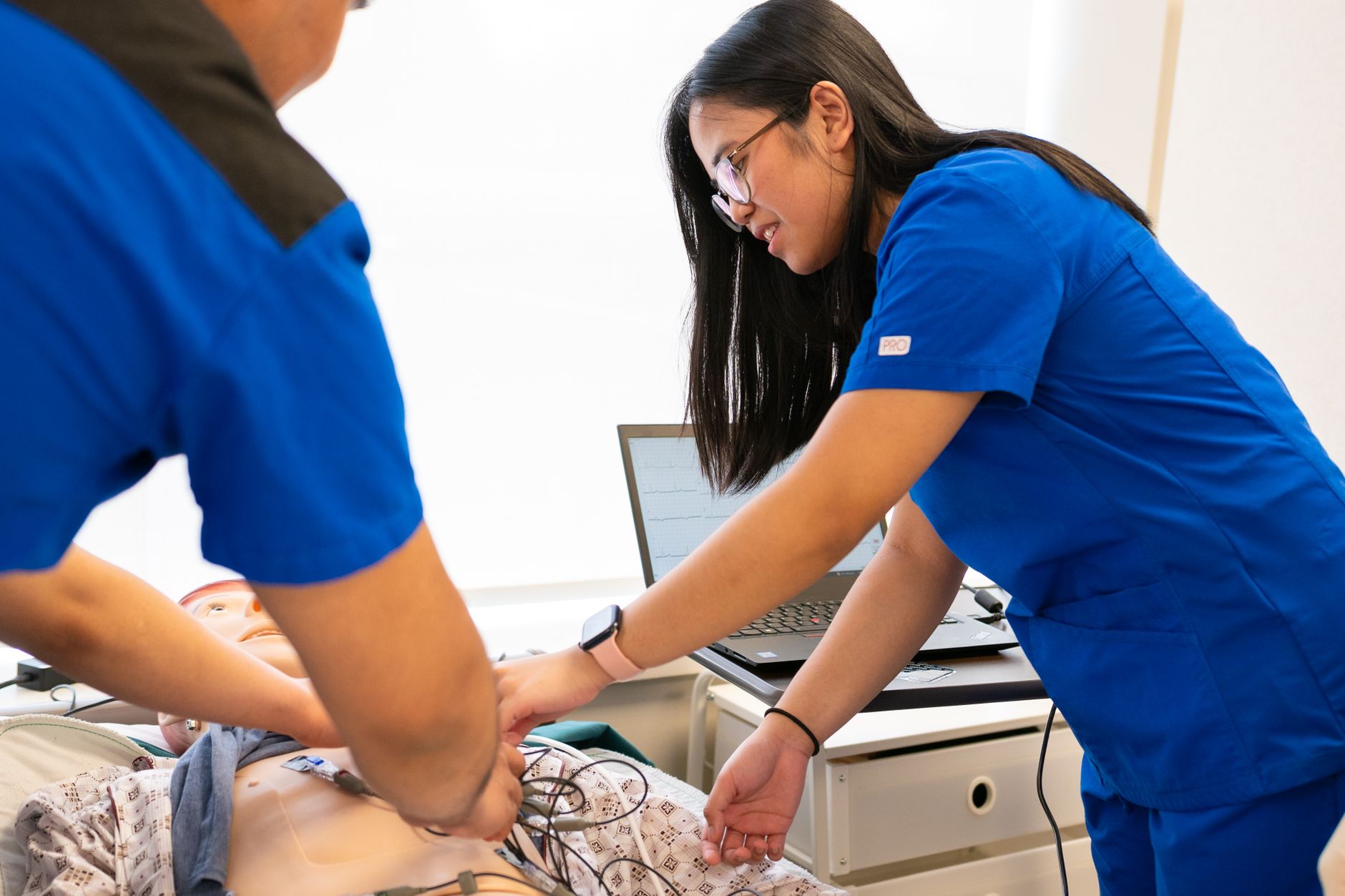
LPN to RN programs are educational programs that target licensed practical nurses who want to advance their education and become registered nurses. These pathways grant advanced standing that shortens the path to RN nursing licensure. The coursework is usually shorter than those starting RN program from scratch, and the clinical hours are also fewer because you’ll skip the fundamentals that you already learnt.
This transition will also shift how you're expected to think, assess, and act as a nurse, and this is tested in the NCLEX exam at the end. If this is a journey you are ready to take, this resource is for you. We will cover how LPN to RN bridge programs work, why the scope shift matters more than the credit transfer, what changes on the licensing exam, and considerations as to whether path aligns with your goals.
How LPN-to-RN bridges work
LPN-to-RN bridge programs are built around the idea that you don’t have to relearn the skills you already know. Schools award advanced standing, which means practical nursing education and work experience credit are tied to your LPN license. Students taking this route are able to skip the first few semesters (or year) of a traditional RN nursing program and start where an RN coursework actually becomes more demanding.
Credit Transfer and Advanced Standing
Programs handle LPN credit in several ways. Some award a block of credit automatically immediately after you enroll. Others require a challenge exam, transitional (bridge) coursework before they grant advanced standing. A few programs also accept verified clinical experience to be part of the assessment. Before applying to any program, confirm exactly how the program handles LPN credit. The number of credits awarded directly affects how long the program takes and what it costs.
Program Types
Licensed practical nurses who would like to be registered nurses can generally consider two educational pathways: an LPN-to-ADN bridge (Associate Degree in Nursing) or an LPN-to-BSN bridge (Bachelor of Science in Nursing). The two pathways varies in length, cost, and how far your credential carries you afterward. This is how the two compare:
LPN-to-AND bridge | LPN-to-BSN bridge | |
|---|---|---|
Typical program length | 12–18 months full-time | 24–36 months, depending on transfer credit |
Where to find the program | Community college, vocational schools | University or hybrid online/in-person |
Cost range | Lower, often $8,000–$20,000 total | Higher, often $15,000–$35,000 total |
Outcome | Eligible to sit the NCLEX-RN | Eligible to sit the NCLEX-RN, with a bachelor's degree attached |
Best for | Nurses who want RN licensure quickly and may finish a BSN later | Nurses targeting hospital systems or leadership roles that prefer or require a BSN |
The admission requirements vary by state and by school, so it's worth checking your state board of nursing's licensure rules before you assume a program will qualify you to test. Also, confirm the program itself carries proper nursing accreditation, which you can verify through ACEN, since an unaccredited program can create real problems with licensure or transferring credits later. You can also learn the two programs offer n our blog ADN vs BSN: Which Nursing Degree Should You Choose?
You're changing your scope, not extending it
A common misconception among the LPNs joining bridging programs is that they are building on existing skills. In reality, the move from LPN to RN marks a change in nursing practice and a commitment to more responsibilities.
Supervision vs. Independence
LPNs work under supervision of RNs or physicians. Their role is implementation: following an established plan of care, administering medications, monitoring patients, and reporting changes to an RN or physician. That work is skilled and necessary, but the plan itself usually isn't yours to create.
RNs, on the other hand, develop and revise the plan of care, and decide how to prioritize needs across multiple patients. RNs also delegate duties unlicensed staff, which means you'll be giving the instructions you used to receive. The official NCLEX-RN Test Plan places management of care and delegation front and center for this reason.
None of this means LPN experience doesn't count. It counts a great deal especially for basic care, medication administration, and reading a patient's condition. But a bridge program has to teach and examine something LPN programs don’t fully cover: how to reason through ambiguous, evolving situations and own the decisions that follow.

Compensation Difference
According to Bureau of Labor Statistics 2024 data, the median annual salary for registered nurses was approximately $93,600, compared to $62,340 for LPNs and LVNs. That means the financial gap between the two roles is about 50%.
The exam changes too
Advanced standing shortens your coursework and overall time, but it doesn’t change the licensing exam. LPNs sit the NCLEX-PN, while the RNs sit a different exam, the NCLEX-RN. The two aren't the same test at different difficulty settings. They’re built from separate blueprints.
Format Similarities
Both exams are computerized adaptive tests. Each contains a minimum of 85 and a maximum of 150 questions, runs under five-hour time limit, pretest questions are woven throughout, and both use the same Next Generation NCLEX item types such as case studies, bowtie questions, and matrix grids. The testing experience looks similar on the surface.
Passing Standard Difference
The passing standard for the NCLEX-RN is 0.00 logits while the passing standard for the NCLEX-PN is -0.18 logits. In simple terms, the RN exam requires a higher demonstrated level of clinical reasoning and judgment.
Content and Emphasis
The NCLEX-PN emphasizes coordinated care and following established care plans rather than creating them. The NCLEX-RN, tests your ability to assess patients independently, prioritize interventions, delegate appropriately, and manage complex clinical scenarios. The 2026 test plan, effective April 1, 2026 through March 31, 2029, includes stronger emphasis on health equity, patient dignity, and social factors that influence outcomes You can learn more about

Exam Comparison
NCLEX-PN | NCLEX-RN | |
|---|---|---|
Governing body | NCSBN | NCSBN |
Format | Computer adaptive (CAT) | Computer adaptive (CAT) |
Item range | 85–150 items | 85–150 items |
Time limit | 5 hours | 5 hours |
Passing Standard | -0.18 logits | 0.00 logits |
Core framework | 4 Client Needs categories | 4 Client Needs categories |
Care coordination emphasis | Practical nurse role, implementing care under supervision | Independent assessment, care planning, and delegation |
Clinical judgment weight | Case studies and standalone items across all categories | Same structure, applied to higher-complexity, less-scripted scenarios |
If you’re yet to take any these exams, you can learn about their difficulties in our blog on how hard the NCLEX is. And if you're studying towards LPN to RN transition, Testavia's NCLEX-RN prep resource is built around the current test plan's clinical judgment model.
Written by · Verified educator
Testavia editorial
Nathan Cole
RN
Medical-Surgical nurse & health writer
Meet Nathan, a registered nurse with over five years of experience in Medical-Surgical care, based in New York City. Having worked with a wide range of patients through some of their most vulnerable moments, Nathan brings a grounded, real-world perspective to his writing on healthcare. His goal is simple: to bridge the gap between medical knowledge and everyday understanding, making health topics feel less intimidating and more empowering for everyone. When he's not caring for patients, Nathan channels his passion for medicine into writing that educates, comforts and inspires.
5+
Years in Med-Surg
Medical-Surgical
Specialty
New York City
Based in