Home Health Nurse: A Guest in the House, and the Only One Who Can Sign
A home health nurse delivers skilled nursing care in the patient's own residence — assessment, medications, wound care and teaching — with no charge nurse down the hall. Medicare requires an RN to complete the comprehensive OASIS assessment, which is why the autonomy and the paperwork are the same fact.
Editorial
Last reviewed · August 9, 2026
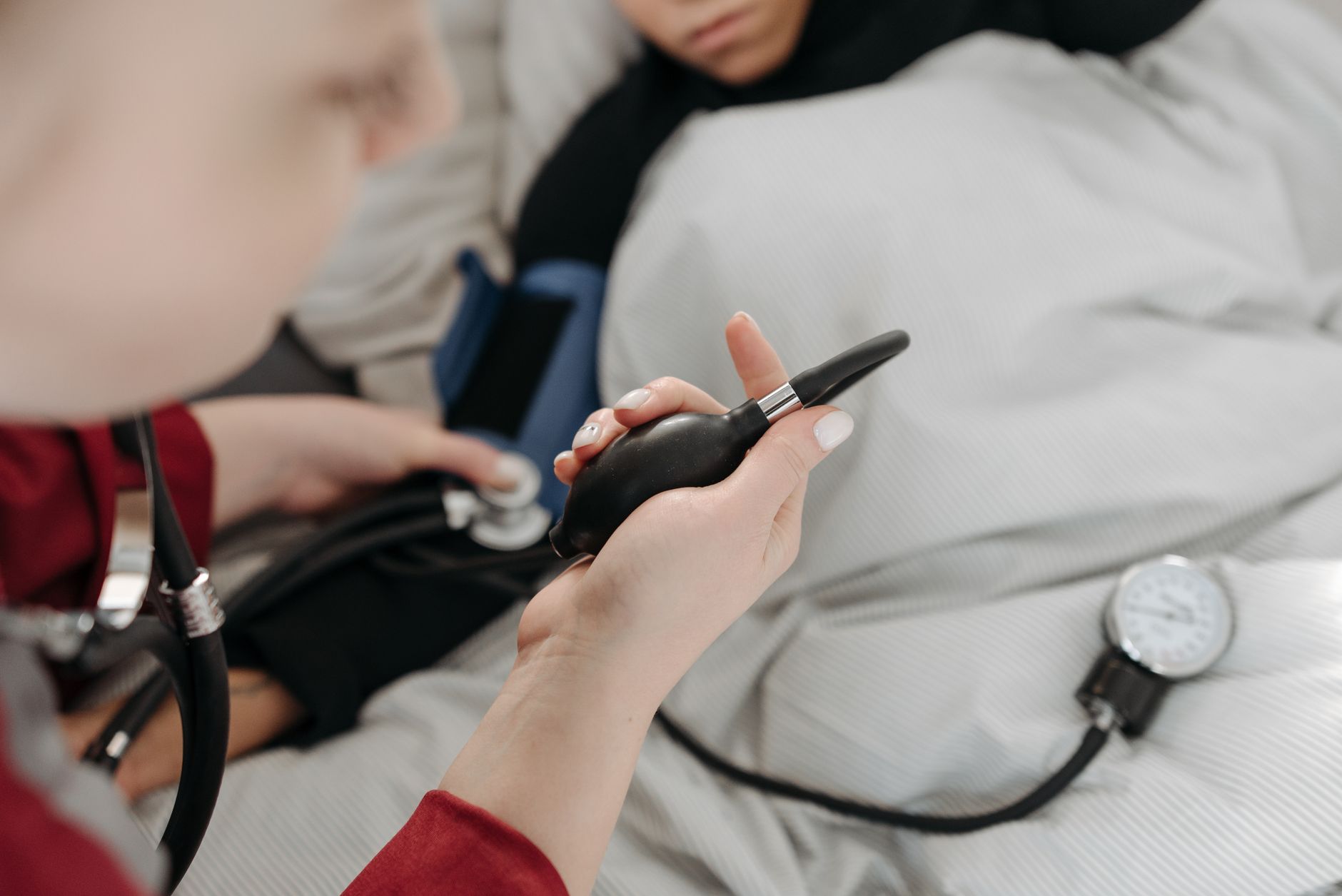
When most people hear the word nurse, they picture someone working in a hospital corridor or a clinic bay. The home health nurse works differently. This is a clinician who will step into the patient’s house, and deliver skilled care with no one else in the building to consult. For a growing share of patients recovering from surgery, managing chronic illness, or aging, the home health nurse may be the only clinical professional they see all week. The job combines clinical judgment, diplomacy, and paperwork that no one else in the house is legally allowed to complete. If this’s a path you’d like to take, it helps to learn what the role involves, why it runs on documentation as much as skill, and how to figure out whether it fits the kind of nurse you want to be.
What does a home health nurse do?
A home health nurse's work involves providing skilled nursing care in a patient's residence rather than in a hospital or clinic. According to Advanced Professional Home Health Care (APHHC), the daily responsibilities include a wide range of tasks:
Comprehensive assessment of a patient's condition
administering medications and treatments, including IV therapy or injections when needed.
changing wound dressings and other post-operative procedures
teaching a patient or family member how to manage a new diagnosis
coordination care <span class="mark">with doctors, therapists, and other healthcare professionals care plans can be adjusted.</span>
reporting changes and back to the physician or allowed practitioner who ordered the care.
Documenting visits and completing required assessment instruments on schedule
What makes the role different from other nursing is the setting. There is no charge nurse down the hall, and rapid-response team waiting nearby. The home health nurse carries the full weight of assessment, intervention, and documentation alone.
According to the US Bureau of Labor Statistics, Ambulatory healthcare services- the category that includes home healthcare nurses among physicians' offices and outpatient centers, employs about 19% of the total registered nurses.
Medicare and most insurers require that a registered nurse perform the initial comprehensive assessment and establish the plan of care. That initial visit sets the baseline for every subsequent service and visits, and it cannot be delegated to a licensed practical nurse or an aide. In this sense, the home health nurse is the gatekeeper of the entire episode of care.
Every one of these tasks folds into a single required document: the Outcome and Assessment Information Set, or OASIS.
Home health nurse vs public health nurse: Home health nurses travel to individual patient’s homes, while public health nurses Editor link the article I have written about Public health Nursing) may travel instead to community centers, schools, and other public settings. Home health nurses focuses on one patient at a time, while public health nurse focuses on the health of the population.
Home health nurse vs Hospice nurse: Home health nurses aren’t the same as hospice nurses. Home health centers on skilled, often short-term care tied to a recovery or a chronic condition, while hospice care prioritizes on comfort at the end of life. Many nurses move between the two specialties over a career.
The autonomy and the paperwork are the same fact
Home health nursing offers a level of independence that get envied by many hospital nurses. You schedule your own route, prioritize your own caseload, and make real-time clinical decisions without waiting for a physician to round.
But the independence doesn’t free you from administrative weight. Home health care also runs on some of the heaviest documentation in nursing. The comprehensive assessment you complete becomes the record of what happened and why. The Centers for Medicare & Medicaid Services requires home health agencies to collect The Outcome and Assessment Information Set (OASIS) data as part of that comprehensive assessment, and the data feeds directly into quality reporting and payment. <span class="mark"></span>
OASIS assessments are collected at defined points in a patient's episode of care such as start of care, resumption of care after a hospital stay, recertification near the end of every 60-day period, and discharge, transfer, or death. Agencies must update the comprehensive assessment no less often than the last five days of every 60-day period, within 48 hours of a patient's return home from a hospital stay of 24 hours or more, and at discharge.

Licensed practical nurses, aides, and social workers may not be allowed to complete that comprehensive assessment. In therapy-only cases, a qualified occupational therapist may perform it. In nursing cases, the RN is the clinician of record for that critical first assessment. Reporting the data is mandatory, and the agencies that fail in submission of OASIS data on time face a payment reduction under Medicare's home health quality program. Coding errors can also trigger compliance review.
Comparison between Hospital RN and Home Health RN
Aspect | Hospital RN | Home Health RN |
|---|---|---|
Supervision | Charge nurse and colleagues on the unit at all times | minimal, remote access via phone or video to a supervisor/case manager |
Patient load | Generally Higher census, shorter encounters | usually see fewer patients per day, longer visits, and travelling in between. |
Documentation burden | Shift notes and flowsheets in one system | OASIS comprehensive assessment plus the visit notes and care plan |
Clinical setting | Fixed facilities, Controlled, equipped, and standardized | The patient's home, with whatever equipment travels with the nurse |
Autonomy | Moderate; protocols and rapid consultation available with the team | high; independent decision-making |
Patient relationships | Episodic; single shift or few days | Longitudinal; weeks to months of regular contact |
The trade-off is real. A hospital nurse hands off documentation at the end of a shift and rarely carries responsibility for a single, all-encompassing assessment. A home health nurse signs a document that stands in for her judgment on a day nobody else witnessed.

You're a guest, and it changes everything
Medicare's own guidance to surveyors states that “anyone evaluating care must always be cognizant that as a guest in a patient’s home or place of residence, courtesy, respect, and sensitivity to the patient’s clinical status (physical and emotional) are necessary”. That same posture defines the home health nurse's entire day. You adapt to the home as it is. their house rules, the family dynamics, pets, cultural practices, routines, patient's and comfort level all become part of the assessment and shape how care gets delivered.
Trust is earned visit by visit. Some patients choose to minimize or conceal symptoms to avoid “bothering” you or to protect their independence. Caregivers may be exhausted, anxious, or unsure of their role. You can only succeed in educating patients and their family members if it fits their real schedule and capacity, which means involving them in the arrangements rather than imposing the plan.
Safety awareness is continuous. You enter unfamiliar neighborhoods and private spaces. You notice trip hazards, medication storage, and whether the patient can reach the bathroom safely. You also protect your own safety through agency protocols, check-in systems, and clear professional boundaries.
This dynamic explains why home health nursing needs strong communication skills more than almost any other specialty. You are constantly reading a room you do not control, and every visit is a small negotiation between the plan of care and the reality of someone else's home.
Written by · Verified educator
Testavia editorial
Nathan Cole
RN
Medical-Surgical nurse & health writer
Meet Nathan, a registered nurse with over five years of experience in Medical-Surgical care, based in New York City. Having worked with a wide range of patients through some of their most vulnerable moments, Nathan brings a grounded, real-world perspective to his writing on healthcare. His goal is simple: to bridge the gap between medical knowledge and everyday understanding, making health topics feel less intimidating and more empowering for everyone. When he's not caring for patients, Nathan channels his passion for medicine into writing that educates, comforts and inspires.
5+
Years in Med-Surg
Medical-Surgical
Specialty
New York City
Based in