ACLS Practice Test 2026: Rhythms, Drugs & Megacode Q&A
The megacode is where most ACLS candidates freeze — not from lack of knowledge, but from never drilling under pressure. This ACLS practice test walks the written exam and megacode: high-yield rhythms, the drug doses you must know, and nine exam-style questions with full rationales.
Editorial
Last reviewed · July 16, 2026
Medically reviewed
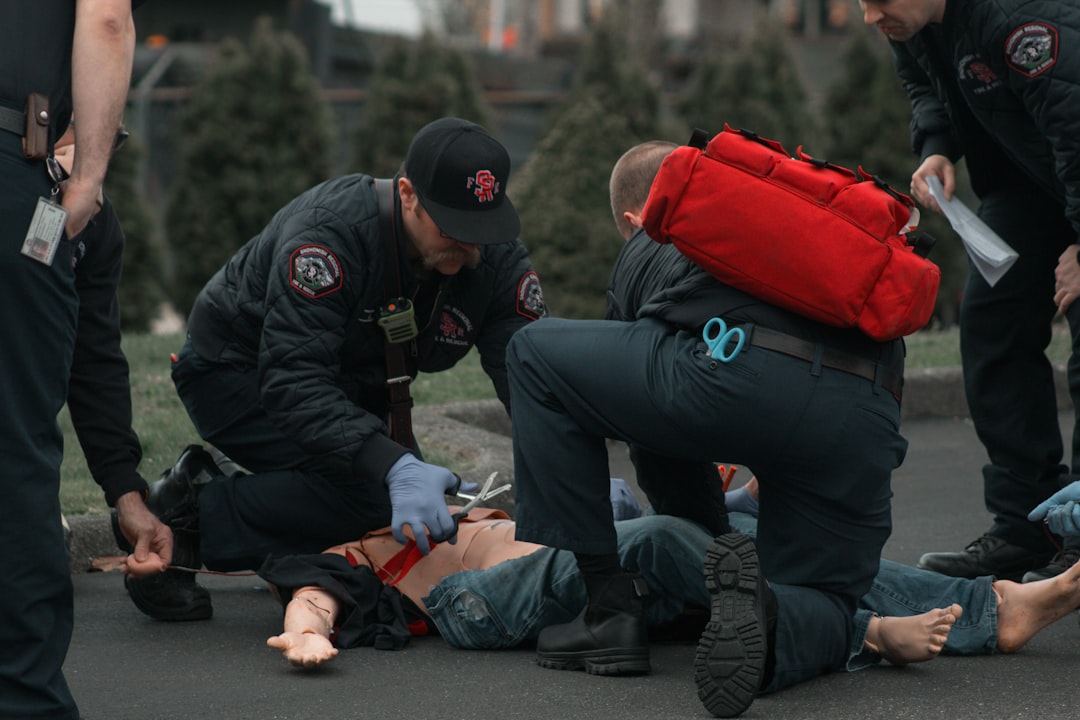
After completing an ACLS course, candidates must pass a written exam and a practical megacode skills evaluation that applies AHA algorithms in real time before the certification card is awarded. For most people, the megacode is the hard part — and candidates who freeze during the skills test usually do so because they read the algorithms without ever practicing them under pressure.
This ACLS practice test covers what the written exam and megacode actually demand, identifies the highest-yield content to drill, gives you original practice questions with full rationales, and shows you how to use practice time so it translates to the skills station.
What the ACLS test and megacode actually involve
ACLS certification through the American Heart Association (AHA) has three assessment stages: a diagnostic precourse self-assessment, a written post-test scored at 84%, and a hands-on megacode skills evaluation. Each tests a different skill, so each needs a different preparation strategy.

The precourse self-assessment (pretest)
Before your course, the AHA has you complete an online precourse self-assessment. It is a diagnostic tool — roughly 50 questions requiring at least 70% to proceed — that tells you what you do not yet know across three areas:
Area | What it assesses |
|---|---|
Rhythm recognition | Identifying cardiac rhythms from ECG strips: sinus rhythms, atrial arrhythmias, ventricular rhythms, heart blocks |
Pharmacology | ACLS drug indications, dosages, contraindications, and administration sequence |
Practical application | Applying ACLS algorithms to scenarios: cardiac arrest, bradycardia, tachycardia, ACS, stroke |
The written post-test
The course concludes with a 50-question multiple-choice written assessment. You must score 84% or higher to pass. The questions cover the same three domains as the pretest but reflect the specific content delivered in the course. Candidates who fail are given a chance to remediate and retest.
The megacode skills test
The megacode is a hands-on simulated cardiac emergency, typically 15–20 minutes long, run by an AHA-trained instructor who observes you as team leader in real time. You are scored against a standardized checklist:
Recognition of the presenting rhythm
Correct algorithm selection and adherence
Timing and dosing of medications
Closed-loop team communication
CPR quality during pulseless rhythms
Appropriate escalation or de-escalation as the scenario evolves
Post-cardiac-arrest care
Scenario types include VF/pulseless VT, PEA, asystole, stable and unstable tachycardia (narrow and wide complex), acute coronary syndrome (ACS), and stroke. Most courses select and test three of these. If you fail, AHA training centers offer remediation and a retake.
High-yield topics to drill: rhythms, algorithms, and drugs
Three content areas appear repeatedly on the written exam and drive every megacode scenario — rhythm recognition, the ACLS algorithms, and the drugs. This is where practice time pays off most.
Rhythm recognition
All ACLS treatment flows from the presenting rhythm, so rhythm mastery lets you identify life-threatening arrhythmias and choose the right intervention in time. The rhythms to master:
Rhythm | Key features to recognize |
|---|---|
Normal sinus rhythm | Regular, HR 60–100, normal QRS, P before every QRS. No treatment required |
Sinus bradycardia | Regular, HR <60, normal P and QRS. If symptomatic: atropine, then dopamine or epinephrine infusion |
Sinus tachycardia | Regular, HR >100, normal P waves and QRS |
Atrial fibrillation | Irregularly irregular, no distinct P waves before the QRS |
Atrial flutter | Saw-toothed flutter waves (multiple P waves per QRS), often a regular ventricular rate near 150 |
Supraventricular tachycardia (narrow complex) | Very fast atrial rhythm, narrow QRS, HR 150–250, impulse originates above the ventricles |
Monomorphic ventricular tachycardia | Regular, uniform wide QRS (>0.12s), rate 100–250; may or may not have a pulse |
Polymorphic VT / Torsades de pointes | Wide QRS with varying morphology, twisting around the baseline |
Ventricular fibrillation | Chaotic, disorganized, no discernible QRS — unsynchronized shock immediately |
Pulseless electrical activity (PEA) | Organized rhythm on the monitor, no palpable pulse — never shock |
Asystole | Flat line, no electrical activity on the monitor — never shock |
First-degree AV block | Prolonged, consistent PR interval (>0.20s), every P conducts |
Second-degree AV block, Mobitz I (Wenckebach) | Progressive PR lengthening until a QRS is dropped |
Second-degree AV block, Mobitz II | Constant PR (>0.20s) with sudden non-conducted P waves — often needs pacing |
Third-degree (complete) AV block | No relationship between P waves and QRS; regular P–P intervals independent of the QRS |
ACLS practice questions with rationales
Work through each question before reading the rationale. These are written in the style of the AHA written exam and megacode scenarios, with facts drawn from the AHA ACLS Provider Manual and current AHA ACLS guidelines.
Question 1. A 58-year-old man collapses in the emergency department. He is unresponsive and pulseless, and the monitor shows a wide, chaotic rhythm with no discernible QRS complexes. What is your first intervention?
A. Epinephrine 1 mg IV push
B. Amiodarone 300 mg IV push
C. Defibrillation at maximum energy
D. Synchronized cardioversion at 200 J
Correct answer: C
The rhythm is ventricular fibrillation — a shockable rhythm — so the first intervention is immediate defibrillation, not a drug. Epinephrine and amiodarone come later in the cardiac-arrest algorithm, after the second and third shocks. Synchronized cardioversion is never used for VF because the device cannot synchronize on a chaotic rhythm.
Question 2. Which degree of AV block is generally considered the most clinically significant?
A. Second-degree Mobitz I
B. Second-degree Mobitz II
C. Third-degree (complete) AV block
D. First-degree AV block
Correct answer: C
Per the AHA ACLS Provider Manual, complete (third-degree) block is the most clinically significant degree of block and the most likely to cause cardiovascular collapse, because the atria and ventricles beat independently and cardiac output can fall sharply.
Question 3. A 65-year-old man collapses during a walk. CPR is started and EMS arrives in six minutes. He has no pulse, no respirations, and no response to stimulation, and the monitor shows a nearly flat baseline with no organized electrical activity. Which ACLS algorithm should guide management?
A. Cardiac Arrest (VF/pulseless-VT branch)
B. Bradycardia (unstable branch)
C. Cardiac Arrest (asystole/PEA branch)
D. Unstable Tachycardia
Correct answer: C
A flat baseline with no organized activity is asystole. Combined with the clinical picture — witnessed collapse, no pulse, no respirations, unresponsive — this is a non-shockable arrest managed on the asystole/PEA branch: high-quality CPR, epinephrine, and a search for reversible causes.
Question 4. For a witnessed sudden cardiac arrest in a shockable rhythm, which intervention improves survival most the earlier it is delivered?
A. Defibrillation
B. Effective chest compressions
C. Early activation of EMS
D. Rapid administration of resuscitation drugs
Correct answer: A
For a witnessed sudden cardiac arrest in a shockable rhythm, the earlier defibrillation occurs, the higher the survival rate — survival falls with each minute of delay. High-quality compressions and early EMS matter, but time-to-defibrillation is the strongest modifiable determinant of survival here.
Question 5. The ACLS survey assesses which of the following?
A. Airway, Breathing, Chest compressions, Deformity
B. Airway, Breathing, Circulation, Defibrillation
C. Airway, Breathing, Circulation, Differential diagnosis
D. Airway, Blood pressure, CPR, Differential diagnosis
Correct answer: C
The ACLS survey is Airway, Breathing, Circulation, and Differential diagnosis. Defibrillation and blood pressure fall under "Circulation," and "B" stands for Breathing, not blood pressure. The differential-diagnosis step is where you search for reversible causes.
Question 6. A 32-year-old is struck in the left upper quadrant of the abdomen. Vital signs: HR 210, BP palpable only, RR 20, SpO2 97%, thready pulse, with a narrow-complex tachycardia on ECG. He then arrests, showing an organized narrow-complex rhythm on the monitor but no pulse. Aside from starting CPR, what is the immediate treatment?
A. Adenosine injection
B. Transcutaneous pacing
C. Volume infusion
D. Synchronized cardioversion
Correct answer: C
A direct blow to the left upper quadrant points to splenic rupture and hemorrhagic shock. The arrest rhythm — organized electrical activity without a pulse — is PEA. Treatment targets the reversible cause: hypovolemia, one of the H’s and T’s. Rapid volume infusion (and hemorrhage control) is the priority; shocking or pacing an organized rhythm without treating the cause will not help.
Question 7. A patient who achieved ROSC after a 12-minute arrest is unresponsive with no purposeful movement. SpO2 is 100% on 100% FiO2. What is the most appropriate oxygen management?
A. Maintain 100% FiO2 to ensure adequate oxygen delivery
B. Titrate FiO2 down to keep SpO2 between 94% and 99%
C. Wean oxygen only after a 12-lead ECG is obtained
D. Remove supplemental oxygen and let spontaneous breathing resume
Correct answer: B
Post-cardiac-arrest hyperoxia causes oxidative injury to reperfused brain tissue and is linked to worse neurological outcomes. Current AHA guidance is to titrate oxygen to keep SpO2 between 94% and 99% — enough to avoid hypoxia without the harm of excess oxygen. A 12-lead ECG should be obtained regardless of oxygen management.
Question 8. A patient has a wide-complex tachycardia at 210 bpm. BP is 70/40, and the patient is diaphoretic and unresponsive to verbal stimuli. What is the immediate treatment?
A. Adenosine 6 mg IV push
B. Amiodarone 150 mg IV over 10 minutes
C. Synchronized cardioversion
D. Defibrillation
Correct answer: C
The patient is unstable — hypotensive with altered mental status. For any unstable tachycardia with a pulse, the algorithm calls for immediate synchronized cardioversion regardless of QRS width. Adenosine and an amiodarone infusion are too slow for this degree of instability, and defibrillation is unsynchronized and reserved for pulseless rhythms.
Question 9. You are team leader during a megacode. You order 1 mg epinephrine IV. The nurse replies, "1 mg epinephrine, administering now — epinephrine given at 14:32." What technique is this, and why does it matter?
A. Direct communication, which reduces ambiguity in role assignment
B. Closed-loop communication, which confirms the order was heard, acted on, and completed with a timestamp
C. Structured handoff communication, used when transferring team leadership
D. Parallel communication, which lets multiple members act simultaneously
Correct answer: B
Closed-loop communication is the AHA’s required standard during resuscitation: the leader gives a clear order, the member repeats it back on accepting it, then confirms completion with what was done and when. It reduces medication errors, prevents missed interventions, and is explicitly evaluated on the megacode checklist.
Disclaimer: This information is for general educational purposes based on standardized ACLS training scenarios and does not constitute individual medical advice.
How to use practice effectively and pass the megacode
Passing the written test requires recognition and recall; passing the megacode requires automatic execution under pressure. These are different skills and need different strategies.

For the written exam
Sequence your study. Drill the three domains separately before combining them — rhythm strips first, then pharmacology, then scenario application.
Know the tricky distinctions. Focus on what trips candidates up: PEA vs. asystole, Mobitz I vs. Mobitz II, synchronized vs. unsynchronized cardioversion, and ETCO2 interpretation.
Use the pretest as a diagnostic. Your first run through the precourse self-assessment shows exactly which domains need work — direct your prep there.
For the megacode
Practice out loud. In the real megacode you verbalize every decision, delegate by name, and demonstrate closed-loop communication. Reviewing algorithms silently does not build this.
Know your entry points. When the instructor announces a scenario, rhythm recognition and algorithm selection must be fast — pausing more than a few seconds costs time the algorithm does not allow.
Drill transitions. Most scenarios involve a rhythm change. Practice the pivot: recognize the change, switch algorithms, identify the first action on the new path.
Do not neglect post-arrest care. Instructors evaluate SpO2 targets, ETCO2 goals, 12-lead ECG acquisition, hemodynamic targets, and targeted-temperature-management decisions.
The H's and T's: reversible causes of cardiac arrest
Every non-shockable arrest scenario tests whether you are searching for and treating reversible causes while CPR continues. Know these and watch for the clinical clues an instructor embeds in the scenario:
H's | T's |
|---|---|
Hypovolemia | Tension pneumothorax |
Hypoxia | Tamponade (cardiac) |
Hydrogen ion (acidosis) | Toxins |
Hypo-/hyperkalemia | Thrombosis (pulmonary embolism) |
Hypothermia | Thrombosis (coronary — STEMI) |
If you are a nursing student preparing for the NCLEX, the same clinical judgment shows up first on your licensure exam. Testavia’s NCLEX-RN prep resources and our NCLEX pharmacology guide build the drug and rhythm knowledge that anchors both exam prep and real-world emergency response.
Written by · Verified educator
Testavia editorial
Nathan Cole
RN
Medical-Surgical nurse & health writer
Meet Nathan, a registered nurse with over five years of experience in Medical-Surgical care, based in New York City. Having worked with a wide range of patients through some of their most vulnerable moments, Nathan brings a grounded, real-world perspective to his writing on healthcare. His goal is simple: to bridge the gap between medical knowledge and everyday understanding, making health topics feel less intimidating and more empowering for everyone. When he's not caring for patients, Nathan channels his passion for medicine into writing that educates, comforts and inspires.
5+
Years in Med-Surg
Medical-Surgical
Specialty
New York City
Based in