HESI Fundamentals Exam 2026: Topics, Scores & Study Plan
The HESI Fundamentals exam is an Elsevier-proctored specialty test taken during your Fundamentals of Nursing course — not the HESI A2 admissions exam or the RN Exit Exam. It tests the nursing process, patient safety, infection control, meds, and basic care in NCLEX format. Most programs require a scaled 800–850 to pass.
Editorial
Last reviewed · June 3, 2026
Medically reviewed

The HESI Fundamentals Exam is an Elsevier-proctored nursing specialty exam taken during the Fundamentals of Nursing course. It is different from both the HESI A2 admissions exam and the HESI RN Exit Exam. The test evaluates foundational nursing knowledge, including the nursing process, patient safety, infection control, medication fundamentals, vital signs, communication, and basic patient care. Most nursing programs require a scaled score of 800–850 to pass. Questions follow the NCLEX format and emphasize applying the nursing process to clinical scenarios.
You signed up for nursing school, survived the HESI A2, and now there's a new exam on your plate — the HESI Fundamentals exam.
Here is what it actually is. The HESI Fundamentals exam is Elsevier's proctored specialty test built specifically for your Fundamentals of Nursing course, the first real clinical course in your BSN or ADN program. It is not the HESI A2 you took to get into nursing school, and it is not the comprehensive Exit Exam you will face at graduation. This one sits squarely in the middle, testing whether you can think through entry-level clinical nursing situations the way a nurse actually would.
The exam scores on a scale of 0 to 1,500. Elsevier sets 850 as the minimum acceptable pass mark, with 900 as the recommended target. Most nursing programs set their own cutoff somewhere in that 800 to 850 range.
In this guide, you get to learn exactly what topics show up on the exam, how programs use your score, what it takes to pass, and how to study smart in the two weeks you likely have left.
What Is the HESI Fundamentals Exam (and What Makes It Different from the HESI A2 and Exit Exam)?
First things first. You are not taking the same exam as your friend who just graduated. And you are not retaking the HESI A2 either.
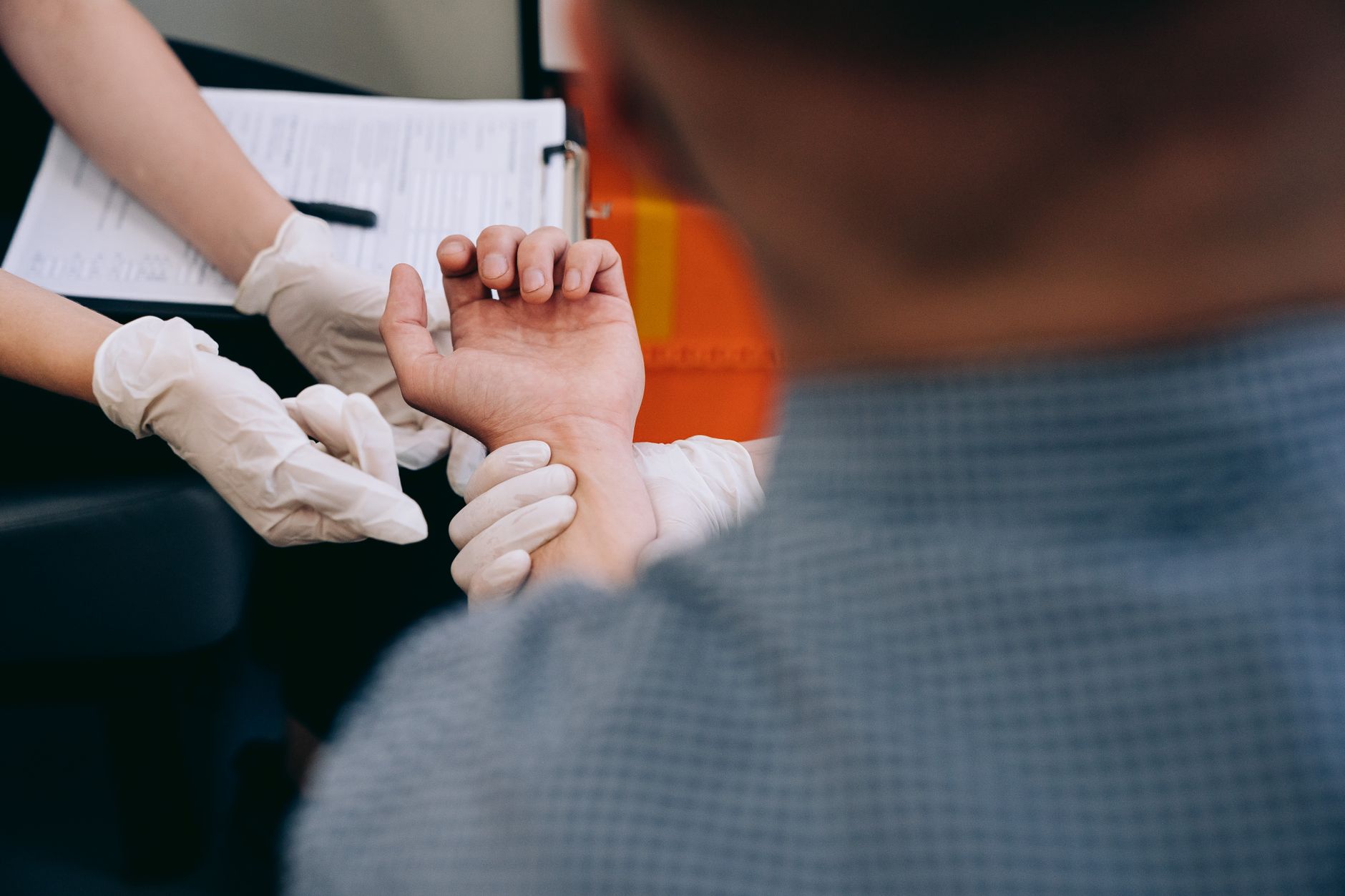
The HESI Fundamentals exam is a proctored specialty exam from Elsevier, administered by nursing programs specifically during the Fundamentals of Nursing course. That typically means your first semester of clinical nursing education. It sits in a family of HESI specialty exams, each tied to a specific course, and Fundamentals is almost always the first one you will encounter.
Here is where students get confused. Three HESI exams exist at different stages of a nursing program, and they test entirely different things.
HESI A2 | HESI Fundamentals | HESI RN Exit Exam | |
|---|---|---|---|
When taken | Before nursing school | During Fundamentals course | End of nursing program |
Purpose | Admission readiness | Course-exit assessment and early clinical readiness signal | Predict NCLEX-RN readiness |
Content | Academic basics (math, science, reading) | Entry-level clinical nursing | Full clinical nursing scope |
Who takes it | Prospective nursing students | First-semester nursing students | Final-semester nursing students |
Self-schedulable | Sometimes | No, program administered | No, program administered |
If you searched "HESI Fundamentals" and landed on pages about math and anatomy, that was the HESI A2. If you found content about comprehensive clinical nursing across every specialty, that was the Exit Exam. What you are preparing for right now is narrower and earlier — first-semester clinical knowledge, tested the HESI way.
What Does the HESI Fundamentals Exam Cover?
The HESI Fundamentals exam content map pulls directly from Elsevier's own Fundamentals of Nursing textbooks, specifically Potter and Perry and Yoost and Crawford. Both textbooks organize first-semester nursing around the same core clinical domains, and the exam follows that same structure.
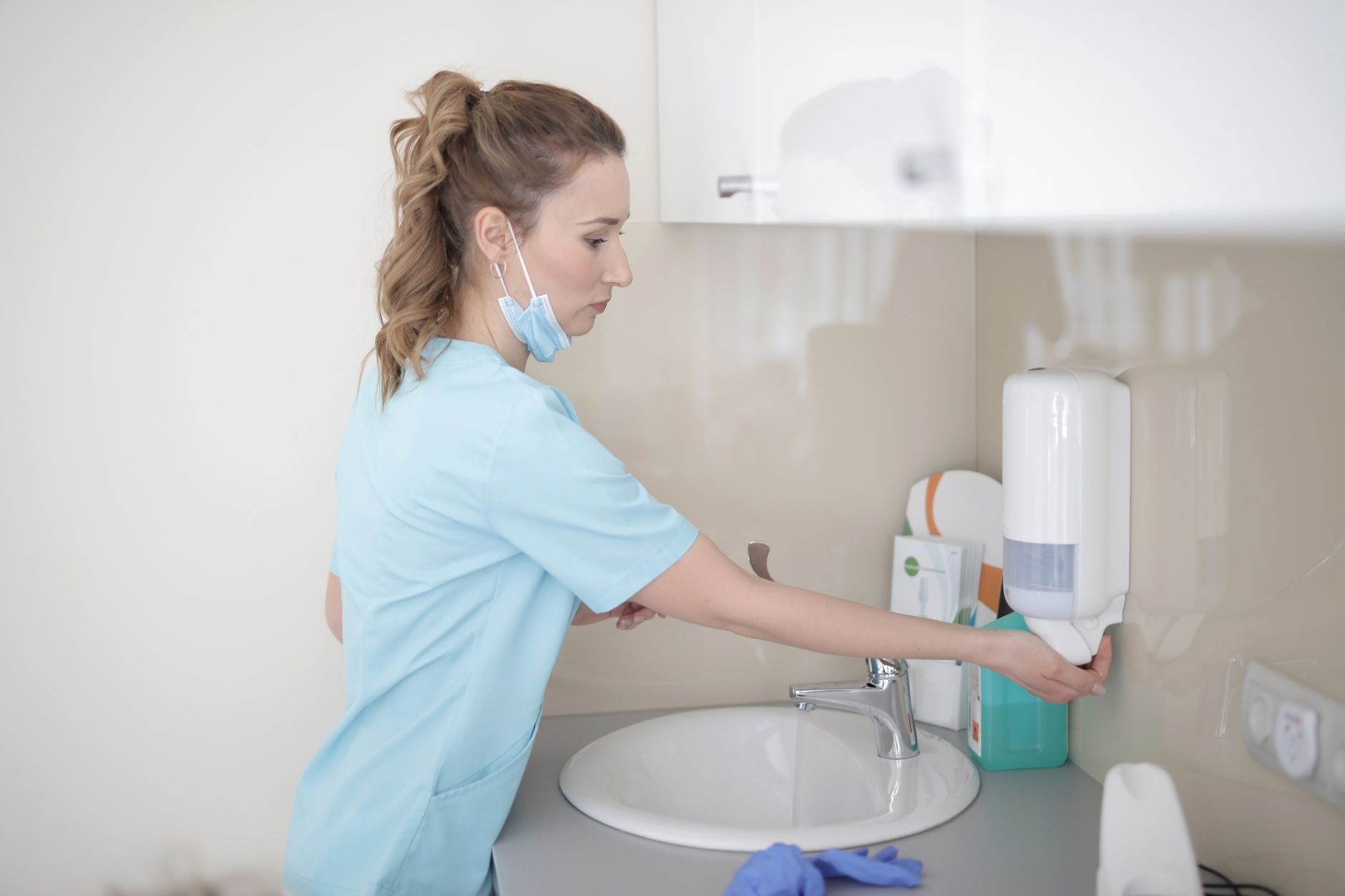
Here is what you should expect to see tested.
Nursing Process (ADPIE)
This is the backbone of the entire exam. Assessment, Diagnosis, Planning, Implementation and Evaluation are not just content topics. They are the answer-selection framework for every clinical question on the test. More on this in a dedicated section below.
Patient Safety
Fall prevention and restraint use
Environmental safety protocols
Standard precautions and hand hygiene
Surgical asepsis principles
Infection Control
The chain of infection
Medical versus surgical asepsis
Isolation precaution types: contact, droplet and airborne
Hand hygiene as a standalone testable topic
Vital Signs and Assessment
Normal ranges and what abnormal values mean clinically. The exam does not just ask you to recall a number. It asks what the nurse does when that number is off.
Medication Administration
The rights of medication administration sit at the center of this domain. Right patient, right drug, right dose, right route, right time and right documentation. Oral medications and a basic overview of parenteral routes at the student level.
Patient Communication and Education
Therapeutic communication techniques, patient teaching principles and health literacy basics. Expect questions where one answer choice is empathetic and another is informational. Knowing which comes first matters.
Basic Patient Care
Hygiene (bath, oral care, perineal care)
Mobility and positioning (body mechanics, turning schedules, pressure ulcer prevention)
Nutrition basics
Elimination patterns and catheter care basics
Documentation
Nursing notes, SBAR communication and proper reporting sequences. Documentation questions almost always test sequencing. What gets charted and when.
Legal and Ethical Nursing Practice
Patient rights, HIPAA basics, informed consent, scope of practice and the distinction between negligence and malpractice.
Nursing Theory and History
Minimal emphasis. Expect one to three questions at most.
A question on HESI Fundamentals does not ask "what is the normal heart rate?" It asks "a patient's heart rate is 110, what does the nurse do first?" That shift from recall to application is the whole game.
When Is the HESI Fundamentals Exam Taken and How Is It Used?
Most nursing programs schedule the HESI Fundamentals exam at the end of the Fundamentals of Nursing course. A smaller number use it mid-semester as a formative checkpoint. Either way, it is program-administered and proctored. You will not self-schedule this one.
How Programs Actually Use Your Score
As a progression gate. Many programs require students to meet a minimum score before advancing to second-semester clinical courses. Miss the cutoff and you are looking at a required retake and a possible hold on progression.
As an early NCLEX-readiness signal. Even at the first-semester level, Elsevier positions HESI specialty exam data as an early indicator of future NCLEX performance. Programs use this to flag students who need support before gaps compound over four semesters.
As a program benchmark. Faculty compare cohort scores against national norms Elsevier provides, using the data to evaluate whether their curriculum is hitting the right clinical targets.
What Your Score Report Actually Shows
Your score report is not just a number. It breaks your performance into clinical domain sub-scores, showing exactly where your knowledge held and where it did not. That breakdown is your study roadmap, whether for a retake or for every HESI Fundamentals specialty exam that follows in later semesters.
A low first-semester HESI score is not a prediction that you will fail the NCLEX. It is a signal that something in your study approach needs adjusting before it compounds. The students who treat the domain breakdown as a diagnostic tool and act on it come out of second semester stronger than students who scored higher but ignored the data.
What Score Do You Need to Pass the HESI Fundamentals Exam?
Here is the honest answer. Elsevier does not set a universal passing score for HESI Fundamentals specialty exams. Your nursing program sets the cutoff, and it varies.
That said, the widely reported program requirement sits between 800 and 850 on the scaled score. Elsevier's own documentation identifies 850 as the acceptable performance threshold and 900 as the recommended target. The percentage-scale equivalent most programs use lands between 75% and 80%.
Three Questions to Ask Your Program Before Exam Day
What is the required minimum score at this program?
What happens if I do not meet it, delayed progression or a required retake?
How soon can I retake the exam if I miss the cutoff?
If You Have Already Scored Below the Cutoff
Resist the urge to re-study everything. Pull up your score report and look at the two lowest domain sub-scores. That is where your missing points are concentrated. Targeting those domains specifically is a far more efficient use of your remaining prep time than a full content review.
Programs that use the HESI Fundamentals exam as a progression gate typically allow at least one retake, often after a mandatory waiting period or a required remediation session with faculty. Some programs require a counseling conversation before the retake window opens. Confirm the specifics with your program before you assume anything about the timeline.
How to Study for the HESI Fundamentals Exam: 2-Week Plan
The most important thing to understand before you open a single textbook is this. HESI Fundamentals questions are not designed to test memorization. They test application. Knowing the content is necessary but not sufficient. You need to practice applying the nursing process to answer choices under timed conditions, and that skill only develops through repetition with the right question format.

Here is a realistic two-week plan built around that principle.
Week 1: Content Foundation and Nursing Process Framework
Day 1 — Pull up your program's HESI Fundamentals requirements and any content blueprint or study guide your faculty has provided. If your Fundamentals textbook (Potter and Perry or Yoost and Crawford) came with an Evolve companion, activate it now. That question bank is built to mirror HESI Fundamentals content directly.
Days 2 and 3 — Study the nursing process (ADPIE) not just as definitions but as a decision-making sequence. Practice 10 application-level questions per day with a single focus: identifying which step of ADPIE drives the correct answer.
Days 4 and 5 — Cover Safety and Infection Control. Falls, restraints, isolation precautions (contact, droplet and airborne) and hand hygiene are high-density testable topics. These appear heavily because they are foundational to every clinical rotation that follows.
Days 6 and 7 — Review Vital Signs and Basic Assessment. Focus on what constitutes an abnormal finding, the correct sequence for assessment and the appropriate nursing response to each abnormal value. Practice 15 application-level questions.
Week 2: Application Practice and Weak-Domain Drill
Days 8 and 9 — Cover Medication Administration basics and Therapeutic Communication. For communication questions, the skill is identifying which responses are therapeutic (open-ended and reflective) versus non-therapeutic (advice-giving, closed-ended or defensive).
Days 10 and 11 — Work through Basic Patient Care domains: hygiene, mobility, nutrition and elimination. These are content-dense but rule-based. Learn normal versus abnormal patterns and the priority nursing response for each.
Days 12 and 13 — Sit a full timed practice set of 50 HESI Fundamentals-style questions. Review every wrong answer and identify whether the error was a content gap or a nursing-process application error. That distinction matters for how you correct it.
Day 14 — Stop adding new material. Review your personal weak-topic list only.
Resources Worth Using
Elsevier Evolve companion for Potter and Perry or Yoost and Crawford
Saunders Comprehensive Review, Fundamentals section
Testavia's NCLEX QBank with Fundamentals-tagged questions
Master the nursing process framework until choosing the right answer feels automatic — the same skill our guide on how to study for the NCLEX builds for licensure. Testavia is the prep platform built specifically for this.
Their Fundamentals-tagged question sets pinpoint exactly where you need to improve, targeting the domains your score report reveals as your weakest areas. No fluff. No wasted time. Just precision drilling where it matters.
99% pass rate. That's not a claim—that's the track record of one of the most trusted NCLEX prep platforms nursing students rely on from their first semester straight through to exam day.
Don't wait. Start Testavia's 7-day free trial now—before your retake window closes. This is the difference between burning another retake fee and walking across that stage as a newly licensed nurse.
The Nursing Process as Your Answer Framework for HESI Fundamentals Questions
Most students who score below their program's cutoff on the HESI Fundamentals exam are not missing clinical knowledge. They are applying the wrong decision framework when they reach the answer choices.
HESI and NCLEX questions share the same prioritization logic, and once you internalize it, your accuracy on application-level questions improves measurably.
The Four Framework Rules
Rule 1: Assess before you act. Unless the patient is in immediate physical danger, the correct first nursing action is almost always assessment. "A patient reports pain, what does the nurse do first?" The HESI Fundamentals answer is to assess the pain (location, character, intensity and duration) before administering anything.
Rule 2: Safety beats comfort. When one answer choice addresses safety (fall prevention or infection spread) and another addresses comfort, safety is the priority answer.
Rule 3: Empathetic acknowledgment before information. When a patient expresses fear and the answer choices split between giving information and acknowledging the feeling, acknowledgment comes first.
Rule 4: Documentation is last. In any clinical action sequence, documentation follows the nursing action. It never precedes it.
The Quick Decision Test
When you read a HESI Fundamentals question and feel pulled toward an intervention, stop and ask one question first. Is the patient in immediate physiological danger? If yes, act. If no, assess first.
Drilling these four rules across 50 application questions is worth more preparation time than re-reading two textbook chapters. The content is already in your head from the course. What the exam is testing is whether you can sequence it correctly under pressure.
Written by · Verified educator
Testavia editorial
Nathan Cole
RN
Medical-Surgical nurse & health writer
Meet Nathan, a registered nurse with over five years of experience in Medical-Surgical care, based in New York City. Having worked with a wide range of patients through some of their most vulnerable moments, Nathan brings a grounded, real-world perspective to his writing on healthcare. His goal is simple: to bridge the gap between medical knowledge and everyday understanding, making health topics feel less intimidating and more empowering for everyone. When he's not caring for patients, Nathan channels his passion for medicine into writing that educates, comforts and inspires.
5+
Years in Med-Surg
Medical-Surgical
Specialty
New York City
Based in