How Hard Is the TEAS Test? An Honest Section Breakdown
How hard the TEAS feels comes down to how recently you've used high-school reading, math, and science. It tests academic readiness, not nursing knowledge — so most applicants find Science (anatomy and physiology) toughest, with separately timed sections adding pressure. All of it is prep-responsive.
Editorial
Last reviewed · June 19, 2026

How hard is the TEAS test? It mostly comes down to how recently you've used high-school reading, math and science. The exam tests academic readiness. So most applicants find the Science section (heavy on anatomy and physiology) the toughest, and the separately timed sections add pressure. But here's the good part. The content is finite and knowable, so targeted prep brings the difficulty down fast and remember, your "pass" is set by your program not by ATI.
How Hard Is the TEAS Test, Really? The Honest Answer
The honest answer is that it depends on you. The TEAS tests high-school-level reading, math, science, and English, not nursing knowledge. So how hard it feels comes down to how recently you've used those skills. If you took algebra and anatomy last year, a lot of this will click. But if it's been a decade, the same material can feel brutal at first. That's the part most "is the TEAS hard" pages skip. They give you a vague "it depends" and stop there. The real driver is rust, not raw difficulty. And the exam runs 170 questions in 209 minutes across four separately timed sections, so pacing piles on too. None of it is graduate-level, though. It's the stuff you saw in high school, just timed and stacked together. So how hard is the TEAS test for you specifically? That's the real question, and prep is what answers it.
So if you're anxious about this, you're not being dramatic. Plenty of capable people walk in nervous. But anxiety and difficulty aren't the same thing. The TEAS is beatable, and most of what makes it feel scary is fixable before test day.
How Your Background Changes the Difficulty
It helps to picture where you fall. A recent high-school grad who just finished bio and algebra is in good shape, and mostly needs to learn the format and timing. A returning student coming back after five or ten years has more relearning to do, especially in Science. And someone who's always found science stressful will feel that section hardest no matter their age. None of those people is doomed. They just need different amounts of runway. So the smartest first move is figuring out which one you are, then planning your weeks around it.
The Hardest TEAS Section Is Science (Anatomy and Physiology)
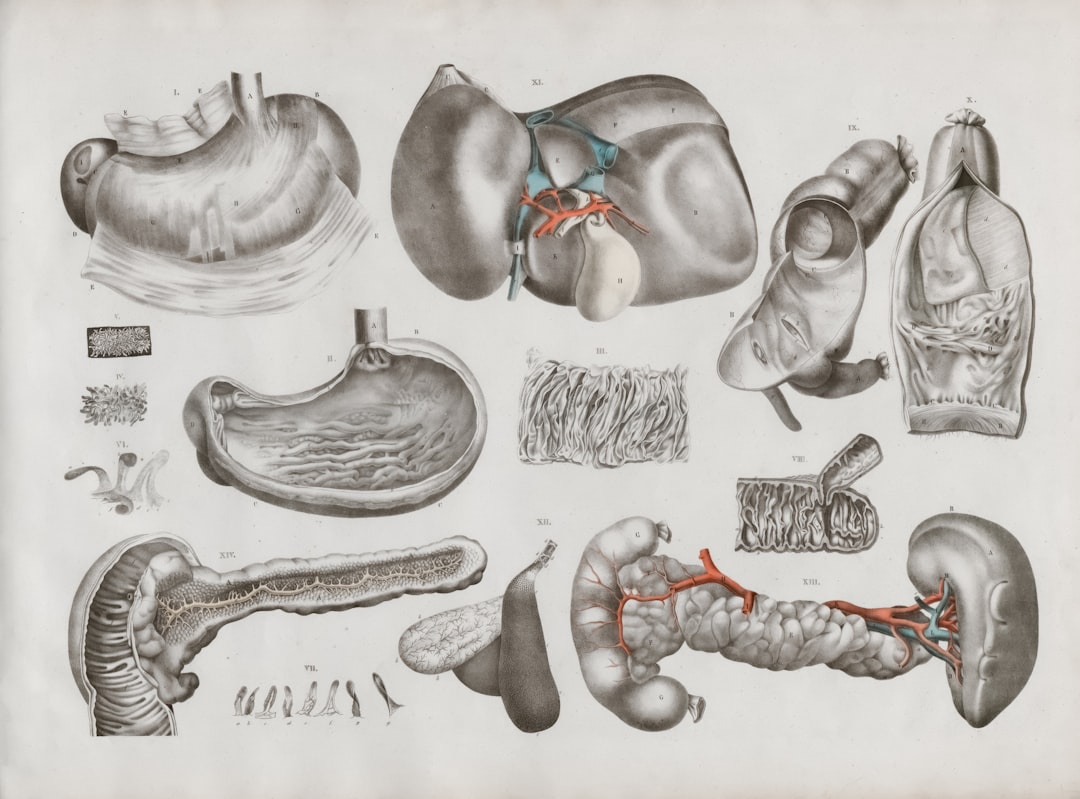
If you're dreading Science, your instinct is right. Science is the section most applicants find hardest, and the numbers back it up. It has 50 questions, more than any other section, and 18 of those cover human anatomy and physiology alone. That's the single biggest content chunk on the whole exam. A&P is also where people are rustiest, because most haven't studied body systems since an intro class years ago. So you get a double hit: the most questions, on the least-fresh material. But here's the upside, and it's a real one. Science is the most prep-responsive section there is. The content is finite. There's a fixed list of systems, terms, and processes, and once you drill them, your score climbs fast. So the section that scares people most is often the one where focused study pays off hardest. Fear it less. Study it first.
How the Sections Compare
Section | Typical difficulty | Why |
|---|---|---|
Science | Hardest | 50 questions (the most), 18 on A&P; usually the rustiest material |
Mathematics | Moderate to hard | 38 questions in 57 minutes; tough mainly for the anxious or out of practice |
Reading | Easier to moderate | 45 questions but long passages under a clock test your focus |
English & Language Usage | Easiest for most | 37 grammar-style questions, though only 37 minutes makes pacing tight |
Your mileage will vary, of course. A former math major might find Math trivial and Reading the grind. But across most applicants, Science sits at the top. The good news is that the same topics trip up most people, so they're well-mapped by now. Our breakdown of the most-missed TEAS topics shows exactly which A&P pathways and math setups cost the most points, and how to fix each one.
And if Science is the part keeping you up at night, get a read on it before you study blind. Testavia's free TEAS diagnostic shows you, section by section, where you actually stand. So you spend your hours on what's hard for you, not on everything.

What Actually Makes the TEAS Hard
Most of the "hard" isn't the content. It's the conditions around it. Four things do the heavy lifting. First, timing. Each section is separately timed, so you can't borrow minutes from an easy section to rescue a tough one. Second, rust. If you haven't touched algebra or A&P in years, you're relearning, not just reviewing. Third, math anxiety. For a lot of people the math itself is fine but the clock and the nerves aren't. Fourth, breadth. Science alone covers anatomy, physiology, biology, chemistry, and reasoning, so there's a lot to hold at once. Notice what's not on that list: impossible material. None of these come from the content being too advanced. They're about pressure, practice and recency. So the fix isn't brilliance. It's reps. Timed practice handles the pacing, and a finite topic list handles the rust.
So when people ask how hard is the TEAS test, the truer answer is that it's less "hard" and more "demanding under time." Those are different problems. One needs a genius. The other just needs a plan and a few honest practice runs. Picture the Math section: 38 questions in 57 minutes, so a little over a minute and a half each. That's plenty of time if you've practiced, and panic-inducing if you haven't. The clock is the test as much as the math is. Most of the fear drains out once you've sat through a full timed exam and seen that the questions are knowable.

How to Make the TEAS Easier With Smart Prep
You control more of the difficulty than you'd think. The TEAS is finite, so a smart plan beats brute-force cramming every time. First, take a diagnostic. Do one full, timed run so you know which sections are hard for you, not hard in general. Then prioritize. Put your hours into Science and A&P first, plus whatever your diagnostic flagged, instead of studying everything evenly. Next, practice timed. Get used to the clock before test day, because pacing is a skill you build, not a switch you flip. Last, review your misses. Every wrong answer is a free lesson, but only if you go back and understand why it was wrong. ATI recommends giving yourself at least six weeks, and that's a fair starting point for most people. So treat the difficulty as a to-do list, not a verdict. You're not trying to get smarter. You're getting reps on a known set of material.
That's exactly what Testavia's TEAS 7 prep is built around. A free diagnostic finds your weak sections first, then you get targeted practice with full rationales so you actually fix them. You start with what's hard for you, and skip what isn't.
Why Passing Depends on Your Program
One more thing worth saying out loud. "Passing" the TEAS isn't a fixed bar. There's no universal cutoff anywhere. Your nursing program sets the score it wants, so a result that's great for one school might fall short at another. So before you stress about a number, find out your target program's requirement. Our guide on whether you can fail the TEAS and still get into nursing school walks through how cutoffs and retakes actually work.
Written by · Verified educator
Testavia editorial
Nathan Cole
RN
Medical-Surgical nurse & health writer
Meet Nathan, a registered nurse with over five years of experience in Medical-Surgical care, based in New York City. Having worked with a wide range of patients through some of their most vulnerable moments, Nathan brings a grounded, real-world perspective to his writing on healthcare. His goal is simple: to bridge the gap between medical knowledge and everyday understanding, making health topics feel less intimidating and more empowering for everyone. When he's not caring for patients, Nathan channels his passion for medicine into writing that educates, comforts and inspires.
5+
Years in Med-Surg
Medical-Surgical
Specialty
New York City
Based in