TEAS Exam: The Complete 2026 Guide to Sections & Scoring
The TEAS (Test of Essential Academic Skills), made by ATI, is the pre-nursing entrance exam most US programs use to screen applicants. ATI TEAS 7 has four sections — Reading, Math, Science, and English & Language Usage — and tests academic readiness, not nursing knowledge.
Editorial
Last reviewed · June 20, 2026

The TEAS (Test of Essential Academic Skills), made by ATI, is the pre-nursing entrance exam most US nursing programs use to screen applicants. The current version, ATI TEAS 7, has four sections — Reading, Mathematics, Science, and English and Language Usage and tests academic readiness, not nursing knowledge. There's no universal passing score since each program sets its own minimum.
What Is the TEAS Exam?
Here's the first thing you need to hear and it's the thing most pages bury: the TEAS does not test nursing knowledge. You won't see care plans. You won't see dosage calculations as a nursing skill. So if you're panicking because you haven't started nursing school yet and you're worried the test will quiz you on clinical content, stop. That's not what this is.
The TEAS, short for Test of Essential Academic Skills, is made by ATI (Assessment Technologies Institute). Most nursing programs in the US use it as an admissions screen and the current version is ATI TEAS 7 which has been in use since June 2022.
What it actually tests is foundational academic readiness. That means the reading, math, science, and grammar skills your nursing program assumes you already have walking in the door. Think high-school-level material. If you can comprehend a passage, do basic algebra, recall biology and chemistry fundamentals and write a grammatically clean sentence, you already have the raw material this test is measuring.
Some programs use a different exam called the HESI A2 instead of the TEAS, and a few accept either one. So before you register, check which one your target program actually requires.
This guide covers the whole picture: the four sections, how scoring actually works, your delivery options, registration and cost, and how to prep without wasting hours on sections you've already got covered. If you want the deeper definitional breakdown first, our TEAS basics guide is a good starting point.

The Four TEAS Sections
The TEAS has four sections, and they run in a fixed order: Reading, then Mathematics, then a short break, then Science, then English and Language Usage. The whole exam totals 170 questions across 209 minutes, but only 150 of those questions count toward your score. The other 20 are unscored pretest items that ATI mixes in to test future questions, and you won't know which ones they are. So treat every question as if it counts, because you genuinely can't tell.
Section | Questions | Time | What It Covers |
|---|---|---|---|
Reading | 45 | 55 min | Comprehension, main idea, following directions, integrating information |
Mathematics | 38 | 57 min | Numbers and algebra, measurement, data interpretation |
Science | 50 | 60 min | Anatomy & physiology, biology, chemistry, scientific reasoning |
English & Language Usage | 37 | 37 min | Grammar, punctuation, sentence structure, vocabulary in context |
Reading checks whether you can pull the right information out of a passage under time pressure, not whether you've memorized literature. Math covers number sense, basic algebra, and reading data from charts and tables, and ATI provides an on-screen four-function calculator for this section. Science is the heaviest section by question count, and anatomy & physiology carries the biggest weight inside it, alongside biology, chemistry, and questions that test scientific reasoning rather than memorized facts. English checks grammar, punctuation, and sentence structure, the kind of thing your future nursing documentation depends on getting right.
If you only deep-study one section, make it Science. Anatomy & physiology is the largest single content area on the whole exam, and it's the section that quietly drags composite scores down for applicants who haven't reviewed it recently. Our anatomy & physiology TEAS prep guide breaks that section down further if you want to start there.
ATI TEAS 7 and Online vs. In-Person Testing
If you've seen "TEAS 6" mentioned anywhere, ignore it. TEAS 6 was retired on June 3, 2022, and ATI TEAS 7 is the only version offered now. Old TEAS 6 study guides won't match the current question formats or section weighting, so don't waste prep time on outdated material.
You have three ways to take the exam. You can sit it in person at an ATI-approved testing center or through a PSI testing site. You can take it on-campus at your nursing school directly, if your school offers its own administration. Or you can take it remotely from home with live online proctoring through PSI, which requires a working webcam, a stable internet connection, and a quiet, private room that meets the proctor's setup rules.
In-Person (ATI/PSI Center or School) | Online (Remote Proctored) | |
|---|---|---|
Proctoring | Human proctor on-site | Live remote proctor via webcam |
Equipment needed | None beyond valid photo ID | Webcam, microphone, stable internet |
Setting | Testing center or campus room | Your own private space |
School acceptance | Almost universally accepted | Not always — some schools require in-person only |
Here's the catch that trips people up. Some nursing programs only accept TEAS scores from an in-person or on-campus administration and won't take a remote score, even though both are technically valid ATI exams. Before you book the online option for convenience, confirm your target program actually accepts it. A rejected score because of delivery mode means retesting, and a retest costs you both time and money. For the full version walkthrough and registration mechanics, see our ATI TEAS 7 deep-dive.

How the TEAS Is Scored (and Why There's No Universal Passing Score)
Stop Googling "the TEAS passing score." There isn't one. Every nursing program sets its own minimum required score, and that's not a loophole or a technicality. It's how the system actually works.
When you finish the exam, ATI gives you a composite score, which is your overall percentage, plus a separate score for each of the four sections. ATI also sorts your composite into one of five Academic Preparedness Levels: Developmental (below 40.7%), Basic (40.7%–58%), Proficient (58.7%–79.3%), Advanced (80%–91.3%), and Exemplary (92%–100%). The national mean composite score typically lands somewhere between 65% and 75%.
But here's the part that matters more than the national average: your specific program sets its own bar, and that bar varies widely. Less competitive ADN programs often accept scores in the 55–65% range. Mid-tier BSN programs commonly look for 65–80%. Competitive and accelerated BSN programs frequently expect 80% or higher, sometimes with minimums on individual sections too.
So the same 72% that gets you accepted into one program might fall short at another down the road. The only number that matters is the one your target program publishes on its admissions page. Look it up and aim a few points above it so you have margin, since competitive programs rank applicants rather than just clearing a pass/fail line. For the full scoring breakdown by program tier, see our TEAS passing score guide.
Registration, Cost and Retakes
Registering for the TEAS happens through ATI directly at atitesting.com, though some schools route registration through their own portal first. Either way, payment for the exam itself is processed through ATI.
The exam fee is $120 whether you test through ATI or through PSI for remote proctoring. If you test through your own institution or a third-party testing center, the price can run lower, often somewhere between $70 and $115, since schools and centers set their own rates to cover local administrative costs. Always check what your specific testing location charges before you book.
If you don't hit your target score, ATI requires a minimum 14-day wait between attempts at ATI-proctored sites. But most nursing programs set their own, often stricter, limits. Some allow three attempts a year. Others only count your first attempt, or your first two, toward your application regardless of how many times you actually sit the exam. So check your program's retake policy before your first attempt, not after a disappointing score.
Here's the registration sequence in order:
Create an ATI account at atitesting.com.
Choose your testing path — ATI-proctored, PSI remote, or through your institution.
Pay the exam fee and schedule your date.
Take the exam, then designate the school(s) where you want your score sent.
For the full cost breakdown including retake fees and study material pricing, see our TEAS cost guide, and for the complete registration walkthrough, see our TEAS application guide.
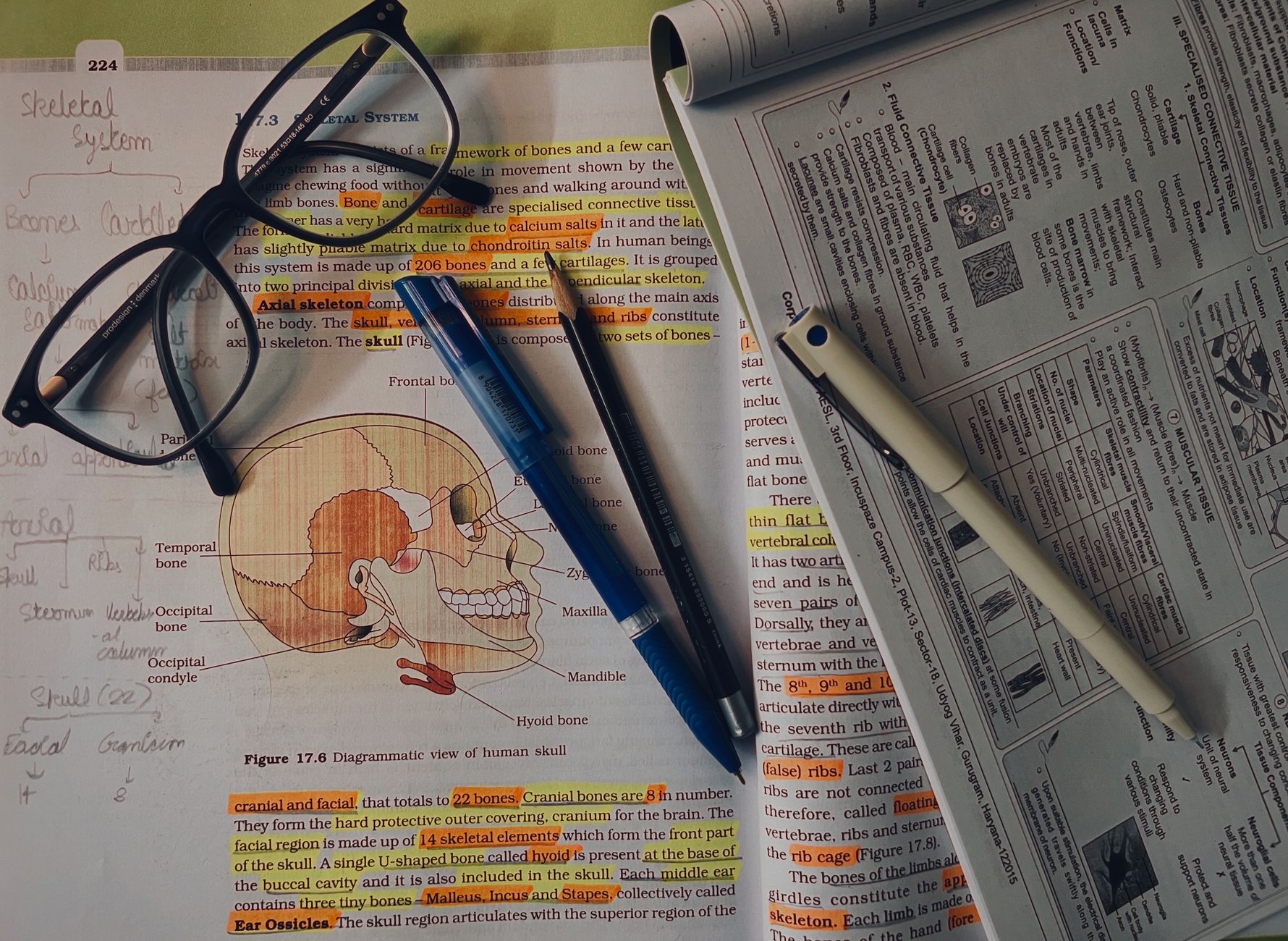
Your TEAS Prep Path (by Timeline and Weak Section)
Now that you know the format, here's how to actually use your study hours well.
Don't study all four sections evenly. That's how strong readers end up re-reading passages they'd already ace while their weakest section gets the same attention as their strongest. Diagnose first, then pour your time into the gap that's actually dragging your composite down.
The sequence that works:
Take a free diagnostic test to find out exactly where you stand on each section.
Allocate your hours by gap, not evenly. Most applicants need the most time on Science (especially anatomy & physiology) and Math, since those skills fade fastest if you haven't used them since high school.
Drill section-specific practice questions for your weakest areas first.
Take full-length timed practice tests to build stamina and pacing across all four sections together.
Review every rationale, right or wrong, since understanding why an answer works is what actually transfers to new questions on test day.
Your timeline changes the intensity, not the method. If you're six months out, you can spread this across weeks with room to breathe. If you're 60 days out, the same five steps apply, just compressed and with less margin for skipped practice sessions.
Written by · Verified educator
Testavia editorial
Nathan Cole
RN
Medical-Surgical nurse & health writer
Meet Nathan, a registered nurse with over five years of experience in Medical-Surgical care, based in New York City. Having worked with a wide range of patients through some of their most vulnerable moments, Nathan brings a grounded, real-world perspective to his writing on healthcare. His goal is simple: to bridge the gap between medical knowledge and everyday understanding, making health topics feel less intimidating and more empowering for everyone. When he's not caring for patients, Nathan channels his passion for medicine into writing that educates, comforts and inspires.
5+
Years in Med-Surg
Medical-Surgical
Specialty
New York City
Based in