How Many Questions Are on the TEAS Test? (Total by Section)
The ATI TEAS 7 has 170 total questions across four sections — Reading (45), Math (38), Science (50), and English & Language Usage (37) — and includes 20 unscored pretest items. That leaves 150 that count toward your score. The TEAS isn't adaptive, so everyone answers the same number.
Editorial
Last reviewed · June 18, 2026

The ATI TEAS 7 has 170 total questions across four sections — Reading (45), Math (38), Science (50) and English & Language Usage (37) and includes 20 unscored pretest items. That leaves 150 questions that actually count toward your score. The TEAS isn't adaptive, so every test-taker answers the same number. Pace by section and you'll walk in knowing exactly what's coming. (Source: ATI's official TEAS exam details)
Total TEAS Questions: 170, With 150 Scored
You're looking at 170 questions total on the ATI TEAS, Version 7. That number hasn't moved since TEAS 7 launched, and it's the one you'll see quoted everywhere but it's not the whole story. Of those 170, only 150 count toward your score. The other 20 are unscored pretest items.
Why 20 Questions Don't Count
ATI mixes pretest items into the real exam to try out future questions before they go live. You won't know which ones they are. They look exactly like scored questions, sit in the same sections and run on the same clock.
That's by design and it's not unique to the TEAS. The NCLEX does it. So does the SAT. Standardized tests need somewhere to trial new content and burying it inside a live exam is cheaper than running a separate study.
Some students find this annoying, why grind through questions that might not even matter? Fair reaction. But the practical answer is simple: you can't tell which 20 are unscored, so there's no shortcut. Answer everything like it counts because it might.
What This Means for Pacing
Don't try to identify the unscored items mid-test. Students who hunt for "off" questions waste time second-guessing instead of moving forward. Treat the 170 as one block, work through it at your planned pace, and let the scoring sort itself out behind the scenes.
Think of it this way: if you spend even ten extra seconds per question trying to spot the pretest items, that's nearly half an hour lost across the full exam. Half an hour you don't have. The 20 unscored questions aren't a puzzle to solve. They're a fact to ignore.
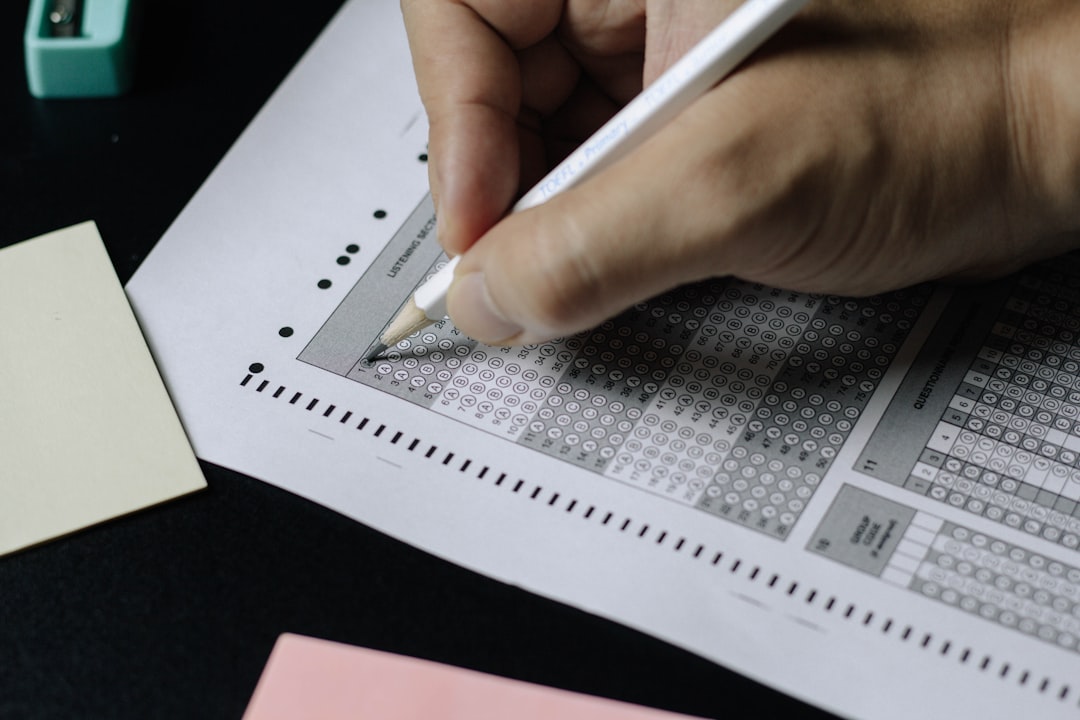
TEAS Questions by Section
Here's the breakdown that actually matters for planning your day. A bare total tells you almost nothing about pacing — the per-section split tells you everything.
Section | Total Questions | Scored | Unscored | Time Limit | Seconds per Question |
|---|---|---|---|---|---|
Reading | 45 | 39 | 6 | 55 min | ~73 sec |
Mathematics | 38 | 34 | 4 | 57 min | ~90 sec |
Science | 50 | 44 | 6 | 60 min | ~72 sec |
English & Language Usage | 37 | 33 | 4 | 37 min | ~60 sec |
Source: ATI TEAS exam details
Science carries the heaviest load at 50 questions. Reading is close behind at 45. Math sits at 38, and English & Language Usage is the shortest section by a wide margin — just 37 questions in 37 minutes.
Reading and Science: The Stamina Sections
These two sections answer the most questions in the least forgiving time. Reading gives you about 73 seconds per item; Science gives you about 72. Neither sounds brutal in isolation. Fatigue is the real enemy here not the math by question 35 of 50 in Science, your focus has been running for almost an hour straight.
If Science is where you're weakest, Testavia's breakdown of exactly which topics make up those 50 questions is worth a look before you start drilling blind. Anatomy and physiology alone makes up a large chunk of the section, so generic science review won't cut it.
Math and English: Different Problems, Different Fixes
Math gives you the most breathing room at roughly 90 seconds a question. Use it but don't get comfortable — multi-step algebra and unit conversions eat that buffer fast if you're not fluent with the formulas.
English moves the quickest, at about 60 seconds per item. That sounds tight until you realize most questions are short grammar and usage checks, not long passages. Drill these under a strict timer until the pace feels automatic instead of rushed.

Is the TEAS Adaptive? No – Here's Why That Matters
The TEAS is fixed-form. Every test-taker answers the same 170 questions in structure, with the same section counts and time limits, no matter how they're performing. Nothing adjusts based on your accuracy.
Compare that to the NCLEX, which is computer-adaptive and can end a section early once the algorithm is confident in your competency level. That uncertainty is where old "Pearson Vue trick" rumors came from people trying to read meaning into how many questions they got. None of that applies to the TEAS. If you finish early, you can review answers within that section, but once you move on, you can't go back. Walking out of Reading with exactly 45 questions answered isn't a sign anything went wrong. It's just the number, same as everyone else's.
Fixed-form has a real upside: you know the shape of the test before you sit down. No mystery about whether finishing fast means something bad. You can build a section-by-section pacing plan in advance and trust the test won't shift under you. That's also why practice tests built around the real counts matter more than generic question banks — drilling 50 untimed science questions doesn't train you for 50 questions in 60 minutes with fatigue setting in by the back half.
One more practical note: because each section locks once you submit it, you can't borrow time from a section you finished early to bail out a later one. Reading running long won't get you extra minutes in Math. Plan each section's pace on its own terms, not as part of one big 209-minute pool.

Written by · Verified educator
Testavia editorial
Nathan Cole
RN
Medical-Surgical nurse & health writer
Meet Nathan, a registered nurse with over five years of experience in Medical-Surgical care, based in New York City. Having worked with a wide range of patients through some of their most vulnerable moments, Nathan brings a grounded, real-world perspective to his writing on healthcare. His goal is simple: to bridge the gap between medical knowledge and everyday understanding, making health topics feel less intimidating and more empowering for everyone. When he's not caring for patients, Nathan channels his passion for medicine into writing that educates, comforts and inspires.
5+
Years in Med-Surg
Medical-Surgical
Specialty
New York City
Based in