How to Transfer a Nursing License to Another State
You may not need to transfer a nursing license at all. If you hold a multistate license under the Nurse Licensure Compact and are moving between compact states, you are already authorized to practice - though changing your primary residence starts a 60-day clock. Otherwise the process is licensure by endorsement.
Editorial
Last reviewed · August 4, 2026

If you're a licensed nurse moving across state lines, you've probably searched how to transfer your nursing license and found a stack of step-by-step guides. Before you follow any of them, ask a sharper question first: do you actually need to transfer anything? At Testavia we help nurses navigate licensure, and this is the step almost every guide skips. If you hold a multistate license and you're moving between compact states, the paperwork you're bracing for may barely exist. And if the compact doesn't cover your move, the process you're hunting for has a name your board actually uses, and it isn't "transfer." So this guide sorts you into the right pathway first, then walks you through it.
You may not need to transfer a nursing license at all. If you hold a multistate license under the Nurse Licensure Compact and you're moving between compact states, you're already authorized to practice, although changing your primary state of residence triggers its own 60-day requirement. If the compact doesn't apply, the process is called licensure by endorsement, filed with your new state's board, and it does not mean retaking the NCLEX.
Do You Actually Need to Transfer Your Nursing License?
Start here, because for a lot of nurses the honest answer is no. Whether you file anything depends on two things: the kind of license you hold, and whether both your old and new states belong to the Nurse Licensure Compact. So before you learn how to transfer a nursing license, figure out which situation is yours.
If you hold a multistate (compact) license and you're relocating between two compact states, you already carry the privilege to practice across compact states, so you aren't starting a fresh application. Instead, you owe a single step tied to your move, covered in the next section. But if you hold a single-state license, or you're moving to or from a non-compact state, you do need to act, through a pathway called licensure by endorsement. The table below sorts the common cases.
Your situation | What you likely need |
|---|---|
Multistate license, moving between two compact states | Apply for a multistate license in your new home state, on the 60-day timeline below. You're not starting over. |
Multistate license, temporary assignment in another compact state (not moving) | Usually nothing new. Your multistate license already covers practice in compact states. |
Single-state license, moving to any state | Licensure by endorsement in the new state. |
Any license, moving to a state outside the compact | Licensure by endorsement in that state, issued as a single-state license. |
Treat that table as a starting point, and confirm your own case with your destination board, since the details turn on your specific states. To check whether your states are compact members, use NCSBN's Nurse Licensure Guidance tool, which carries the current member map, instead of a list that quietly goes stale. The compact now spans most of the country and keeps growing, yet membership does change, so a live source always beats a memorized roster. And if you still need to obtain a multistate license in the first place, that's its own process, covered in how to get a multistate license.
> A relocating RN: "The best outcome here is that you close this tab. Check the compact before you file anything."
Sort Yourself in Three Questions
If the table feels abstract, three questions get you there faster. First, is your current license multistate or single-state? Nursys will tell you in seconds. Second, are both states, the one you're leaving and the one you're entering, compact members? Third, are you truly changing your primary residence, or just picking up a temporary assignment? A permanent move between compact states means updating your home-state license, a temporary assignment usually means nothing new, and anything touching a non-compact state means endorsement. When two answers point different ways, call the board.

The Residency Rule That Catches Nurses Out
Moving your primary residence to another compact state starts a 60-day clock. NLC Rule 402(2), effective 2 January 2024, requires you to apply for a multistate license in your new home state within 60 days of the move. Miss it and your former multistate license converts to a single-state license the moment your residency changes. Here is how that works in practice.
This is the part that gets nurses in trouble, so slow down here. A multistate license is not a passport you carry anywhere forever. Rather, it's issued by your primary state of residence, and it stays tied to that state. So when you permanently move your primary residence to another compact state, NLC Rule 402(2) requires you to apply for a multistate license in your new home state within 60 days of the move. That 60-day residency rule took effect on January 2, 2024. In the meantime, you can keep practicing on your existing multistate license from your former state, but there is no open-ended grace period. Once your new state issues your license, the old one is deactivated, and if you let the 60-day window lapse, your former multistate license converts to a single-state license as soon as your residency changes. ICNLCA chair Pam Zickafoose, EdD, MSN, RN, draws the comparison directly: "Just as we are required to obtain a new driver's license when relocating to a new primary state of residency, the same type of requirement applies to nurses who hold a compact license."
Why So Many Nurses Get This Wrong
The compact is marketed as portability, and it genuinely is. But portability isn't permanence. Your privilege to practice across compact states depends on your multistate license staying valid, and that validity depends on where you legally reside. Treat a compact license as blanket coverage that follows you anywhere, and you have hit the one misconception here with real professional consequences. Practicing on a license that quietly converted to single-state, or that should have been reissued in your new home state, can leave you working without valid licensure where you now live. So when in doubt, confirm your situation with your board before you rely on the old card in your wallet.
How to Transfer a Nursing License by Endorsement
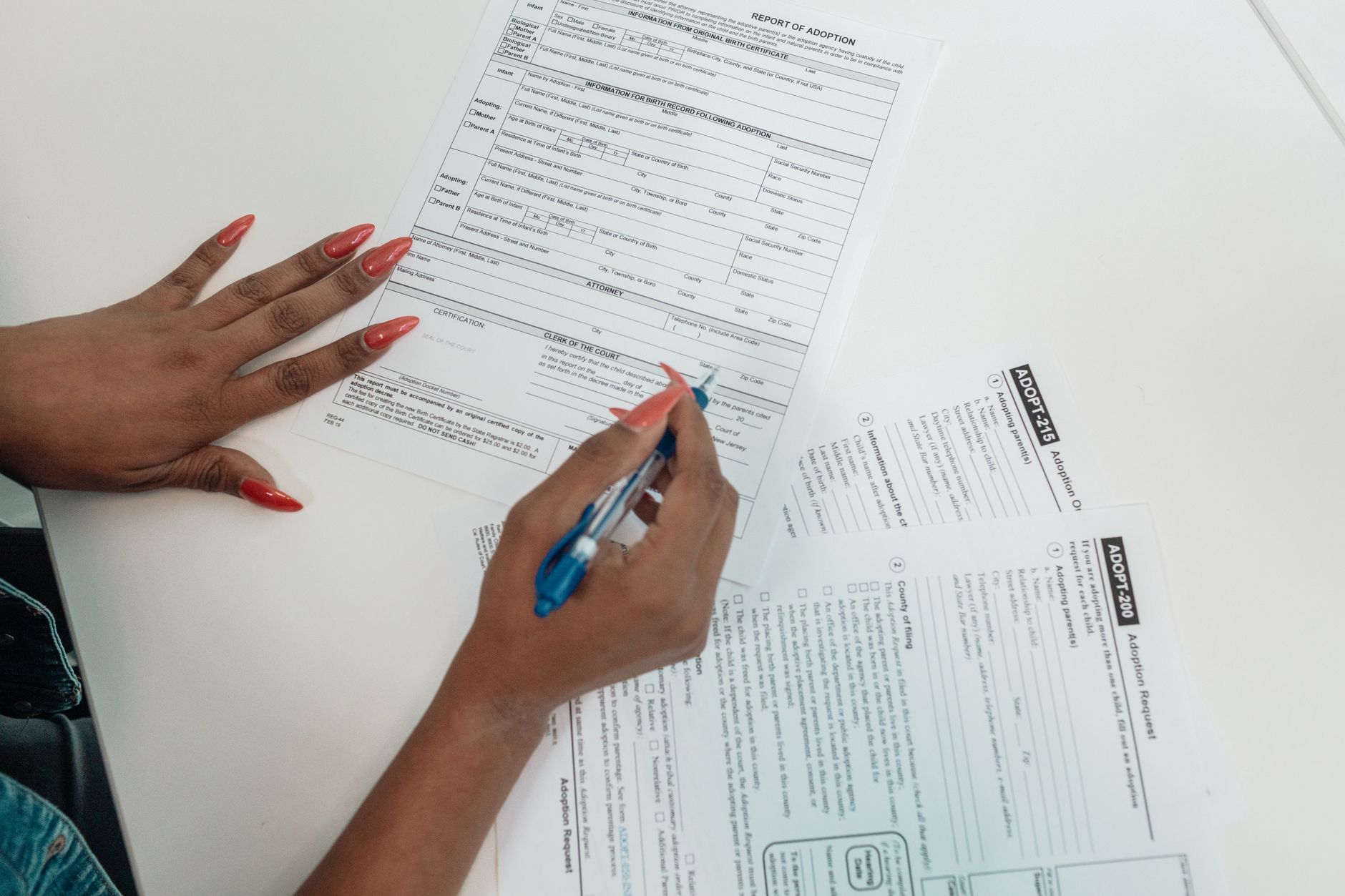
If you searched "transfer" and came up empty on your new board's website, here's why: boards call it licensure by endorsement. That single word solves most of the confusion, because it's the form you were actually looking for. Endorsement is how a nurse already licensed in one jurisdiction becomes licensed in another, and importantly, it does not mean sitting the NCLEX again.
You passed the exam once, and endorsement recognizes exactly that. The process follows a common pattern from state to state, though the specifics vary, so treat the sequence below as the shape of it, not a universal script. In practice, the reason endorsement feels opaque is mostly vocabulary and verification, not real difficulty. Once you know the name of the pathway and understand how boards confirm your existing license, the rest is filling in an application and meeting whatever that particular state asks of you.
Here's the sequence most boards follow:
Apply to your new state's board by endorsement. Look for "licensure by endorsement" or an "endorsement application," never "transfer."
Your existing license gets verified. Boards confirm your current license through Nursys, the national verification database, so in most states you don't mail your own paperwork between boards.
The new board applies its own requirements. This is where any state-specific steps come in, and we break the categories down next.
Your new license is issued. Once everything clears, you're authorized to practice in that state.
Because fees and processing times vary widely and change often, this is one place to go straight to your destination board instead of trusting any published estimate. And endorsement covers every license after your first, so the uniform licensure requirements that underpin it are worth understanding once.
What to Have Ready Before You Apply
You can smooth the process by gathering the basics before you start the application. In general, most boards want proof of your active license, a government-issued photo ID, and your consent to a criminal background check, which increasingly includes fingerprinting.
Beyond that, requirements diverge by state, so your destination board's checklist is the one that counts. If license verification between boards is new to you, know that it usually happens behind the scenes through Nursys. A little preparation up front turns endorsement from a scramble into a form you finish in one sitting.
What the New Board Adds on Top
Endorsement isn't identical everywhere, because each board bolts its own conditions onto the shared baseline. Fortunately, those additions fall into a few predictable categories, not a single checklist. Many states run a criminal background check with fingerprinting. Some also require a jurisprudence exam, a short test covering that state's nursing law and scope of practice.
Continuing-education requirements differ from state to state as well, and if you were educated outside the United States, a board may additionally ask for proof of English-language proficiency. Which of these apply to you depends entirely on where you're headed, and that's precisely the kind of detail that goes stale the moment anyone prints it in a table.
So instead of a state-by-state rundown, run your own case through the Nurse Licensure Guidance tool, which routes you to your destination board's application and its Nurse Practice Act based on the license you hold and the state you're entering. As a result, you get requirements that are current and specific to your case, which a generic table can't promise.
Written by · Verified educator
Testavia editorial
Nathan Cole
RN
Medical-Surgical nurse & health writer
Meet Nathan, a registered nurse with over five years of experience in Medical-Surgical care, based in New York City. Having worked with a wide range of patients through some of their most vulnerable moments, Nathan brings a grounded, real-world perspective to his writing on healthcare. His goal is simple: to bridge the gap between medical knowledge and everyday understanding, making health topics feel less intimidating and more empowering for everyone. When he's not caring for patients, Nathan channels his passion for medicine into writing that educates, comforts and inspires.
5+
Years in Med-Surg
Medical-Surgical
Specialty
New York City
Based in