New Grad RN Jobs: How to Land Your First Nursing Job
Yes, hospitals hire new graduate RNs — mostly through nurse residency programs built for exactly that. You can start applying before your NCLEX results arrive, and in some states an interim permit lets you work under supervision while you wait. Here is the timing, the on-ramp, and how to beat the experience paradox.
Editorial
Last reviewed · August 13, 2026

Nurse residency and new-grad programs (your best on-ramp)
Hospitals, health systems, and academic medical centers run nurse residency programs. They often partner with organizations like Vizient and AACN to run the programs. For instance, the Vizient/AACN Nurse Residency Program connects entry-level nurses transitioning into practice with opportunities to learn, improve, and grow. They achieve this through an evidence-based curriculum that covers areas like person-centered care, leadership, quality, and safety.
As a nurse resident, you are expected to:
Work side-by-side with an experienced RN (preceptor). They guide you on how things run in the hospital and let you take on more responsibilities.
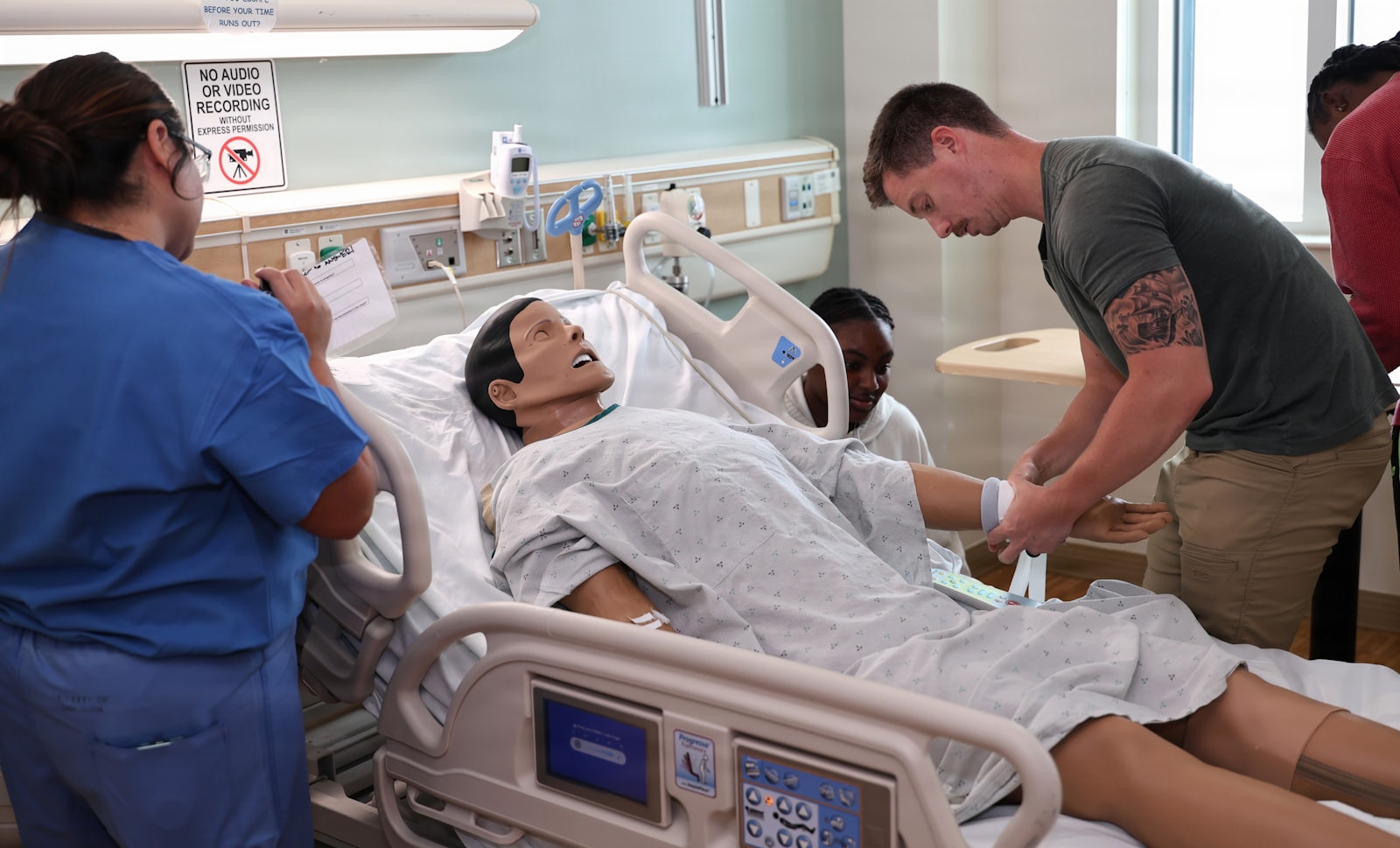
Attend classroom sessions and stimulation labs. Here, you get to strengthen your clinical judgment and nursing skills.
Learn how to manage your workload, teamwork, and how to handle situations that you were probably not taught in school.
Most of these programs run for 6 to 12 months, but for specialties like ICU and emergency care, the orientation may be longer due to their complexity. You should start applying for these programs before you’re licensed. Typically, hospitals recruit nurses in their final semester. They also hand out contingent job offers that become official once you graduate, pass the NCLEX-RN, and become licensed.
How do you find and apply for these programs? Follow these steps:
Finding Programs
Use keywords such as "nurse resident" and "new graduate RN" in job search engines. You can also check hospital career sites for postings labeled as New Grad RN Residency" or "New Graduate Nurse Residency. In addition, you can check in with your nursing school's career services about direct pipelines or hiring partnerships with nearby hospitals. You should keep in mind that application cycles open 3 to 6 months before cohort start dates (they are aligned with winter/spring and summer/fall graduation timelines).
Preparing Your Application Materials
Make sure that your resume and cover letter match the residency you’re applying to. Next, highlight your clinical rotations and unit preferences. Thirdly, request letters of recommendation from your clinical instructors because some programs require them during the application process. Lastly, get ready for behavioral interview questions. They mostly ask how you’d handle real patient care scenarios since most residencies are more interested in your judgment than textbook knowledge.

Eligibility & Requirements
A lot of nurse residency programs allow you to interview and receive a job offer while you’re still finishing school, as long as you pass the NCLEX-RN and get licensed. You should check if the program requires a specific degree type; some will only consider BSN grads. Also, review any program-specific requirements, such as immunization records, BLS certification, and background checks.
The experience paradox (and how to beat it)
While going through job postings, you’ll realize that they all want you to have experience. You are new, so how are you supposed to get experience if no one will hire you without it? This is often referred to as the experience paradox, and it's frustrating because employers want people who need less training, but new nurses haven’t had the chance to get it.
The good thing is that, just like all problems, you can find a way around it. The trick is finding an entry-level spot; it might not be your dream unit or shift, but you’ll get hands-on clinical experience. Once you get a year or two of experience working as an RN, you can start applying for the jobs you’d not have qualified for because of the experience requirement. Here are other workaround tactics you can use to beat the experience paradox:
Apply to nurse residency programs first. They’re designed for new grads, and you get real clinical experience in the process.
Consider less-competitive clinical settings. Places like long-term care, rehab centers, and some med-surg units usually have more openings for new nurses. These also have a lower experience threshold than high-demand specialties.
Leverage connections made during clinical placements. A preceptor or unit manager who already knows how you work can get you a referral or an interview way faster than applying cold.
Work as a nursing tech or PCT first. You can use this method if you want to end up working as an RN at a specific hospital. It's easier to land an internal transfer than to get hired from outside.
Pick up per-diem or PRN RN positions. These roles don’t require much experience and can help build your resume as you look for something more permanent.
Which specialties hire new grads?
Most nursing specialties have opportunities for new grads, especially through the nurse residency programs. However, getting hired depends on the level of competition because some specialties are more competitive than others. The med-surg units are more likely to hire new grads because they experience frequent turnover rates and care for a large number of patients. On the other hand, specialties such as the ICU, Emergency Department (ER), Labor and Delivery (L&D), and pediatrics are more competitive. These specialties attract a large number of applicants, which drives the competition way up. For instance, ICU positions are usually in high demand, but the patient-to-nurse ratio is so tight that it's hard to land a position. The table below compares some nursing specialties based on how friendly they are to new grads.
Specialty/Setting | New-Grad Friendliness | Notes |
|---|---|---|
Medical-Surgical | High | High vacancy and turnover rates make this the most accessible entry point |
Long-Term Care (LTC) / Rehab | High | Consistent demand for staff, flexible entry requirements |
Step-Down / Progressive Care | Moderate | Higher acuity than med-surg, generally open to strong new-grad candidates |
Psychiatric / Behavioral Health | Moderate | Prioritizes communication skills over technical procedures |
Operating Room (OR) | Moderate | Many hospitals run dedicated perioperative residency tracks for new grads |
Emergency Department (ED) | Low–Moderate | High interest from grads; some hospitals require prior EMT or tech experience |
ICU | Low | Tight nurse-to-patient ratios and demand from CRNA-track applicants drive competition |
Labor & Delivery / Pediatrics | Low | Extremely popular; hundreds of applicants for a handful of spots |
Resume and interview tips for new RNs
Although most employers will insist you have work experience to land a job, some people still get hired without it. They don’t land these jobs by luck; it all depends on how well you present yourself in your resume and interview. These two are what set you apart, especially with the high level of competition. Here’s how to make both work in your favor:
Resume
Ensure your resume includes the following
Professional summary. It should include a brief introduction that covers your nursing education, career goals, and passion for patient care.
Clinical rotations. List the hospitals or clinics where you did your clinical rotations. Also include the units you worked in, such as med-surg, ICU, and L&D.
Relevant clinical skills. Mention the skills you picked from the units you worked in. For example, IV insertion, wound care, medication administration, and patient education.
Certifications. Having certifications like Basic Life Support (BLS)and Advanced Cardiovascular Life Support (ACLS) sets you apart from other applicants and can increase your chances of being hired. Include all the certifications that fit the job you’re applying to.
Healthcare experience: Include any healthcare experience you have, even if it wasn't as an RN. For example, if you’ve worked as a nursing assistant (CNA), patient care technician (PCT), medical assistant, EMT, or any other healthcare role, include it.
Interview Tips
If you get an interview, this means the employer believes you’re qualified on paper. Now, you need to show them that you know how to communicate and solve problems, and that you’re the right fit for their team. Here are a few ways you can prepare for your interview:
Research the employer. Study the organization's mission and values so you can be able to explain why you wish to work with them.
Gather documents. Prepare extra copies of your resume and relevant certifications.
Practice using the STAR method. Your employer will likely ask you behavioral interview questions about your past experiences. To avoid rambling, use the STAR method ( Situation, Task, Action, Result) to make your responses organized and relevant.
Prepare for clinical scenario questions: These questions do not test the textbook knowledge you learnt in school; they test your clinical judgement.
Show that you’re eager to learn. Let your employer know that even though you don’t have a lot of clinical experience, you’re willing to learn.
Ask questions towards the end of the interview. You can ask about orientation, mentorship, continuing education, or how their nurse residency works. It shows you’re genuinely interested and planning to do well.
Where to apply
Knowing where to look also determines how fast you land your first job. Here are some places you’re likely to get new grad RN jobs:
Hospital Career websites. They post new-grad and residency openings on their career pages before posting them elsewhere.
Nurse-specific job boards. These sites let you filter jobs by specialty, location, and experience, making it easier to find positions intended for new graduates.
Residency directories. Healthcare organizations sometimes publish annual directories of residency programs, including application and start dates.
LinkedIn. Recruiters also use this platform to advertise nursing positions and look for new candidates. You can follow hospitals and health systems to stay updated on new openings.
Professional Networking. Don’t brush off your clinical connections. Instructors, preceptors, classmates, and nurse managers might tip you off about jobs way before they're listed anywhere.
Frequently Asked Questions
When should new grads start applying for RN jobs?
You should start applying during your final semester of nursing school. That’s because many hospitals recruit before graduation and hire nurses through nurse residency programs around this time. If you’re selected, you’ll receive a contingent job offer, which means that you’ll get hired after you graduate, pass the NCLEX-RN, and obtain your RN license.
Can I work as an RN before passing the NCLEX?
No, you need to pass the NCLEX-RN and have a license before you work as a registered nurse. However, some states offer temporary or interim permits that let you work under certain conditions before you get your license. These rules vary state by state, so you should check with your State’s Board of Nursing to know what applies in your state.
What is a nurse residency program?
It's a structured training program offered by hospitals and healthcare programs for newly licensed registered nurses. They help new grads transition smoothly from school to real clinical practice by offering mentorship, classroom sessions, and one-on-one guidance from experienced nurses.
Why is it so hard to get a new grad RN job?
Many job postings ask for experience that new grads don’t have because employers want nurses who need less onboarding. This gap is known as the experience paradox, but you can overcome it by completing nurse residencies, applying to less-competitive units, or starting out in roles like a PCT to build your resume.
Which units hire new grads most easily?
Medical-surgical units, long-term care, and rehab are usually more open to hiring new grads because of high turnover and the care of many patients. Specialty units like ICU, ER, or Labor & Delivery do hire new grads too, mostly through residency programs, but landing a spot in those areas is a lot tougher.
The Bottom line
Landing your first RN job without experience is tough. The experience paradox will discourage you, but it's not a dead end. Nurse residency programs are designed for this: to help new grads transition from classroom work to real clinical experience. You only need to know where to search, how to apply, and how to build a resume that highlights your strengths so your application can stand out. Apart from nurse residencies, you can also apply for jobs in less-competitive units like med-surg, or start out in roles like patient care technician (PCT), medical assistant, or EMT to build your resume. After sometime you’ll have the experience you need to start applying for the jobs you actually like.
If you’re still getting ready for the NCLEX, Testavia has your back with practice questions and study tools that follow the latest NCLEX-RN plan. That way, you start your first RN job not just hired, but licensed and ready to go.
Written by · Verified educator
Testavia editorial
Nathan Cole
RN
Medical-Surgical nurse & health writer
Meet Nathan, a registered nurse with over five years of experience in Medical-Surgical care, based in New York City. Having worked with a wide range of patients through some of their most vulnerable moments, Nathan brings a grounded, real-world perspective to his writing on healthcare. His goal is simple: to bridge the gap between medical knowledge and everyday understanding, making health topics feel less intimidating and more empowering for everyone. When he's not caring for patients, Nathan channels his passion for medicine into writing that educates, comforts and inspires.
5+
Years in Med-Surg
Medical-Surgical
Specialty
New York City
Based in