Online Nursing Programs: What "Online" Actually Means
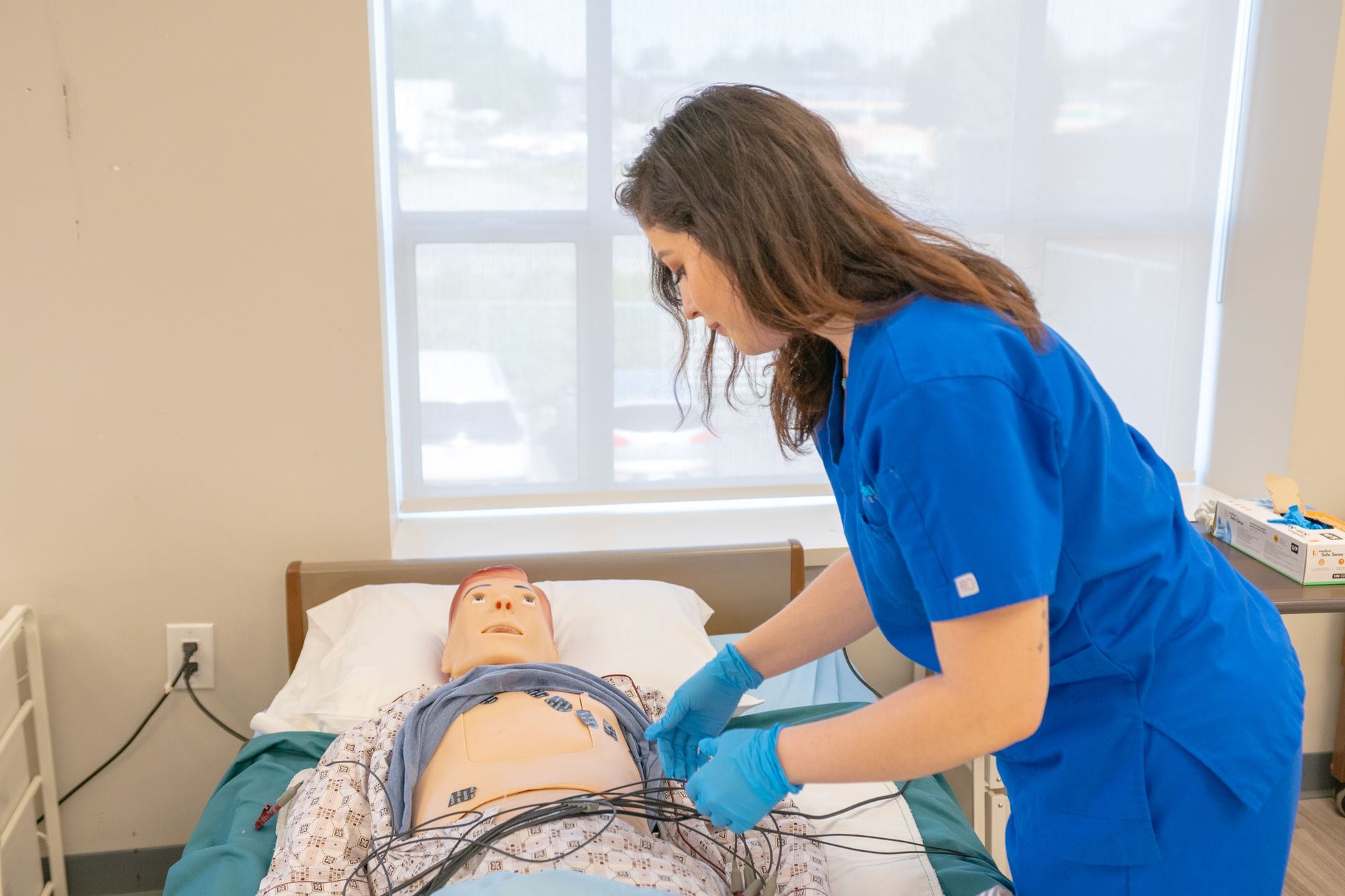
No accredited program makes a nurse entirely online. Didactic coursework can be delivered remotely, but skills labs and supervised clinical hours happen in person, and accreditation is the filter that decides whether you can sit the NCLEX at all. Here is what "online" actually covers, and where it genuinely works.
Editorial
Last reviewed · August 3, 2026

No pre-licensure nursing program is fully online. Licensure requires supervised clinical hours you complete in person, so "online" describes the lecture portion-you will still be at a clinical site. Online is most straightforward for RN-to-BSN, where you're already licensed. Whatever the format, the check that matters is whether your board of nursing approves the program.
Can You Become a Nurse Online?
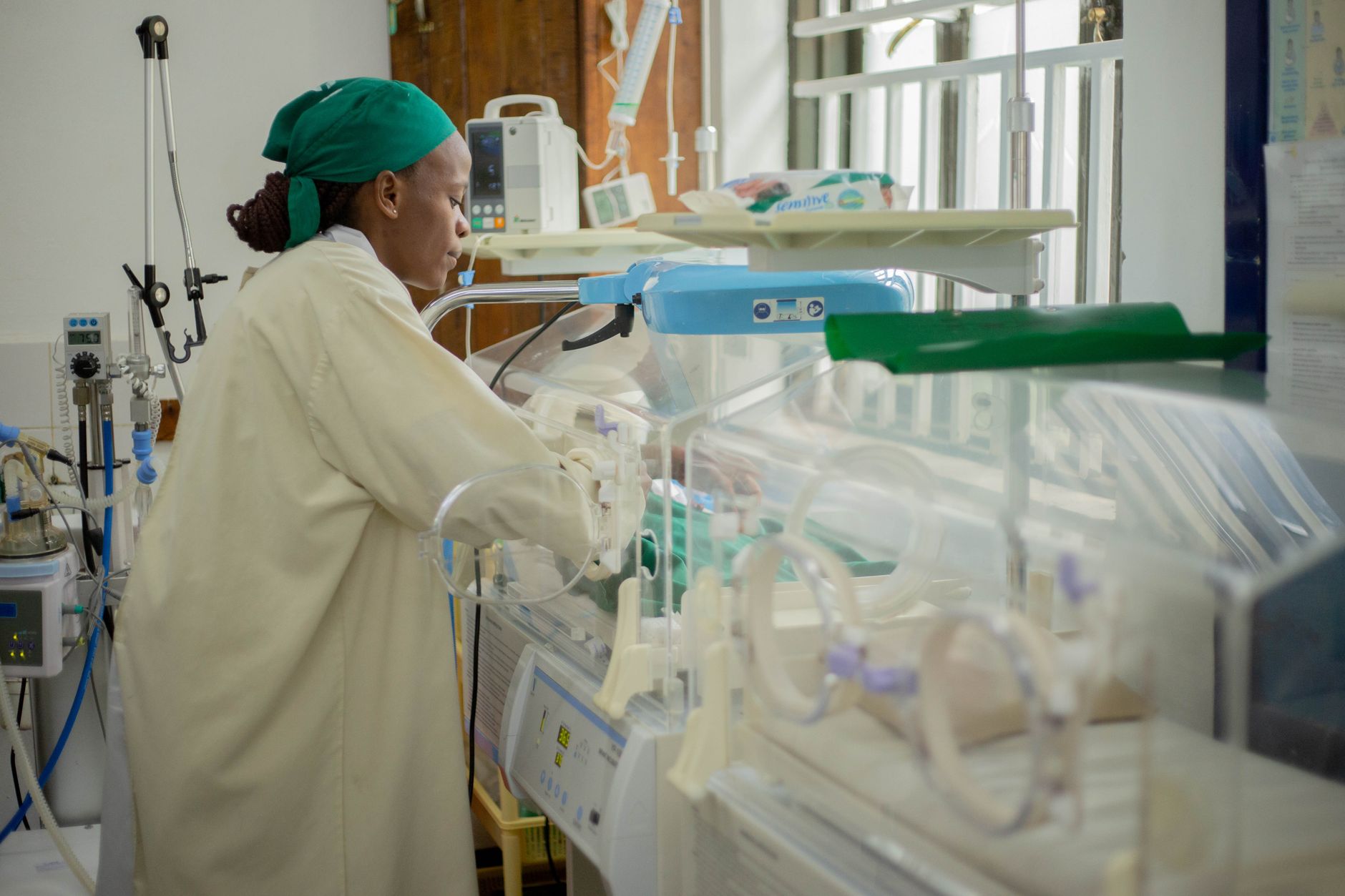
You cannot earn a pre-licensure nursing degree completely online. Earning your RN license takes a mix of core medical theory and intense, hands-on clinical skills that a computer screen just cannot teach. When you see an advertisement for an online nursing track. Remember that the digital setup only covers your didactic coursework-the lectures, readings, and exams. While your foundational science classes take place inside a virtual classroom, your actual technical, hands-on training never does.
To earn your degree and qualify for professional practice. You must complete hundreds of supervised clinical hours inside physical healthcare facilities. These clinical rotations are mandatory, supervised in real-time by licensed clinical instructors, and completed in person at hospitals, clinics, or long-term care facilities. Online platforms handle the theory, but the hospital floor handles the practice.
The gap between understanding this reality and believing marketing claims is where students lose time and money. Commercial program advertisements often lead with phrases like "100% online" or "flexible fast-track nursing degrees." While these headlines are technically referring to the lecture schedule. They are frequently structured to appeal to working adults who need flexible hours. If you take those marketing slogans literally. You risk enrolling in a program that does not fit your schedule or one that lacks the regional infrastructure to place you in a local hospital.
According to the NCSBN Board of Nursing, “Board of nursing (BON) approval of registered nurse (RN) education programs is vital for protecting the public.” Every state maintains a definitive list of approved pre-licensure programs. If an institution is not explicitly listed on your state board’s directory, it cannot grant you eligibility to sit for the licensing exam, regardless of how professional its virtual lectures appear.
This guide does not name, rank, or recommend specific nursing schools or private institutions. Ranking platforms in the online education space are heavily influenced by paid marketing partnerships, advertising placements, and lead-generation budgets. Rather than relying on a commercial list that ranks schools based on sponsorship, this article gives you the exact verification steps and structural screening queries needed to audit any online nursing option independently.
What the marketing says | What is actually online | What still happens in person |
|---|---|---|
"100% online" | Didactic coursework: lectures, readings, exams, discussion | Skills labs and supervised clinical hours |
"Hybrid" | Most theory, delivered asynchronously | Scheduled on-campus intensives plus clinicals |
"Online RN-to-BSN" | Genuinely most of it — you are already a licensed RN | Any practicum or community health hours the program requires |
"Online prerequisites" | Anatomy, microbiology, statistics and similar | Lab components, where the program requires a proctored lab |
Accreditation is the whole filter
The ultimate safety mechanism for any prospective student is programmatic accreditation combined with state board approval. These two filters protect your financial investment, your academic credits, and your ultimate right to practice.
If you enroll in an unapproved or unaccredited program. You will face a catastrophic outcome. You will be legally barred from sitting for the National Council Licensure Examination (NCLEX). Leaving you with thousands of dollars in non-transferable tuition debt and no path to an RN license.
While these national bodies validate educational quality, your individual state board of nursing holds the legal power to grant licensure eligibility. As detailed in the NCSBN Program Approval Guidelines, “The purpose of BON program approval is to ensure the program comprehensively covers the knowledge and skills that students will need to be licensed.” A program must satisfy both requirements to be legitimate.
Programmatic accreditation means an independent, federally recognized authority has audited a program's curriculum, faculty qualifications, resources, and student outcomes to ensure they meet national profession-wide standards. In the United States, two principal bodies handle this oversight:
The Accreditation Commission for Education in Nursing (ACEN): This body provides programmatic review across all levels of nursing education, including practical, diploma, associate, baccalaureate, and advanced degrees.
The Commission on Collegiate Nursing Education (CCNE): An autonomous arm of the American Association of Colleges of Nursing (AACN), this agency focuses exclusively on baccalaureate, graduate, and residency programs.
To verify a program's legal standing before speaking with an admissions representative, perform this two-step lookup:
Search the Accreditor Directories: Visit the official ACEN Search Page or the CCNE Directory to verify that the school's specific nursing track holds active programmatic accreditation.
Cross-Reference Your State Board’s Approved List: Access your local jurisdiction's portal via the NCSBN Board of Nursing Directory. Look up the exact institution to confirm it is approved to operate pre-licensure tracks for residents of your state.
Never rely on generalized statements on a school's website claiming they are "regionally accredited" or "working toward approval." Regional accreditation applies to the university as a whole, but it does not substitute for specific programmatic nursing accreditation. The verification instruction is the protection: an unapproved program can render your coursework worthless under state law. Perform both checks independently to protect your career path.
Where online genuinely works: RN-to-BSN
Online delivery excels in post-licensure programs. The premier model is the RN-to-BSN track. This bridge serves currently working registered nurses. These professionals already hold an associate degree or diploma. They want to upgrade to a bachelor's degree. They already cleared state-mandated clinical training. They hold active, unencumbered RN licenses. Their instructional needs are completely different.
The online environment offers high utility here. Coursework targets advanced medical concepts. Students analyze healthcare policy and research synthesis. They study public health systems and organizational leadership. These competencies are purely conceptual. Virtual platforms handle them efficiently.
Separate entry-level claims from post-licensure realities. Low-friction virtual enrollment applies to existing nurses. Read the fine print on flexible ads. Those perks belong to post-licensure tracks. They do not apply to beginners.
Other fast paths exist. The Accelerated BSN (ABSN) fits non-nursing degree holders. Some ABSN setups use a hybrid structure. They use web platforms for basic lectures. However, they remain high-intensity tracks. They demand rigorous on-campus laboratory drills. They require intensive local hospital clinical assignments.
What to Ask Before You Enroll
Look past polished enrollment pitches. You must audit the school's operational framework. Demand clear, written answers from admissions staff. Ask about local clinical setups and state rules. Your choice between an Associate Degree (ADN) and a Bachelor Degree (BSN) alters your timeline. However, both paths require identical legal verification. You must protect your tuition investment. Avoid unaccredited entities, often called diploma mills. Your goal is to secure an approved path. Use strict screening questions to get clear answers.
Evaluating institutions requires submitting five specific programmatic queries to admissions personnel:
"What is your exact programmatic accreditation status, and can you provide the link to your directory listing?" Verify ACEN or CCNE status. General regional university accreditation is insufficient.
"Is this specific track fully approved by the Board of Nursing in my home state?" Programs authorized in their home states often lack permission to teach out-of-state residents.
Do you guarantee local clinical placement sites and assign a preceptor, or must I source my own?" Self-placement programs force students to find hospital slots. This frequently delays graduation.
"Where exactly would my clinical rotations take place, and what is the maximum commuting radius?" Confirm the spots are truly local. Do not travel out of state for basic shifts.
"What is your exact first-time [NCLEX-RN pass rate](https://testavia.com/blog/nclex-pass-rate) over the last three testing cycles?" High scores prove the virtual didactic curriculum works. It shows they prepare you for modern licensing standards.
This guide excludes tuition costs and programmatic lengths. Schools change these metrics frequently. Get current financial details from official financial aid offices. We never rank commercial programs. Ranking lists favor sponsored leads over student outcomes. Rely on your own verification steps.
Technical Appendix: State Paperwork and NGN Blueprint Integration
Entering the profession requires mastering regional bureaucratic files and modern clinical judgment testing parameters. This appendix details the operational protocol for validating eligibility and mastering Next Generation NCLEX requirements.
Phase1: Decoding the Board of Nursing (BON) Bureaucratic Pipeline
State boards hold total jurisdiction over candidate evaluation. You must manage three core legal documents during your enrollment window:
The Institutional Authorization Affidavit: This file confirms a school's digital footprint is recognized by your resident board of nursing. Out-of-state universities must be explicitly registered in your state to conduct long-distance teaching. Without this validation, your graduation paperwork will be rejected immediately during initial processing.
The Verification of Clinical Hours and Skill Mastery Form: Your assigned local clinical preceptor and clinical coordinator sign this mandatory record. It serves as permanent legal proof of your state-mandated bedside exposure hours. The form catalogs your direct clinical performance across critical focus areas including medical-surgical wards, pediatric clinics, obstetric environments, and mental health facilities.
The Certificate of Graduation and Eligibility Authorization: Your school’s dean of nursing issues this final administrative form to your state board upon exit. It legally vouches that you completed all programmatic components and satisfied your mandatory physical rotation counts. This form initiates your state board's generation of your official Authorization to Test (ATT) letter.
Phase 2: Mastering Next Generation NCLEX (NGN) Performance Standards
The licensing exam does not evaluate basic rote recall. The framework is built on the NCSBN Clinical Judgment Measurement Model (NCJMM), which tests a candidate’s cognitive ability to make high-stakes, real-time clinical decisions under stress. Your online didactic learning must be structured to directly feed these advanced analytical skills.
The Interactive Case Study Engine: The modern exam centers around comprehensive, evolving clinical scenarios. Candidates receive a detailed client chart containing provider admission notes, nursing logs, laboratory values, and vital sign flowsheets. You must synthesize this information across six consecutive, structured cognitive stages: recognizing subtle clinical cues, analyzing those cues to understand underlying pathophysiology, prioritizing the client's most urgent hypotheses, generating targeted clinical solutions, taking direct action based on evidence-based practices, and evaluating the client's subsequent response to those interventions.
Advanced Interactive Item Types: The exam utilizes specialized problem formats that challenge clinical reasoning far beyond traditional single-choice options. Matrix Multiple-Response Items require you to evaluate multiple clinical findings simultaneously, checking columns to indicate whether specific assessment data supports a particular medical hypothesis or requires a targeted nursing intervention. Drag-and-Drop Cloze Rationales present incomplete diagnostic or pathophysiological statements where you must drag specific medical terms into blank slots to correctly articulate cause-and-effect relationships. Highlighting and Dropdown Select Features prompt you to read through a shift report and click to highlight specific clinical phrases that indicate acute client deterioration.
Strategic Scoring Architecture: The scoring system rewards precise clinical accuracy by utilizing partial-credit scoring algorithms. The NGN layout uses a +/- scoring system for select-all-that-apply variations and multiple-response items. Selecting a correct intervention adds points, while selecting an incorrect choice or a harmful action subtracts points from that specific question's total score. This setup penalizes guessing and mirrors the reality of real-world nursing care, where unnecessary or reckless actions cause client harm.
Written by · Verified educator
Testavia editorial
Nathan Cole
RN
Medical-Surgical nurse & health writer
Meet Nathan, a registered nurse with over five years of experience in Medical-Surgical care, based in New York City. Having worked with a wide range of patients through some of their most vulnerable moments, Nathan brings a grounded, real-world perspective to his writing on healthcare. His goal is simple: to bridge the gap between medical knowledge and everyday understanding, making health topics feel less intimidating and more empowering for everyone. When he's not caring for patients, Nathan channels his passion for medicine into writing that educates, comforts and inspires.
5+
Years in Med-Surg
Medical-Surgical
Specialty
New York City
Based in