TEAS Biology Questions: What's Actually Tested (and What Isn't)
Biology is worth nine scored questions on the TEAS 7 Science section, roughly 20% of the 44 scored items. The content stays at cellular and molecular level, but supply-answer questions remove the multiple-choice safety net, which makes active recall non-negotiable here.
Editorial
Last reviewed · July 1, 2026
Biology sits inside the TEAS 7 Science section alongside anatomy and physiology, chemistry, and scientific reasoning. It is worth nine scored questions, which is enough to matter and small enough that over-studying it costs you points elsewhere.
The practical problem is knowing where biology ends and A&P begins, how deep the content actually goes, and which question formats change what "knowing" a topic means. This guide covers all three.
Is biology on the TEAS?
Yes. Biology accounts for nine scored questions on the TEAS 7 Science section, which makes it the second-largest subcategory after anatomy and physiology and puts it slightly ahead of chemistry at eight. It was not always broken out this way, and the questions test general life-science principles rather than human body systems, so it is genuinely separate material from the A&P questions sitting next to it in the same section.
The arithmetic confuses people, so it is worth stating plainly: the Science section presents 50 questions, of which 44 are scored and six are unscored pretest items seeded throughout. Nine scored biology questions out of 44 scored questions is roughly 20% of the section that counts toward your score. If you divide by 50 you will get 18% and wonder why every source says 20%.
Biology became a distinct labeled subcategory in TEAS 7, which launched in June 2022. TEAS 6 covered biological concepts without separating them out, so anyone studying from TEAS 6 materials is working from an outdated map of the exam. For the full section breakdown, our guide to TEAS science questions covers every content area including chemistry and A&P.
Biology vs. A&P: where the line is
The distinction is the level of biological organization being tested. A&P asks about the human body as a system; biology asks about principles that apply to all living things. Cell biology sits underneath both, which is where most of the confusion comes from.
A&P questions ask you to identify body structures, describe their functions, or trace physiological pathways across ten body systems: integumentary, skeletal, muscular, nervous, endocrine, circulatory, lymphatic and immune, respiratory, digestive, and urinary. Biology questions ask about cell structure and function, macromolecules, cellular reproduction, genetics and DNA, and a little evolution and taxonomy.
Biology topics | A&P topics |
|---|---|
Cell structure and organelle function | Body systems and their interactions |
DNA structure and basic genetics | Homeostasis and feedback loops |
Photosynthesis and cellular respiration | Muscular and skeletal system detail |
Macromolecules (carbohydrates, proteins, lipids, nucleic acids) | Cardiovascular and respiratory physiology |
Taxonomy and basic evolution | Pathophysiology basics |
The boundary is not absolute. A question about how the cell membrane regulates what enters and leaves a cell could sit in either category. The working rule: if it concerns a specific human organ or body system, treat it as A&P. If it concerns cells, genetics, macromolecules or universal processes, treat it as biology.
How deep does TEAS biology actually go?
Not very, and that is the point. The biology content tests foundational concepts a nursing student will actually use rather than the depth of a college majors' course. You are not asked to diagram the electron transport chain. You are asked whether you know what a mitochondrion does.
Here is what each topic requires.
Cell structure and function
Know the eukaryotic organelles and what each one does: cell membrane, nucleus, mitochondria, ribosomes, smooth and rough endoplasmic reticulum, Golgi apparatus, lysosomes and cytoplasm. Understand that cellular respiration converts glucose into usable energy and that photosynthesis runs the reverse process in plants. Some questions present a diagram and ask you to identify a structure or its function.
Macromolecules
You need the four biological macromolecules, their building blocks, their functions and an example or two of each. Questions frequently ask about the relationship between structure and function, or where a given macromolecule appears in a biological process.
Macromolecule | Monomer | Primary function | Examples |
|---|---|---|---|
Carbohydrates | Monosaccharides (glucose) | Energy source, structural support | Glucose, glycogen, cellulose |
Lipids | Fatty acids and glycerol | Energy storage, membrane structure, signaling | Triglycerides, phospholipids, steroids |
Proteins | Amino acids | Structure, enzymes, transport, signaling | Hemoglobin, collagen, antibodies |
Nucleic acids | Nucleotides | Genetic information storage and transfer | DNA, RNA |
Genetics and DNA
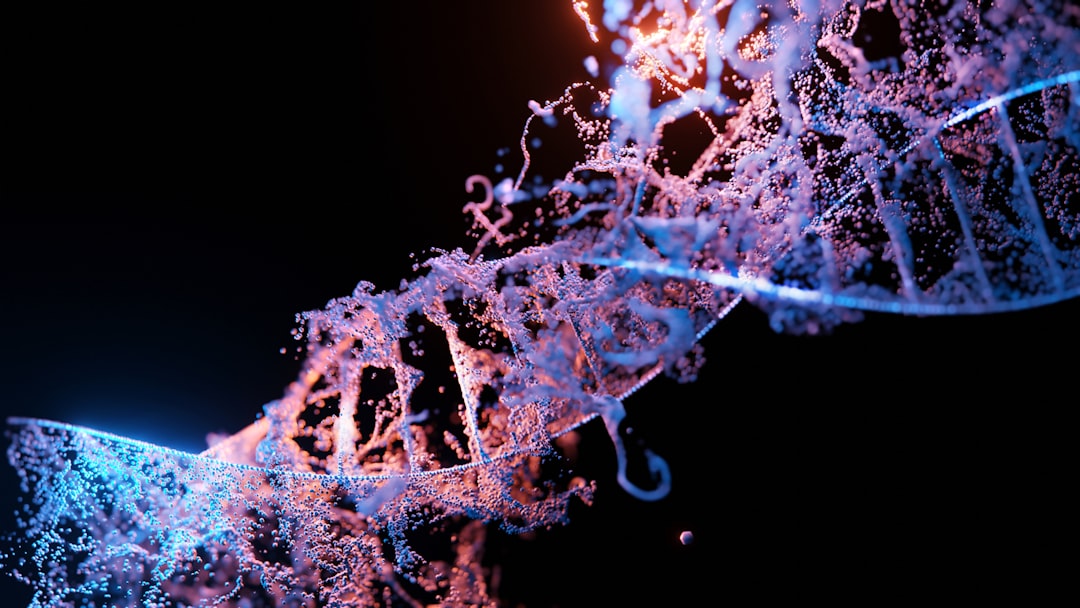
Expect DNA structure, including the double helix and base pairing, where adenine pairs with thymine and guanine pairs with cytosine. Expect the central dogma, meaning how DNA is transcribed to RNA and translated into protein, plus the basics of gene expression. The National Human Genome Research Institute glossary is a reliable free reference if your recall on terminology is shaky.
Understand that mutations can alter protein function, and know dominant and recessive inheritance. Punnett squares do appear, so practice them until they are quick.
Mitosis and meiosis
Know the phases of mitosis in order, prophase through metaphase, anaphase and telophase, with cytokinesis following, and what happens in each. Mitosis produces two genetically identical diploid daughter cells.
Meiosis occurs in reproductive cells, produces four haploid daughter cells, and generates genetic variation through crossing over. The distinction to hold onto: mitosis is for growth and repair, meiosis is for sexual reproduction.
Infectious and non-infectious disease
TEAS 7 added a component on infectious and non-infectious disease. Know the categories of infectious agent: bacteria, which respond to antibiotics; viruses, which do not; fungi; and parasites. Understand the general division, that infectious disease is caused by transmissible pathogens while non-infectious disease arises from genetics, environment or lifestyle and is not contagious.

The format catch: supply answer removes your safety net
Content knowledge is only half of it. TEAS 7 introduced alternate question types that make up roughly 20% of the exam, and one of them changes how you need to study.
Question type | How it works |
|---|---|
Multiple choice | Select one answer from four options; may include charts, exhibits or graphics |
Multiple select | Select all that apply, from four or more options. No partial credit |
Supply answer | Type the answer, text or numerical, with no options given |
Hot spot | Click the correct area of an image |
Ordered response | Drag options into the correct sequence |
Every item is scored right or wrong. No alternate item type awards partial credit.
Why supply answer is the most demanding format
Multiple choice gives you a safety net. Even with fuzzy recall you can eliminate two wrong options and reason toward the answer. Supply answer removes that entirely: you type the name of an organelle, a phase of mitosis, a macromolecule or a genetics term, with nothing to react against. You either retrieve it or you do not.
These questions also carry precise instructions on how to enter your response, and an answer in the wrong format earns no credit even when the content is right.
How to prepare for supply-answer biology questions
Drill recall, not recognition. Flashcards suit this well: organelle on one side, function on the other. Quiz until you can state the function unprompted.
Write answers out. Reviewing macromolecules, do not just think "proteins are made of amino acids." Write the sentence. Producing the answer builds retrieval strength in a way rereading does not.
Know the vocabulary cold. Mitosis, meiosis, genotype, phenotype, heterozygous, homozygous. Hesitation on definitions is exactly what this format exposes.
Keep practicing multiple choice too. Both formats appear. Build fluency on the easier one so you have attention left for the harder one.
This is the same active-recall principle that governs the most missed TEAS topics generally: recognition feels like learning and is not.
Written by · Verified educator
Testavia editorial
Nathan Cole
RN
Medical-Surgical nurse & health writer
Meet Nathan, a registered nurse with over five years of experience in Medical-Surgical care, based in New York City. Having worked with a wide range of patients through some of their most vulnerable moments, Nathan brings a grounded, real-world perspective to his writing on healthcare. His goal is simple: to bridge the gap between medical knowledge and everyday understanding, making health topics feel less intimidating and more empowering for everyone. When he's not caring for patients, Nathan channels his passion for medicine into writing that educates, comforts and inspires.
5+
Years in Med-Surg
Medical-Surgical
Specialty
New York City
Based in