Top Nursing Schools in Chicago: How to Choose the Right Program
Chicago has some of the best clinical training in the country, but not every nursing program uses it well. Here are six standout schools — UIC, Rush, Loyola, DePaul, Saint Xavier, and Chamberlain — what each is actually strong at, and how to pick the one that fits your starting point, budget, and goal.

Chicago is one of the best cities in the country to study nursing, and the reason is the hospitals, not the skyline. The city is home to Rush University Medical Center, Northwestern Memorial, University of Chicago Medicine, and Advocate Health — which means clinical placement opportunities most cities cannot match. But great hospitals only matter if you are at a school that knows how to use them, and Chicago programs vary widely in what they offer and who they fit. This guide covers six standout schools, what each one is genuinely strong at, and how to choose based on the only three things that actually decide it: your current education level, your budget, and where you want your career to end up.
What to look for in a Chicago nursing school
Before the school list, here is what separates a program worth your tuition from one that just markets well:
NCLEX pass rate. A program's first-time NCLEX pass rate is the most honest measure of how well it prepares graduates. Illinois publishes these annually through the Illinois Department of Financial and Professional Regulation — check the current numbers for any school you are serious about, because they shift year to year.
Accreditation. Non-negotiable. Look for CCNE (Commission on Collegiate Nursing Education) for BSN and graduate programs, or ACEN (Accreditation Commission for Education in Nursing) for ADN programs. Accreditation protects credit transfer and licensure eligibility.
Clinical placement. Ask where students do clinicals and how placements are arranged. A program that rotates students through Level I trauma centers gives you a very different education than one limited to outpatient clinics.
Program fit. BSN, ABSN, ADN, graduate-entry MSN, or direct-entry — the right structure depends on where you are starting from. A career changer with a bachelor's degree should not be looking at the same programs as a first-time freshman.
University of Illinois Chicago (UIC) — best for value and research
UIC's College of Nursing is the strongest public nursing program in Illinois and a research powerhouse — it ranks among the top nursing programs nationally for research funding, and its graduate offerings are nationally ranked (its MSN for non-RNs sits near the top of U.S. News's rankings). For Illinois residents, it is also the most affordable serious option on this list by a wide margin, because in-state public tuition undercuts the private schools here substantially.
UIC offers a four-year on-campus BSN, a fully online RN-to-BSN, an MSN for non-RNs, a DNP with multiple focus areas, and a research PhD — with a clinical network spanning campuses across the state. Some incoming freshmen can earn guaranteed admission into the College of Nursing, so you can know you are on the nursing track before your first semester. Best for: Illinois residents who want a research-strong, affordable program with strong graduate pathways.
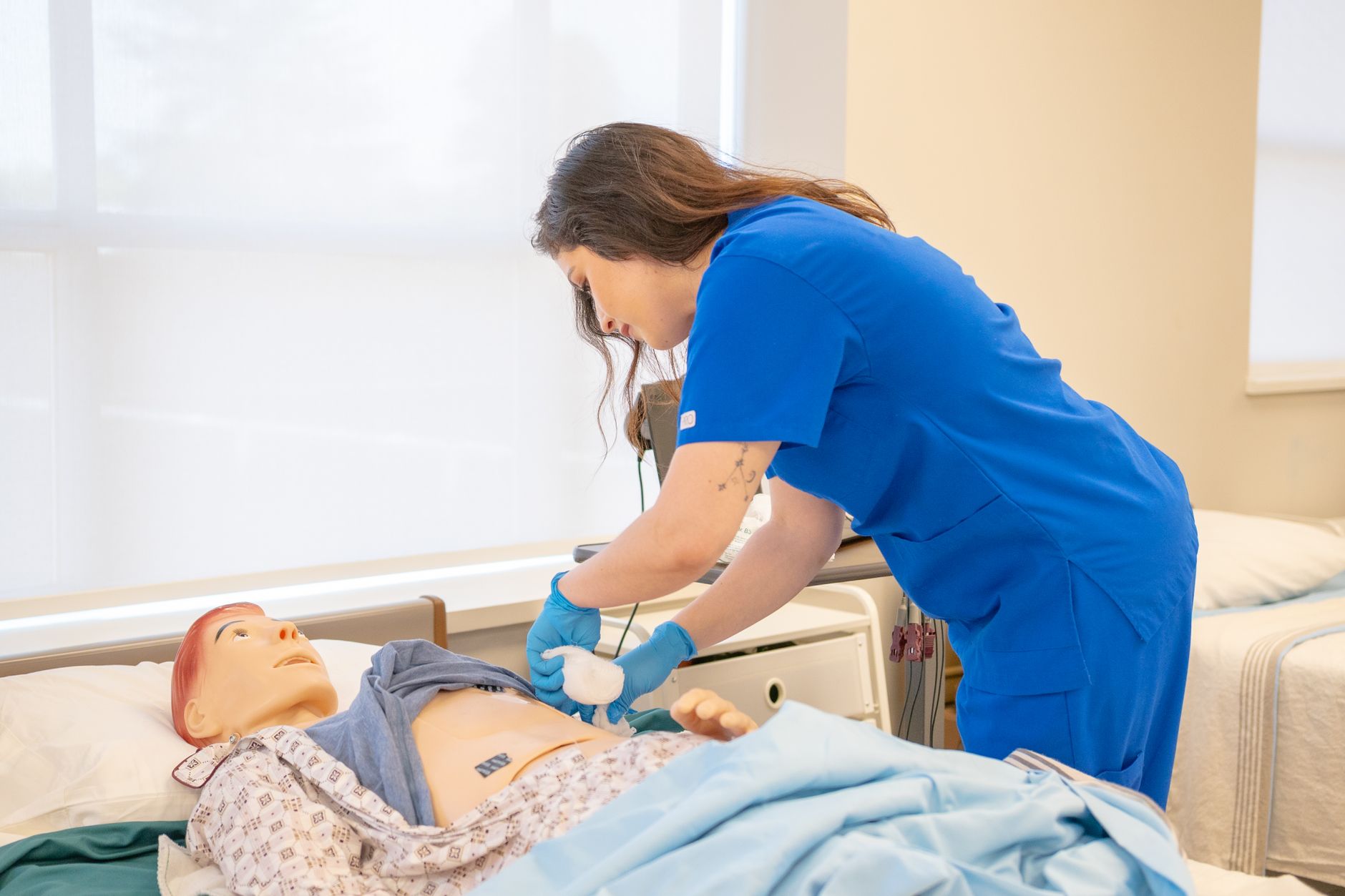
Rush University — best for graduate entry and clinical immersion
Rush University Medical Center is one of the top hospitals in the Midwest, and the College of Nursing sits inside it. That is not a minor detail: students train in the same building where they learn, alongside practicing nurses. Rush also uses a teacher-practitioner faculty model, meaning many instructors are actively practicing clinicians — so what you learn in the classroom reflects current hospital practice.
Rush does not offer a traditional four-year BSN. Its entry-level path is a graduate-entry prelicensure master's program (its Generalist Entry Master's, historically known as Master's Entry in Nursing Practice) designed for students who already hold a bachelor's degree in a non-nursing field. It is intensive and expensive, and it produces nurses with both an RN license and a master's degree. Rush also offers DNP specializations and a research PhD. Best for: career changers with a bachelor's degree who want to enter nursing at the master's level.
Loyola University Chicago — best for an ethics-centered, well-rounded education
The Marcella Niehoff School of Nursing sits inside one of the most respected Jesuit universities in the country, and that shapes the program. Loyola is academically rigorous and places a deliberate emphasis on ethics, social justice, and patient advocacy alongside clinical competency — grounded in the Jesuit tradition of caring for the whole person. Students have clinical access to Loyola Medicine and a broad network of Chicago-area hospitals.
Loyola offers a BSN, an MSN, a DNP, and a PhD, with pathways that serve traditional students, career changers, and working nurses looking to advance. If you are weighing how far to take your degree, it helps to understand how an ADN compares to a BSN before you commit. Best for: students who want a values-driven education with strong clinical placements and multiple program pathways.
DePaul University — best for accelerated graduate entry
DePaul is the largest Catholic university in the United States, and its nursing school takes a different structural approach: there is no traditional four-year BSN here. Its flagship offering is the Master's Entry to Nursing Practice (MENP), a graduate-entry program for students who hold a bachelor's degree in a non-nursing field. You graduate with an MSN and eligibility to sit for the NCLEX-RN, and the program runs in an accelerated (about two years) or balanced (about three years) format.
After the MENP, graduates can continue into post-master's certificates and a DNP in advanced-practice specialties such as family nurse practitioner and adult-gerontology nurse practitioner — so it is a strong fit if you already know you want to reach advanced practice and would rather not stop at a bachelor's. Best for: degree-holders who want a continuous path to graduate-level nursing.
Saint Xavier University — best track record of NCLEX preparation
Saint Xavier has been training nurses longer than almost any institution in the state — it launched the first baccalaureate nursing program in Illinois, and the National League for Nursing has designated it a Center of Excellence in Nursing Education, a recognition that reflects sustained quality rather than one strong year. Its South Side location gives students access to a diverse patient population — genuinely valuable preparation for the realities of practice.
The CCNE-accredited program offers a traditional BSN, an accelerated second-degree BSN, an LPN-to-BSN track, and an online RN-to-BSN. It is known for consistent, strong NCLEX performance year over year. Best for: students who want a smaller, community-oriented environment with a long history of producing NCLEX-ready graduates.
Chamberlain University — best for flexibility and access
Chamberlain operates at a scale none of the others approach — it is the largest school of nursing in the country, and its Chicago campus runs one of the largest prelicensure BSN programs in the state. It serves a different student population than the prestige programs: larger, more diverse, with more non-traditional and working students.
Chamberlain is CCNE-accredited and offers a three-year accelerated BSN, an online RN-to-BSN, a largely online MSN, and a DNP. The three-year BSN with summer study compresses the timeline without the intensity of a true ABSN, and the online graduate options are among the more flexible in the Chicago market. If flexibility and access matter more to you than prestige, it is a legitimate option — just confirm the current NCLEX pass rate for the specific campus and program before you enroll. Best for: non-traditional students, working adults, and anyone who needs online or hybrid options.
Side-by-side comparison
School | Entry-level path | Type | Best for |
|---|---|---|---|
UIC | Four-year BSN, RN-to-BSN | Public | Value + research |
Rush | Graduate-entry MSN (no BSN) | Private | Career changers, clinical immersion |
Loyola | BSN, MSN, DNP | Private (Jesuit) | Ethics-centered, well-rounded |
DePaul | Graduate-entry MENP (no BSN) | Private (Catholic) | Accelerated path to advanced practice |
Saint Xavier | BSN, second-degree BSN, RN-to-BSN | Private (Catholic) | Consistent NCLEX track record |
Chamberlain | Three-year BSN, RN-to-BSN | Private (for-profit) | Flexibility + access |
How to choose between them
The right school comes down to your starting point, your budget, and your long-term goal. If you are an Illinois resident starting from scratch and want the most affordable accredited BSN, UIC is the answer. If you already hold a bachelor's degree and want to reach advanced practice, Rush or DePaul makes more sense. If you need flexibility and work full-time, Chamberlain is worth a serious look. Before you apply, it helps to know how long nursing school actually takes and what the typical nursing-school admission requirements look like.
Do not choose on reputation alone. Pull each school's current first-time NCLEX pass rate from the Illinois Department of Financial and Professional Regulation and confirm tuition directly on the school's site — those are the numbers that actually predict your outcome, and they change every year. Whichever school you pick, the path ends in the same place: the NCLEX. Choosing an accredited program with a strong track record is one of the most important decisions you will make, so start preparing for licensure early rather than treating it as an afterthought.

Written by · Verified educator
Testavia editorial
Nathan Cole
RN
Medical-Surgical nurse & health writer
Meet Nathan, a registered nurse with over five years of experience in Medical-Surgical care, based in New York City. Having worked with a wide range of patients through some of their most vulnerable moments, Nathan brings a grounded, real-world perspective to his writing on healthcare. His goal is simple: to bridge the gap between medical knowledge and everyday understanding, making health topics feel less intimidating and more empowering for everyone. When he's not caring for patients, Nathan channels his passion for medicine into writing that educates, comforts and inspires.
5+
Years in Med-Surg
Medical-Surgical
Specialty
New York City
Based in