UWorld NCLEX Review: Is the QBank Worth It & Enough?
UWorld has dominated NCLEX prep for a decade — but reputation isn’t a study plan. This honest review digs past the marketing: what the QBank, rationales, and NGN coverage actually deliver, where UWorld falls short, how many questions to do, the pricing, and whether it’s genuinely enough to prepare you on its own.
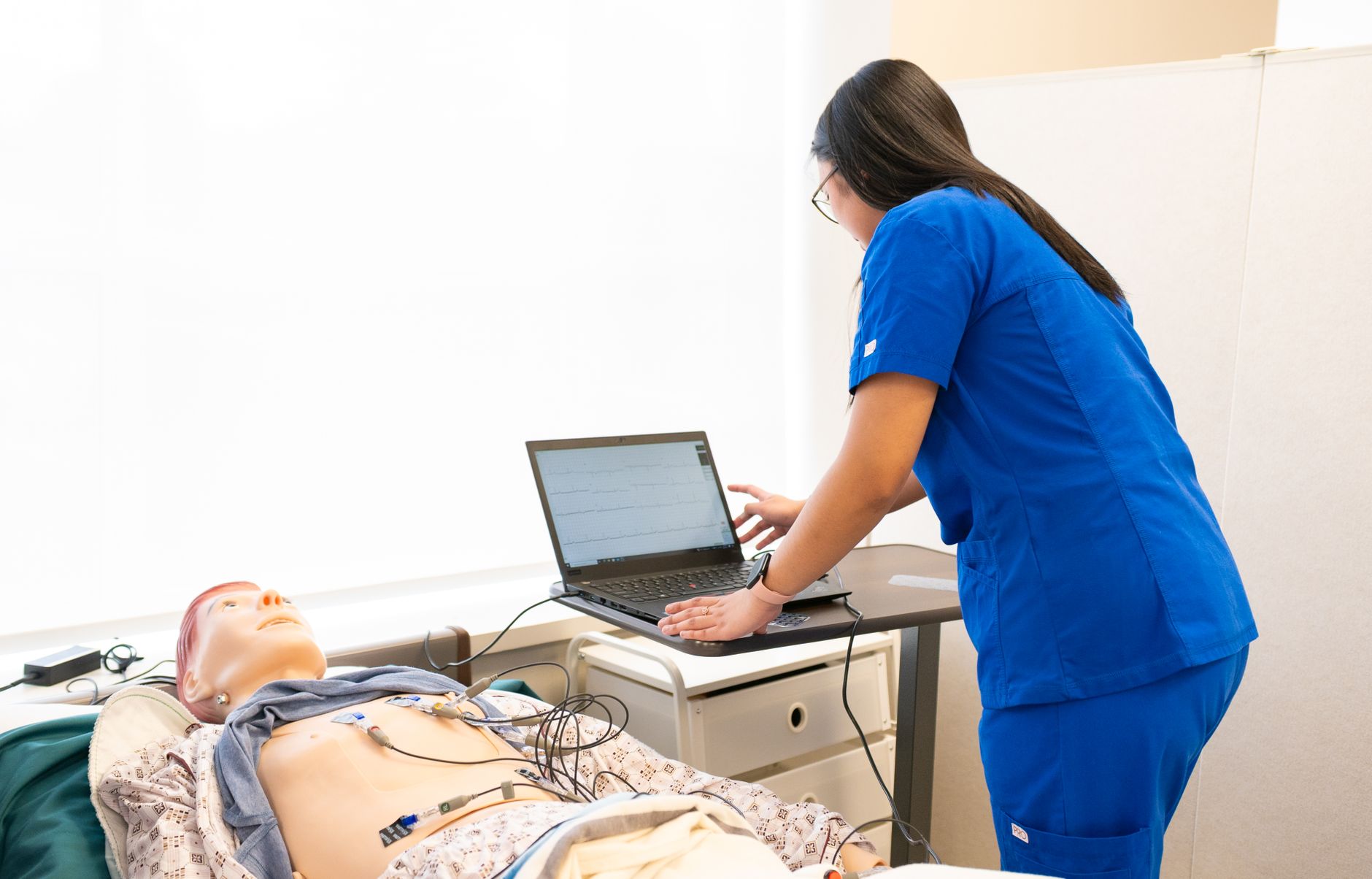
UWorld is one of the platforms most nursing students reach for when preparing for the NCLEX. It has dominated NCLEX prep for more than a decade, and its reputation is undisputed — but reputation is not a study plan. This review digs past the marketing to answer the questions that actually matter: what does UWorld give you, where does it fall short, how many questions do you need to do, and is it genuinely enough to prepare you on its own?
What is UWorld NCLEX?
UWorld is an online platform built specifically to help nursing students prepare for high-stakes licensure and certification exams. Its first NCLEX prep product launched in 2015, and it has since become the most widely used third-party question-bank (QBank) library among U.S. NCLEX candidates. It is built on a simple premise: the most effective way to prepare is to practice at or above the exam’s difficulty level, review detailed rationales, and identify knowledge gaps through performance data. A majority of first-time passers cite UWorld as their primary tool in post-exam surveys — not a failsafe, but a meaningful signal, driven by genuinely difficult, clinically minded questions with rationales that build reasoning rather than just giving an answer.

What you get: questions, rationales, NGN, and self-assessments
The active-learning QBank holds more than 2,800 standalone questions (with up to 600 self-assessment questions), all tagged by content area, client-needs category, and NCLEX scope, and written by nurse educators and working nurses. The NCLEX-PN QBank contains 2,050+ questions. Three practice modes are available: tutor mode (rationales appear right after each question, with embedded flashcards and a digital notebook — where most candidates work), timed mode (exam pressure, no in-session rationales), and adaptive CAT mode (mirrors the real NCLEX’s adaptive pattern).
The rationales are UWorld’s defining advantage — they teach the underlying concept, not just the answer, accompanied by high-quality clinical illustrations that simplify difficult processes. NGN coverage is thorough: case studies, bow-ties, and trend items appear just as they do on the exam, aligned to the NCSBN Clinical Judgment Measurement Model, with 750+ NGN-format questions, and UWorld was one of the first platforms with a complete NGN library ready when the Next Generation NCLEX launched in April 2023. Statistically validated self-assessments simulate the real testing environment and generate a detailed strengths-and-weaknesses report, and every subscription adds bite-sized video lectures, flashcards, a digital notebook, a study planner, and cross-device sync.
Pros and cons: an honest review
What UWorld does well
Question quality is the strongest in the category. UWorld cites its own survey where 90% of learners report its questions are the same difficulty or harder than the NCLEX — so there are fewer surprises on exam day.
The rationale-first model changes how you learn. Students who study every rationale consistently outperform those who skip them, and UWorld’s rationale depth is its edge.
NGN integration is thorough. NGN item types are interleaved throughout the QBank alongside traditional questions, replicating the real exam.
Self-assessment predictions are reliable. Its statistically validated pass-probability scores are among the most actionable signals in NCLEX prep.
Performance analytics are specific and usable. The dashboard breaks down performance by content area, client-needs category, and body system.
Where UWorld falls short
The biggest limitation: it is not a content-review course. UWorld does not teach NCLEX content directly — the QBank sharpens and tests knowledge you already have, so students with foundational gaps must pair it with another resource. A content-first foundation (nursing school, a lecture-based tool, or a mnemonic platform) should come first; see our reviews of Mark Klimek’s NCLEX lectures and Picmonic for content-building options. UWorld also offers no pass guarantee or refund policy (platforms like Picmonic and Testavia back their products with a conditional refund), so you carry the financial risk. And the pricing can feel steep — around $139 for 30 days and $249 for 90 days makes it one of the more expensive QBanks per question, which budget-conscious candidates will feel, especially if they also buy content tools.

How to use UWorld (and how many questions to do)
Get oriented first (week 1). Take one self-assessment before your first quiz to get a baseline and identify your weakest areas.
Do the bulk in tutor mode. Work most of the QBank in tutor mode with immediate rationale review, in blocks of 30–40 questions — small enough to read every rationale carefully. Treat each rationale as a mini-lesson, not an answer check.
Do not skip NGN case studies. They feel slower and unfamiliar — which is exactly why to practice them, so format, pacing, and reasoning feel routine by exam day.
Add CAT practice and self-assessment check-ins. After 40–50% of the QBank, run a CAT adaptive test for simulated conditions, then review missed items. A "High"/"Very High" self-assessment plus consistent QBank scores above 65–70% is a reasonable go signal.
Consolidate in the final week. Review marked questions, revisit persistent weak areas, and do one final CAT for confidence — do not generate fresh questions.
Cost and subscription length
Pricing scales with subscription length; all tiers include the full QBank, video lectures, flashcards, digital notebook, study planner, and mobile app. Current pricing (as of July 2026):
Subscription | NCLEX-RN | NCLEX-PN | Self-assessments | Reset option |
|---|---|---|---|---|
30 days | $139 | $129 | 1 | — |
60 days | $169 | $159 | 2 | — |
90 days | $249 | $189 | 3 | — |
180 days | $329 | $229 | 4 | Yes (1×) |
360 days | $389 | $279 | 6 | Yes (1×) |
730 days | $449 | $329 | 6 | Yes (1×) |
A QBank reset (restoring all questions to unanswered so you can repeat the bank) is available on 180-day and longer plans, and extra individual self-assessments cost $25 each. A 7-day free trial with 50 sample questions lets you confirm the interface fits your study style before buying.
UWorld vs. Archer (and is UWorld enough alone?)
Archer Review is the most direct alternative for candidates who prioritize question volume and value — both are QBank-centric, and neither is a comprehensive content course.
Factor | UWorld | Archer Review |
|---|---|---|
QBank size (RN) | 2,800+ standalone questions | 3,100+ questions |
NGN items | 750+ | 1,100+ (more transparent about count) |
Self-assessments | 2–6 (subscription-dependent) | Unlimited readiness assessments |
Rationale quality | Best — deep, illustrated | Good; some report less specificity |
Live review sessions | Not included | Included at all tiers |
Question realism | Very high; often harder than NCLEX | High; some note less case-study realism |
Pass guarantee | No | Yes (conditions apply) |
Price (90 days) | $249 | $109–$149 |
Honest summary: UWorld wins on rationale quality and brand credibility; Archer wins on value, question volume, NGN item count, and included live sessions. Neither is objectively superior — the right choice depends on your budget, learning style, and whether live instruction matters.
Is UWorld enough on its own? For many candidates, used thoroughly and consistently, yes — those who finish UWorld plus a content review pass at high first-try rates. But it depends on your starting point: UWorld sharpens knowledge you already have. Candidates who fail despite using it usually share three patterns — they did not finish the QBank (under 50% completion), skipped rationale review on questions they got right, or avoided NGN content because it felt unfamiliar. If you have significant content gaps in pharmacology, pathophysiology, or clinical reasoning, UWorld alone is unlikely to close them — adding a content-focused tool produces meaningfully better outcomes. For clinical-reasoning and content-review tools that pair well with a QBank, see Testavia’s NCLEX prep.

Written by · Verified educator
Testavia editorial
Nathan Cole
RN
Medical-Surgical nurse & health writer
Meet Nathan, a registered nurse with over five years of experience in Medical-Surgical care, based in New York City. Having worked with a wide range of patients through some of their most vulnerable moments, Nathan brings a grounded, real-world perspective to his writing on healthcare. His goal is simple: to bridge the gap between medical knowledge and everyday understanding, making health topics feel less intimidating and more empowering for everyone. When he's not caring for patients, Nathan channels his passion for medicine into writing that educates, comforts and inspires.
5+
Years in Med-Surg
Medical-Surgical
Specialty
New York City
Based in