HESI A2 Chemistry: Every Topic Tested (+ the Math)
HESI A2 chemistry is the section your program probably does not even require — so confirm that first. Stuck with it anyway? It is intro chemistry, not a college semester. The only tricky part is the math buried in the mole and stoichiometry. Pair those with your math prep, rank the rest by yield, and cover it all in about a week.
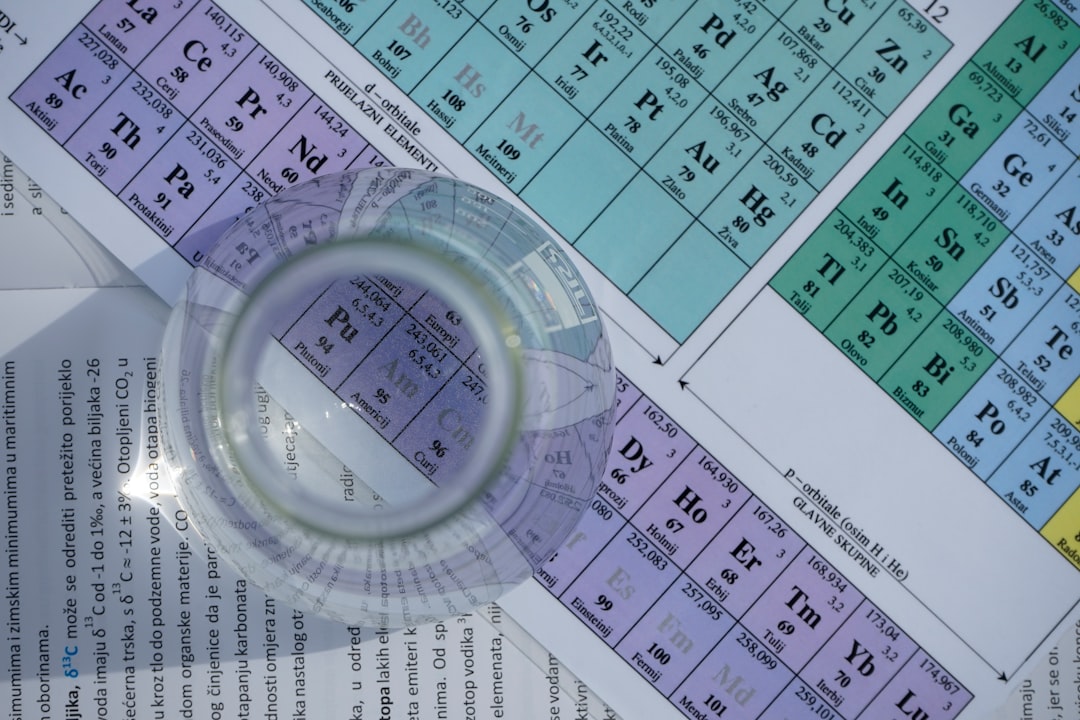
Real talk before you study anything: HESI A2 chemistry is the section your program probably does not even require, so confirm that first. Stuck taking it anyway? Good news — it is intro chemistry, not a college semester of it. The only tricky part is the math buried in a few topics like the mole and stoichiometry. Pair those with your math prep, rank the rest by yield, and you can cover the whole thing in about a week.
What topics does the HESI A2 chemistry section cover?
HESI A2 chemistry is the section nursing programs ask for the least — most schools stick to the big four (math, reading, vocabulary, and grammar) and never go near it. Before you crack a textbook, check which sections your school actually requires. Not on the list? You just handed yourself your study hours back.
If you are stuck with it, it is introductory chemistry — roughly nine topics, from atomic structure to acids and bases. When required, the section is short: usually 25 questions in about 25 minutes, sometimes with a few unscored extras. Those numbers move by program, so confirm the current format on the official Elsevier HESI page rather than trusting a random blog. Same goes for the passing score — there is no universal one; most programs want 75% or better, and competitive ones want more. The reassuring part: this is intro chemistry. No organic mechanisms, and you usually will not memorize the periodic table, because when a question needs one, they give it to you.
High-yield chemistry topics, ranked
Not every topic carries the same weight, so do not study them like they do. Because the section is short (only 25 questions), every item counts more than it would on a 50-question test — so go after the high-yield material first and leave nuclear chemistry for last. Start with atomic structure and the periodic table: they are the base everything else sits on, and they lean on recall far more than math.
Topic | What to know | Math-heavy? | Yield |
|---|---|---|---|
Atomic structure | Protons, neutrons, electrons; atomic number = protons | Light | High |
Periodic table & trends | Groups vs periods, metals vs nonmetals, how to read it | No | High |
Chemical bonding | Ionic (transfer) vs covalent (sharing); valence electrons | No | High |
Reactions & balancing | Reaction types; balance so atoms match both sides | Some | High |
The mole & stoichiometry | A mole is 6.022 × 10²³; mole ratios; grams to moles | Yes | High |
Solutions & concentration | Molarity = moles per liter; dilution | Yes | Medium |
Acids & bases / pH | pH scale, acid vs base, 7 is neutral | Light | High |
Nuclear chemistry | Isotopes, basic radioactive decay | No | Low |
Two concept notes, because they trip people up more than they should. Bonding comes down to one question: does an atom hand off an electron or share it? Hand off, and it is an ionic bond, usually a metal plus a nonmetal, like table salt. Share, and it is covalent. Acids and bases are even simpler — anchor on the pH scale: under 7 is acidic, over 7 is basic, and 7 (dead center) is neutral, like pure water.
The math behind the chemistry
Some of chemistry really is math wearing a lab coat. The mole, stoichiometry, molarity, and pH all lean on the exact skills the math section tests — mainly ratios, unit conversions, and careful setup. If numbers are your weak spot, this is where you will bleed points, which is why you should study these topics in the same sitting as your HESI A2 math review, not off in a separate world. But do not spiral — plenty of test-takers say the practice tests looked scarier than the real section, which stays basic. You are doing setup, not advanced calculation.

One quick demystifier: the mole is just a counting word, like "dozen," only enormous. One mole is 6.022 × 10²³ of something — usually atoms or molecules. Chemists use it because atoms are far too tiny to count one at a time, so the mole links the grams you can weigh to the particles you cannot see. Once that clicks, most stoichiometry is just careful bookkeeping.
The stoichiometry workflow
Most stoichiometry problems walk the same path. Drill it once and it stops feeling like guesswork.
Balance the equation first — the count of each atom must match on both sides.
Convert what you are given into moles (usually grams divided by molar mass).
Use the mole ratio from the balanced equation to find moles of what the question asks for.
Convert those moles back into the requested unit (e.g., grams) by multiplying by molar mass.
Check your units and rounding before locking in an answer.
A focused chemistry review plan
You are juggling four or five sections, so chemistry cannot eat your whole calendar. Give it a focused week — concept first, practice second — and work it by yield instead of grinding front to back. The biggest time-saver: pair the calculation topics with your math review so you are not learning the same skill twice. Build a one-page formula sheet as you go (the mole number, molarity as moles per liter, pH basics, conservation of mass), then lean on study techniques that actually stick — active recall and short, spaced sessions beat one marathon reread every time.

The review sequence
Confirm chemistry is on your school’s list. Never skip this one.
Learn atomic structure and the periodic table — everything else builds on them.
Move to bonding and reaction types, then practice balancing equations.
Hit the math block — the mole, stoichiometry, molarity, and pH — studied right next to your math prep.
Fill in acids and bases plus solutions.
Skim nuclear chemistry last (low-yield), then take a timed practice set and fix whatever is shaky.
Practice: sample HESI A2 chemistry questions
These sample questions mix concept and calculation — exactly what the real section does. Try each before you peek at the answer. For the mole and stoichiometry, Khan Academy’s free unit on the mole and stoichiometry walks you through it at your own pace.
1. An atom has 11 protons. What is its atomic number? (a) 11 (b) 22 (c) 12 (d) 23
Answer: a. Atomic number always equals the number of protons, so 11 protons means atomic number 11 — sodium.
2. Which bond forms when a metal hands an electron to a nonmetal, like in NaCl? (a) covalent (b) ionic (c) hydrogen (d) metallic
Answer: b. Handing off an electron means ionic; covalent bonds share instead. NaCl is the textbook metal-to-nonmetal transfer.
3. Balance this equation: H₂ + O₂ → H₂O. The correct coefficients are: (a) 1, 1, 1 (b) 2, 1, 2 (c) 2, 2, 2 (d) 1, 2, 1
Answer: b. You need 2 H₂ + O₂ → 2 H₂O — four hydrogen and two oxygen on each side. Mass is conserved, so the sides must match.
4. What is the molarity of a solution with 3 moles of solute in 1.5 liters? (a) 1.5 M (b) 2 M (c) 4.5 M (d) 0.5 M
Answer: b. Molarity is moles divided by liters, so 3 ÷ 1.5 = 2 M. The 4.5 trap multiplies instead of dividing.
5. A solution has a pH of 4. It is: (a) basic (b) neutral (c) acidic (d) saturated
Answer: c. Below 7 is acidic, 7 is neutral, above 7 is basic — a pH of 4 is firmly acidic.
6. How many moles are in 36 grams of water (molar mass ≈ 18 g/mol)? (a) 1 mole (b) 2 moles (c) 0.5 mole (d) 18 moles
Answer: b. Grams divided by molar mass gives moles, so 36 ÷ 18 = 2 moles — the most useful conversion in the whole section.

Written by · Verified educator
Testavia editorial
Nathan Cole
RN
Medical-Surgical nurse & health writer
Meet Nathan, a registered nurse with over five years of experience in Medical-Surgical care, based in New York City. Having worked with a wide range of patients through some of their most vulnerable moments, Nathan brings a grounded, real-world perspective to his writing on healthcare. His goal is simple: to bridge the gap between medical knowledge and everyday understanding, making health topics feel less intimidating and more empowering for everyone. When he's not caring for patients, Nathan channels his passion for medicine into writing that educates, comforts and inspires.
5+
Years in Med-Surg
Medical-Surgical
Specialty
New York City
Based in