PCCN Certification: Eligibility, Exam, Renewal & vs CCRN
Progressive care nurses care for acutely ill patients too sick for the general ward but not in intensive care — and the PCCN credential validates exactly that competency. Here’s who qualifies, what the exam involves, how to renew, and how PCCN compares to the CCRN for your clinical setting.
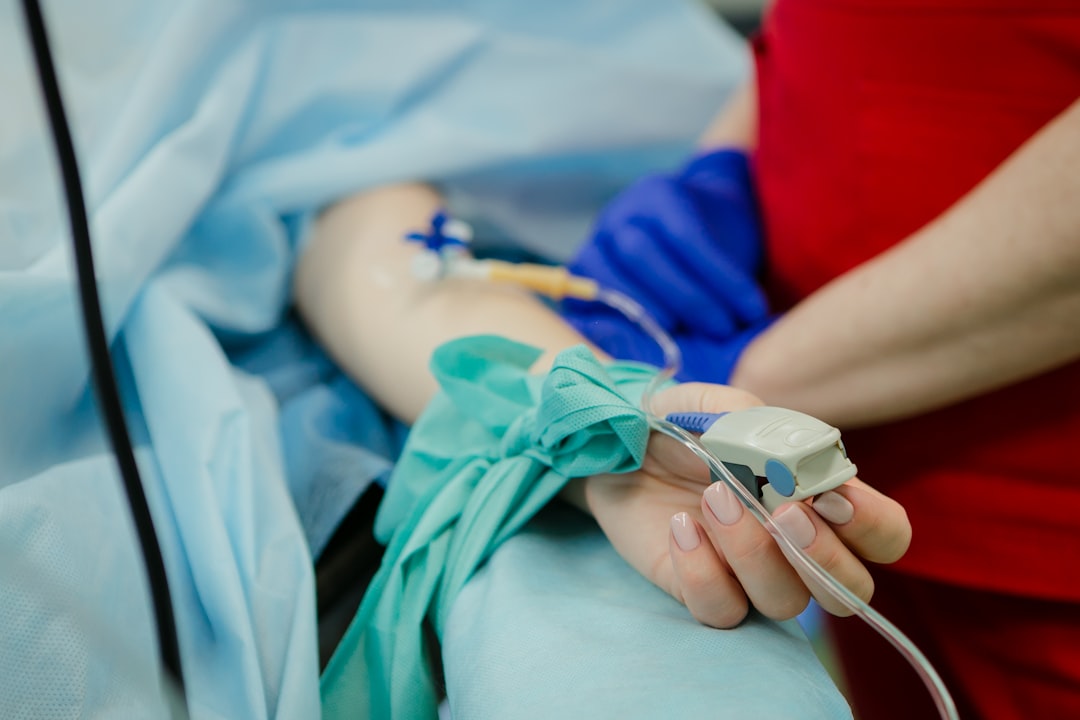
Progressive care unit nurses care for acutely ill adults — patients too stable for intensive care but at too much risk for a general ward. That work takes specialized competency, and the PCCN credential exists to validate exactly that. This guide covers what PCCN certification is, who qualifies, what the exam involves, how to renew, and how it compares to the CCRN for nurses deciding which credential fits their setting.
What is PCCN certification?
PCCN (Progressive Care Certified Nurse) is a credential from the AACN Certification Corporation (American Association of Critical-Care Nurses) that validates your knowledge of nursing care for acutely ill adult patients. AACN uses "progressive care" for settings between the general ward and the ICU: intermediate care, direct-observation and stepdown units, telemetry, transitional care, and emergency departments. A PCCN provides higher-acuity monitoring and care for recovering or stable patients who do not need full critical care but are not yet ready for a general ward.
PCCN and PCCN-K: two pathways
AACN offers two versions: PCCN (Direct Care) for nurses providing hands-on bedside care to acutely ill adults, and PCCN-K (Knowledge Professional) for nurses whose primary role influences progressive care without direct bedside care — educators, managers, and clinical specialists.

PCCN eligibility requirements
PCCN Direct Care has two basics: a valid nursing license and documented progressive-care practice hours. You must hold a current, unencumbered U.S. RN or APRN license. Clinical hours can be met two ways:
Two-year option: 1,750 hours in progressive care, with 875 in the most recent year before application.
Five-year option: 2,000 hours in the prior five years, with 144 in the most recent year — geared to nurses who recently cut back hours due to role or family changes.
The Knowledge Professional (PCCN-K) pathway requires a valid unencumbered U.S. RN or APRN license and 1,040 hours of RN/APRN practice in the previous two years, with 260 in the most recent year.
The PCCN exam: blueprint, format, and preparation
The PCCN exam is a 3-hour, computer-based test at PSI centers or via Live Remote Proctoring, with 150 multiple-choice items — 125 scored plus 25 unscored pretest items woven throughout. AACN uses scaled scoring: a Score Evaluation Committee sets the passing point, and candidates who pass have demonstrated an acceptable level of knowledge. Per AACN certification statistics, the 2025 pass rate was 70.10%.
The exam is built on the AACN Synergy Model for Patient Care, across two domains — Clinical Judgment (80%) and Professional Caring & Ethical Practice (20%). The Clinical Judgment domain breaks into body-system clusters (percentages are approximate and do not sum to 100 due to rounding — see the official handbook for the full breakdown):
Domain / cluster | Approx. % of exam |
|---|---|
Clinical Judgment (total) | 80% |
— Cardiovascular | 20% |
— Multisystem | 15% |
— Respiratory | 14% |
— Neurology | 7% |
— Gastrointestinal | 7% |
— Endocrine | 6% |
— Renal | 4% |
— Hematology/Immunology/Oncology | 3% |
— Behavioral/Psychosocial | 3% |
— Musculoskeletal | 2% |
Professional Caring & Ethical Practice | 20% |
The Professional Caring & Ethical Practice domain covers the Synergy Model’s nurse competencies — advocacy, caring practices, collaboration, systems thinking, response to diversity, facilitation of learning, and clinical inquiry.
Application fee
The PCCN application costs $375 for non-AACN members and $260 for members. Group discounts exist: organizations buying 30+ vouchers pay $210 per exam regardless of membership, and groups of 10 or more pay $235 (member) or $345 (non-member).
Preparation strategies
Start with the official PCCN Exam Handbook. AACN publishes it as a free download with the full test plan, content percentages, sample questions, and an annotated bibliography.
Map your study to the blueprint. Cardiovascular is 20% — the highest-yield single area — so give it more time.
Learn the Synergy Model, not just content areas. The 20% Professional Caring domain is where candidates who treat it as an afterthought consistently underperform.
Use AACN’s official practice exam. A 7-day free trial gives 30 questions with rationales; Basic ($35 member/$45 non-member) gives 30-day access to 150 questions; Premium ($75/$90) gives 180-day access with hundreds of questions.
Review your own complex cases. Reasoning through recent interventions, medication decisions, and early deterioration recognition is exactly the applied thinking the exam tests.
If you are also preparing for the NCLEX, Testavia’s clinical-reasoning prep tools are built around the same applied-judgment frameworks that nursing specialty exams test.

Renewal and recertification
PCCN is valid for three years from the date you pass. Before expiration, you renew one of two ways. Renewal by Synergy CERPs requires 432 hours of direct care for acutely ill adults during the three-year period (at least 144 in the most recent year) plus 100 total CERPs — one CERP equals one hour of instructional time (classes, research, mentorship, and other approved activities):
Category | Minimum CERPs | What it covers |
|---|---|---|
A | 60 | Clinical judgment, clinical inquiry, evidence-based practice |
B | 10 | Caring practices, response to diversity |
C | 10 | Collaboration, systems thinking, facilitation of learning, advocacy |
Any category | 20 | Flexible — any of the above |
Total | 100 | — |
As of July 2026, CERPs-pathway renewal costs $150 for members and $230 for non-members. Alternatively, renewal by examination lets you retake the exam before expiration (apply at least 30 days ahead, meet the same 432/144-hour clinical requirement in U.S. or Canada facilities); it costs $185 for members and $290 for non-members. Nurses who cannot meet renewal requirements can move to inactive status for up to three years — they cannot use the credential but can reactivate anytime within that window once eligible; inactive renewal costs $95 for members and $175 for non-members.
PCCN vs. CCRN: which fits your unit?
Both PCCN and CCRN are AACN specialty certifications, structured similarly and carrying comparable recognition. The key difference is patient acuity.
Factor | PCCN | CCRN |
|---|---|---|
Patient population | Acutely ill adults — moderately stable, elevated risk of instability | Critically ill adults — life-threatening conditions, intensive monitoring |
Typical settings | Stepdown, telemetry, PCU, transitional care, observation | Medical/surgical/cardiac/neuro ICU, burn units |
Clinical hours (2-year) | 1,750 hours; 875 in most recent year | 1,750 hours; 875 in most recent year |
Exam | 150 items (125 scored); 3 hours | 150 items (125 scored); 3 hours |
Exam cost (non-member) | $375 | $375 |
Pass rate | ~70% | ~75% |
Renewal cycle | 3 years | 3 years |
Most candidates rate PCCN as slightly easier than CCRN because the scope is narrower — progressive care rather than full ICU complexity. The right credential matches your patients: choose PCCN if you work in stepdown, PCU, telemetry, transitional care, or observation where patients are acutely ill but hemodynamically stable and at risk; choose CCRN if you work in any ICU with patients on mechanical ventilation, vasopressors, or active continuous monitoring.
For flight or transport nursing, where both progressive- and critical-care patients are managed, the CCRN is more commonly required, though PCCN may be accepted depending on the program. Acute-care credentials like ACLS and roles such as PACU nursing often sit alongside PCCN in a progressive-care career.

Written by · Verified educator
Testavia editorial
Nathan Cole
RN
Medical-Surgical nurse & health writer
Meet Nathan, a registered nurse with over five years of experience in Medical-Surgical care, based in New York City. Having worked with a wide range of patients through some of their most vulnerable moments, Nathan brings a grounded, real-world perspective to his writing on healthcare. His goal is simple: to bridge the gap between medical knowledge and everyday understanding, making health topics feel less intimidating and more empowering for everyone. When he's not caring for patients, Nathan channels his passion for medicine into writing that educates, comforts and inspires.
5+
Years in Med-Surg
Medical-Surgical
Specialty
New York City
Based in