TNCC Course: What It Covers & How to Pass It
The TNCC (Trauma Nursing Core Course) from the Emergency Nurses Association is the international standard in trauma nursing education, earning a four-year provider verification that many EDs and trauma centers require. Here’s what it covers, who needs it, exactly how the exam and skills station work, renewal, and the prep habits that produce first-pass results.
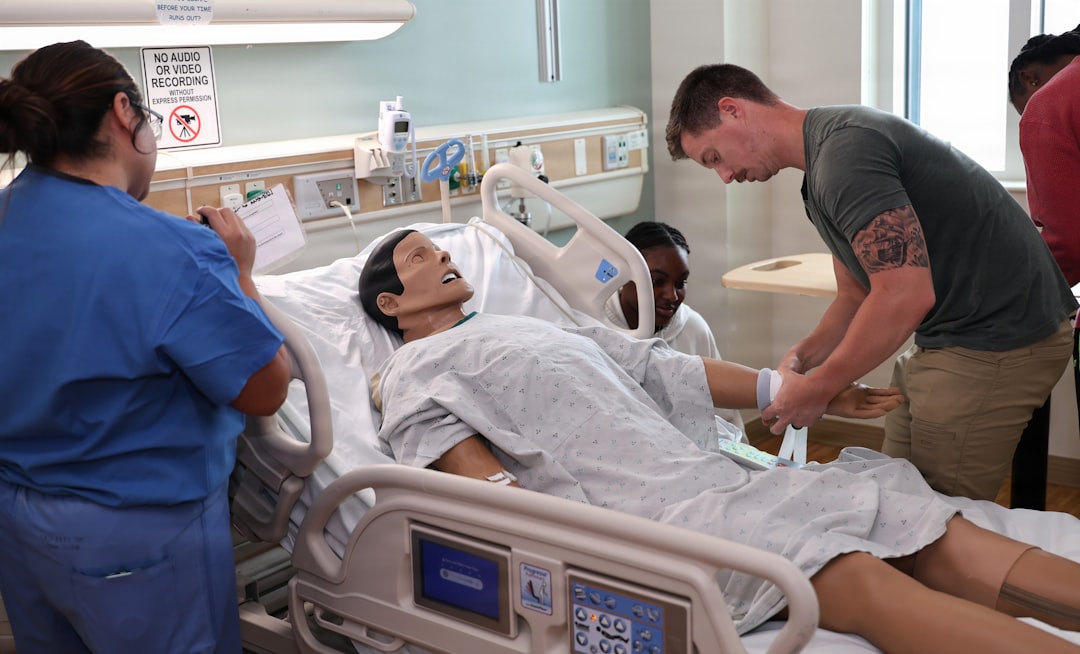
The TNCC (Trauma Nursing Core Course) from the Emergency Nurses Association equips nurses with the knowledge and critical-thinking skills needed to manage trauma patients effectively. It concludes with a written exam and skills evaluation, and passing both earns a provider verification that many emergency departments and trauma centers require or strongly prefer. This guide covers what the course involves, who needs it, exactly how the exam and skills station work, what renewal looks like, and the prep habits that consistently produce first-pass results.
What is the TNCC course? (course vs. certification)
TNCC — Trauma Nursing Core Course — was developed and administered by the Emergency Nurses Association and has been the international standard in trauma education for nurses since 1986. Many nurses call it a certification, but ENA’s official term is provider verification: pass both the written test and the skills evaluation and you earn a four-year provider verification. The course is accredited by the American Nurses Credentialing Center’s Commission on Accreditation, and successful completion awards 18.3 contact hours of continuing nursing education.
What topics does TNCC cover?
ENA’s course content spans the latest trauma nursing practice recommendations, a systematic and standardized approach to trauma care, and rapid identification of life-threatening injuries. The essential skills nurses build:
Comprehensive trauma assessment — primary and secondary surveys for quick identification of and response to life-threatening injuries.
Advanced life-support skills — trauma-specific techniques including advanced airway management, vascular access, fluid resuscitation, and medication administration.
Team collaboration and communication — relaying critical information accurately under high-stress conditions.
Trauma-specific interventions — evidence-based management of traumatic brain and spinal cord injuries, hemorrhage control, and fracture stabilization.
Psychosocial support — holistic care, compassionate communication, and helping patients and families cope with the psychological impact of trauma.

Who needs TNCC?
Not every nursing role needs TNCC — it targets nurses in environments where trauma or acute injury management is a core part of daily practice. Where it is required, preferred, or employer-supported:
Role or setting | Notes |
|---|---|
Emergency department nurses | Most ED positions require TNCC or expect it within 6–12 months of hire |
Trauma center nurses (Level I/II) | Level I and II centers commonly mandate TNCC for all direct-care staff |
Flight nurses and transport teams | Remote and interfacility trauma transport demands rapid systematic assessment |
Trauma ICU nurses | Benefit directly from the skills; not always mandated but increasingly expected |
Travel nurses (ED/trauma) | Many contracts specify current TNCC verification — it widens opportunities and pay |
Military nurses | Deployments and trauma-responsible units commonly require TNCC or equivalent |
Course format, the exam, and the skills station
TNCC has three components, all of which must be completed and passed to earn provider verification:
Component | Format |
|---|---|
Pre-course online modules | Self-paced, completed before the course start date, with immediate feedback |
Classroom component | One and a half days, in-person / hybrid / virtual, with skill stations and interactive exercises |
Skills station evaluation | Hands-on Trauma Nursing Process on a manikin/simulated patient — 70% or higher, all critical steps (via Zoom for virtual) |
Written examination | 50 multiple-choice questions, online, open book, within 7 days of the last course day; two attempts in the window; 80% to pass; application-level, not recall |
If you fail either the written exam or the skills station on the first attempt, you may retest once with an alternative version or scenario. Fail both retests and you must register for another course to pursue verification.

Validity, renewal, and cost
Provider verification is valid for four years, and your TNCC card is downloadable from your ENA account anytime. As expiration approaches, ENA offers a Fast Track renewal — a shortened course for current or recently expired credential holders, focused on updated content rather than foundational material.
Renewal scenario | Path | Key requirement |
|---|---|---|
Current (near expiration) | TNCC Fast Track renewal course | 50-question online exam within 7 days of completion |
Expired within ~6 months | Fast Track may still apply | Verify eligibility with your course director |
Expired more than ~6 months | Full initial TNCC course required | Complete all three components from the beginning |
Fees are set by individual authorized providers, not ENA, so they vary by region and whether the textbook is included — typically $300 to $500 for the initial course. The latest-edition TNCC Provider Manual is mandatory (ENA does not sell it directly; confirm whether it is bundled). ENA members usually pay less, many Level I/II trauma centers reimburse staff, and some state ENA chapters or health departments offer grant coverage — Indiana’s state trauma grant, for example, has covered full TNCC fees at qualifying facilities.
How to prepare and pass TNCC
TNCC is challenging, especially for nurses earlier in their careers. The written exam is open book, but the questions are application-level — asking what to do with a patient in a specific trauma scenario — so passive reading is not enough.
Before the course
Read the Provider Manual in advance. The pre-course modules build on it, and both the skills station and exam assume you have engaged with the material — set aside time two to three weeks before your date.
Complete the pre-course modules early and thoroughly. They are case-study-driven and walk the Trauma Nursing Process in detail — the basis of everything taught in the classroom.
Focus on the Trauma Nursing Process (TNP) algorithm. The systematic A-through-I assessment is the backbone of both the skills station and much of the exam.
Review the chapter on shock. Shock recognition and management is consistently one of the heaviest-tested areas — distinguish hypovolemic, distributive (neurogenic, septic), obstructive, and cardiogenic shock at the clinical-presentation level.
During the classroom component
Practice verbalizing during TNP scenarios. The skills station evaluates talking through your assessment out loud — practice narrating your reasoning during simulations, not just on evaluation day.
Ask about the psychomotor format at your site. Critical steps vary between in-person and virtual; confirm which steps are required and which errors cause automatic failure.
Note trauma-specific clinical pearls. Instructors are experienced trauma nurses; the teaching moments beyond the manual come up on the exam.
On the written exam
You have two hours for 50 open-book questions within 7 days of completion. Use the manual’s index (not the table of contents) to look things up fast; read every option, since application-level questions often hinge on one clinical detail; do not spend more than about 3 minutes on any question (flag and return); and take the exam within 24–48 hours of the course, while the material is fresh.
If you are still working toward your RN license and building toward an ED or trauma career, Testavia’s NCLEX-RN prep resources develop the clinical reasoning and lab-value interpretation that make courses like TNCC significantly easier — and acute-care credentials like ACLS and roles such as flight nursing often sit alongside TNCC.
Written by · Verified educator
Testavia editorial
Nathan Cole
RN
Medical-Surgical nurse & health writer
Meet Nathan, a registered nurse with over five years of experience in Medical-Surgical care, based in New York City. Having worked with a wide range of patients through some of their most vulnerable moments, Nathan brings a grounded, real-world perspective to his writing on healthcare. His goal is simple: to bridge the gap between medical knowledge and everyday understanding, making health topics feel less intimidating and more empowering for everyone. When he's not caring for patients, Nathan channels his passion for medicine into writing that educates, comforts and inspires.
5+
Years in Med-Surg
Medical-Surgical
Specialty
New York City
Based in