What Does a Nurse Do? It Isn't One Job
Ask ten nurses what they do and you get ten different answers, because nursing is not one job. A core set of duties holds everywhere — assessment, medication, monitoring, teaching, advocacy — and beyond that, two nurses with identical licences can have unrecognisably different weeks.
Editorial
Last reviewed · August 17, 2026

If you ask different nurses what their day-to-day routine is, you will get different answers. Some spend their day delivering IV infusions to patients, while others manage chronic disease in clinics. All of them are licensed nurses, yet their days are different.
So when someone asks, “what does a nurse do?”, the genuine response is that nursing is not a single typical answer. And that’s because nursing is not a single job with a single routine, rather it’s a licensed scope of practice that gets applied differently depending on the setting, the patients, and the specialty a nurse chooses
According to American Nurses Association, nursing integrates the art and science of caring and focus on the protection, promotion, and optimization of health and human functioning; prevention of illness and injury; facilitation of healing; and alleviation of suffering through compassionate presence. This article breaks down what stays constant across every nursing role, what changes from one workplace to the next, and how the different nursing credentials fit together.
The part that's true everywhere
No matter where a nurse works or which specialty they hold, there are a number of core duties and responsibilities that follow them everywhere. These are the non-negotiables that define the profession itself.
The core responsibilities include:
Conducting Assessment. This includes physical exam, regular checks of vital signs, asking questions, and noticing details a patient might not mention on their own.
Intervention. Administering medications and treatments, dressing wounds, starting IVs, or performing other hands-on procedures within their scope.
Education. Explaining medical conditions, diagnosis, medication schedule or a routine care providing, and guidance on managing symptoms to patients and their caregivers.
Advocacy. Speaking for patients' health and well-being, ensuring they receive proper care and remain safe. This could include translating complex medical information and diagnoses from doctors, and helping patients understand critical details.
Documentation. Recording and maintaining accurate details of a patient's health. This begins with gathering details about a patient's medical history, past diagnoses, surgeries, current medications, allergies, and family medical information.
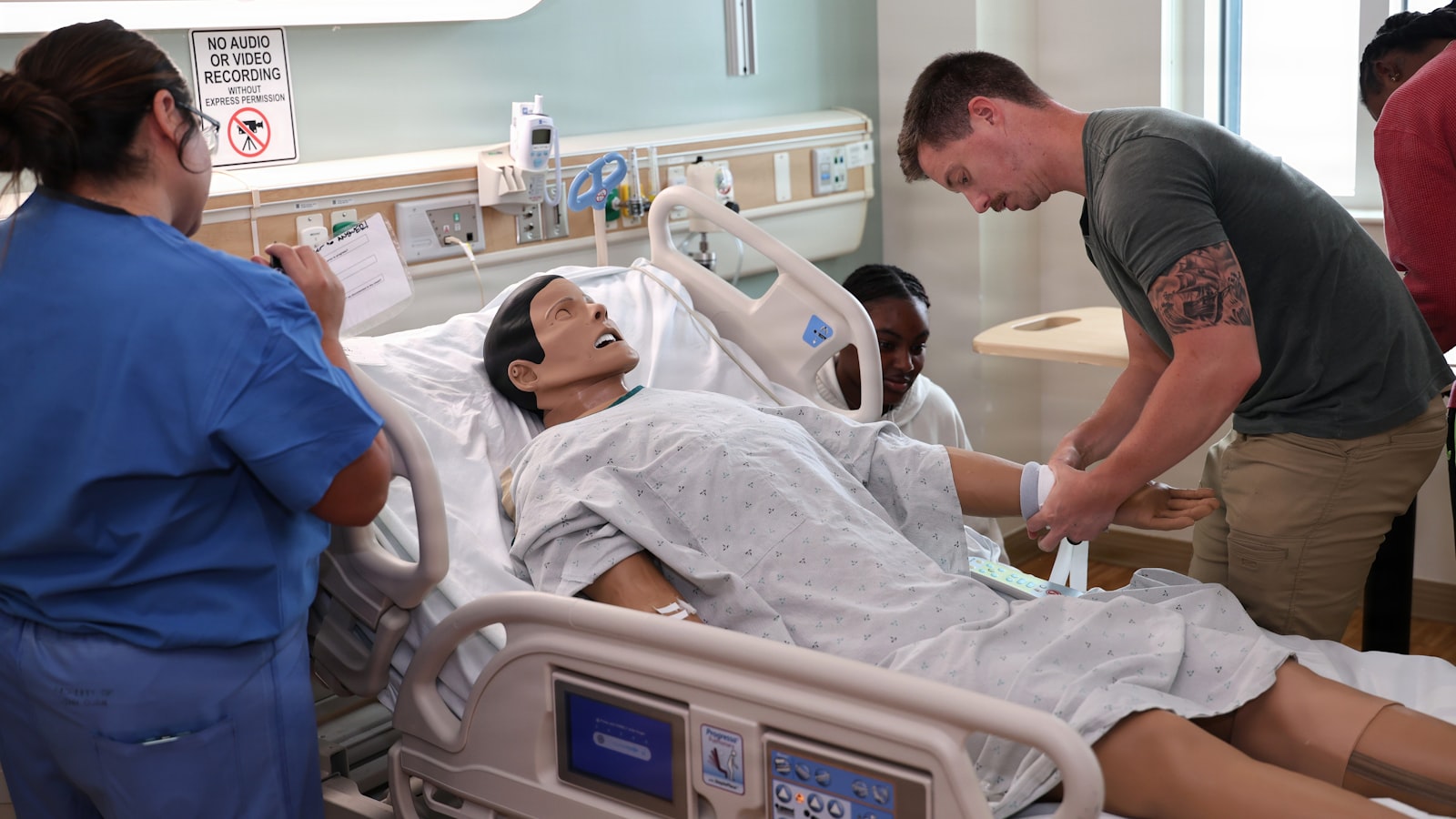
According to American Nurses Association's scope of practice framework, nursing practice is guided by the same underlying standards no matter the population, role, specialty, or where a nurse ends up working. A pediatric nurse and a hospice nurse rely on the same assessment skills and the same commitment to patient safety, even though almost nothing else about their day matches.
This is the reason why nursing schools and licensing exams concentrate on foundational skills before students can choose to specialize.
Same license, unrecognizably different weeks
Here is where the job title stops meaning much on its own. Two registered nurses can hold the exact same certification and license yet spend their time doing almost nothing similar. Most people – especially those outside nursing- picture one version of a job when they hear the word “nurse”, usually a hospital ward. While the image is accurate for some nurses, it’s also completely wrong for others. The Bureau of Labor Statistics profile of registered nurses shows just how wide the nursing field is, with the working environment spreading across hospitals, clinics, schools, residential care facilities, homes, and settings that never see a hospital bed at all.
So instead of describing one typical week, here is a map. Find the picture in your head on the left, then see where it actually leads.
If you picture… | The reality | Guides |
|---|---|---|
A hospital ward | One setting among many, and acuity changes everything | |
Being the only clinician in a building | School nursing | |
Working in people's homes | Home health, where you're a guest and you carry the assessment → | Home health nurse |
Caring for a population, not a patient | Public health | Public health nurse |
Knowing patients for years | Dialysis, the longest relationships in nursing | |
Being called when nobody else can | Infusion and wound care, the consultant roles | Infusion nurse, Wound care nurse |
Not doing bedside at all | Education and management | Nurse educator, Nurse manager |
Prescribing | Advanced practice, which means more school |

RN, LPN, NP: not the same credential
These three are not interchangeable titles for the same job. An LPN completes a practical nursing programme and works under supervision; an RN completes an associate or bachelor's degree, passes the NCLEX-RN and owns the plan of care; an NP holds a graduate degree on top of RN licensure and can diagnose and prescribe. Different education, different licence, different scope of practice.
Licensed Practical Nurses (LPNs), called licensed vocational nurses (LVNs) in some states, complete a shorter training program, usually about a year, and work under the supervision of an RN, APRN or physician. Their role is to handle the basic patient care to patients with duties such as taking vitals, aiding patients in eating and bathing, changing dressings, and administering certain medications. They also report changes in patient condition to supervisors such as RNs or physicians. Their scope is narrower by design. According to the BLS entry on licensed practical and licensed vocational nurses, LPNs are common in nursing homes and residential care facilities where steady, hands-on patient support is the priority. They also earned a median annual wage of about $64,400.
Registered Nurses (RNs) complete either an associate degree or a bachelor's degree, pass the NCLEX-RN, and hold a broader scope of practice. Their core duty is to provide critical health care to the public wherever it is needed. This can include taking medical histories, assessing a patient’s condition, performing diagnostic tests, administering medications and treatments, developing care plans, and supervising LPNs and nursing assistants. According to the most recent BLS data, RNs earned a median annual wage of $93,600. If you are trying to decide which degree path fits your goals, Testavia's comparison guide between ADN vs BSN programs lays out the tradeoffs in time and career ceiling.
Nurse Practitioners (NPs) hold at least a master's or doctoral degree in addition to RN licensure. In many states, they can diagnose illnesses, design treatment plans for patients, prescribe medications, advise the public on health issues, and manage a patient's care with a level of independence closer to a physician than a bedside nurse. Their scope varies more by state law than any other nursing role, which makes licensure rules especially relevant here. NPs earn a median annual salary of $129,210. Job growth is projected at 46 percent, making it one of the fastest-growing occupations tracked by the BLS.
Credential | Education requirements | Scope of practice | Supervision |
|---|---|---|---|
LPN/LVN | About 1 year | Basic care, limited medication administration | Works under RN or physician |
RN | 2-4 years (ADN or BSN) | Independent assessment, care planning, broader interventions | Supervises LPNs and aides |
NP | Master's or doctoral degree | Diagnosis, prescribing, and care management (scope varies by state) | Practices with varying independence |
Because licensure requirements differ by state and by role, the National Council of State Boards of Nursing's licensure page is worth checking directly if you want the current rules for where you plan to practice.
Written by · Verified educator
Testavia editorial
Nathan Cole
RN
Medical-Surgical nurse & health writer
Meet Nathan, a registered nurse with over five years of experience in Medical-Surgical care, based in New York City. Having worked with a wide range of patients through some of their most vulnerable moments, Nathan brings a grounded, real-world perspective to his writing on healthcare. His goal is simple: to bridge the gap between medical knowledge and everyday understanding, making health topics feel less intimidating and more empowering for everyone. When he's not caring for patients, Nathan channels his passion for medicine into writing that educates, comforts and inspires.
5+
Years in Med-Surg
Medical-Surgical
Specialty
New York City
Based in