HESI A2 Practice Questions: How to Use Them to Improve
Grinding through hundreds of HESI A2 practice questions does not automatically raise your score — how you use them does. This guide walks a review loop that actually sticks, what to prioritize in each required section, and when to switch from standalone questions to full timed practice tests.
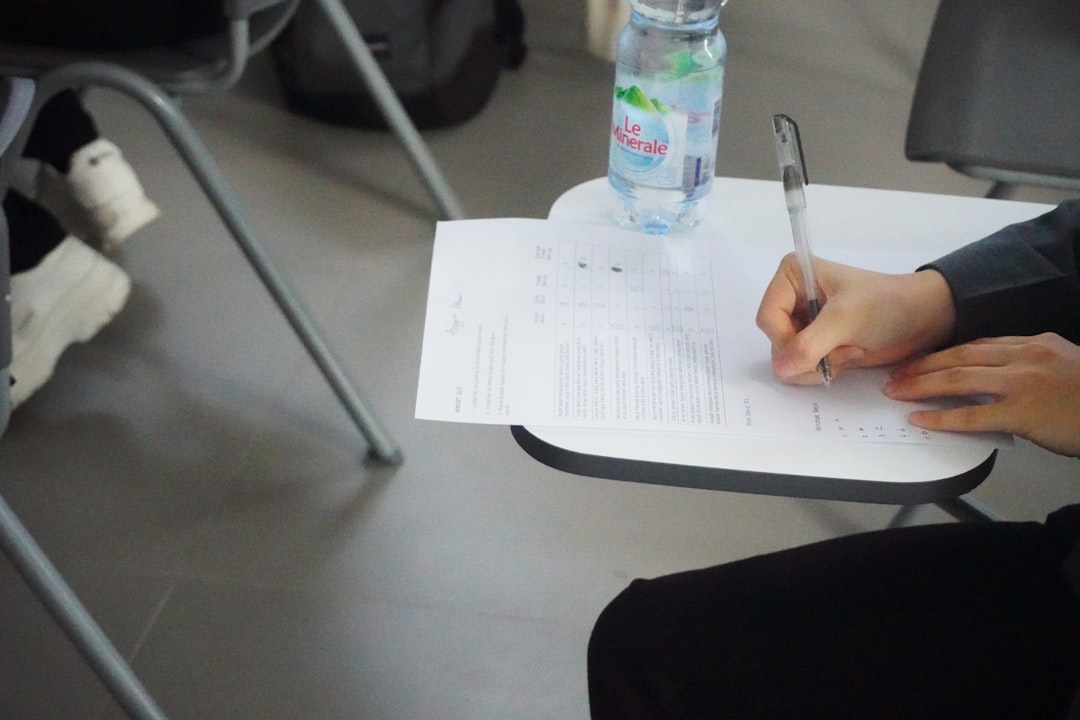
Doing hundreds of HESI A2 practice questions does not automatically raise your score — how well you use them does. This guide walks a method for working HESI A2 practice questions that actually sticks, breaks down what to focus on in each required section, and explains the difference between standalone questions and a full timed practice test — plus where free questions hold up, and which edition to trust in 2026.
How to use HESI A2 practice questions (the method)
A lot of students treat practice questions like a checklist — answer hundreds, move on. But volume alone teaches little unless you reflect on why you missed something. Instead, pick a small batch of fifteen or twenty questions and work through them slowly the first time. Do not time yourself yet; the goal is accuracy and understanding, not speed.
After answering, review every question — even the ones you got right — and read the rationale. If a lucky guess happened to be correct, that is worth knowing, because guessing right once does not mean you will on test day. Keep a running list of your mistakes: a persistent percentage error in math, or always the inference questions in reading. Then, a few days later, retest those exact areas with fresh questions. Real improvement usually shows up on the second or third pass, once you have addressed why you kept missing it.
Step | What you do |
|---|---|
1. Answer untimed | Work a small batch slowly, no clock pressure |
2. Review every answer | Read the rationale even for correct guesses |
3. Log the pattern | Note the specific concept, not just "math" or "reading" |
4. Retest the weak spot | Come back days later with new questions on that exact topic |
This loop works for any section — what changes is the content you drill. It is the same principle behind study techniques that actually stick: active recall plus spaced review beats one marathon pass.

Practice by your required sections
Not everyone sits the same version of the HESI A2 — some schools test four sections, others six or more. Confirm which apply to you (our HESI A2 prep guide covers how to check) before spreading time across sections you may never see.
Math
Math pulls from a predictable set: fractions, decimals, ratios, proportions, unit conversions, basic algebra, and some military time and Roman numerals. These repeat, so once you understand the mechanics, drilling speed matters almost as much as accuracy. See HESI A2 math: what’s tested, scoring & a 4-week plan for the full breakdown.
Reading comprehension
Reading tests a skill, not knowledge: can you understand what a passage says, implies, or argues without adding your own assumptions? Practice teaching yourself to separate three question types that look similar but need different thinking:
"What does the author state?" — a directly supported answer from the text.
"What can be inferred?" — a logical conclusion the passage points toward but does not say outright.
"What is the main idea?" — the central argument, not just a detail that stuck out.
Many wrong answers are true statements that simply do not answer the question type being asked. Catching that distinction builds through repetition, not through reading faster.
Vocabulary
The vocabulary section mixes general academic terms with healthcare language. Memorizing isolated word lists is the least effective prep — words learned in context stick better, and root words are more powerful still, because one root unlocks a whole family of terms. Knowing "cardio" (heart), "renal" (kidney), or "brady-" (slow) lets you decode terms you have never seen. A few hours on medical prefixes, suffixes, and roots pays off more than the same hours on a straight word list.
Grammar
Grammar practice works best when you understand the rule behind each answer rather than recognizing a pattern by feel. Subject-verb agreement, pronoun case, verb tense, comma usage, and sentence completeness all have specific, learnable rules — and the common trap is choosing what "sounds right" in casual speech. Our HESI A2 grammar guide drills the exact rules the section repeats.
Anatomy & physiology, biology, and chemistry
A&P questions are less about labeling diagrams and more about relationships — how the respiratory and circulatory systems interact, what happens to blood pressure when kidney function drops, what triggers a muscle to contract. See HESI A2 anatomy & physiology for topics and a plan. Biology and chemistry questions likewise test whether you understand what is happening, not whether you memorized a formula — so focus on "why does this happen" when those sections are required.
Section | What to prioritize when practicing |
|---|---|
Math | Drill speed once accuracy is solid — especially conversions and ratios |
Reading | Main-idea extraction and spotting inference vs. stated fact |
Vocabulary | Context and root-word patterns, not isolated word lists |
Grammar | The rule behind each answer, not what sounds right |
A&P | System relationships, not just memorized labels |
Biology / Chemistry | Conceptual reasoning over pure memorization |

Try the method: one question per section
Work each of these slowly, then read the rationale — exactly the loop above. Notice what type of thinking each demands.
Math. A patient is prescribed 0.5 g of a medication available as 250 mg tablets. How many tablets equal one dose? (a) 1 (b) 2 (c) 0.5 (d) 4
Answer: b. Convert units first: 0.5 g = 500 mg. Then 500 ÷ 250 = 2 tablets. The trap is skipping the g-to-mg conversion.
Reading. A passage says, "While the drug reduced symptoms, researchers cautioned that long-term effects remain unstudied." Which is an inference, not a stated fact? (a) the drug reduced symptoms (b) long-term effects are unstudied (c) the drug may carry unknown risks over time (d) researchers cautioned readers
Answer: c. Only (c) is a conclusion the passage points toward without stating outright. (a), (b), and (d) are directly stated — this is the "inference vs. stated" distinction.
Vocabulary. Using root words, "tachycardia" most likely means: (a) slow heart rate (b) fast heart rate (c) irregular breathing (d) low blood pressure
Answer: b. "Tachy-" means fast and "cardia" relates to the heart, so tachycardia is a fast heart rate. One root pair decodes an unfamiliar term.
Grammar. Choose the correct sentence: (a) Each of the nurses have their own locker. (b) Each of the nurses has their own locker. (c) Each of the nurses have her own locker. (d) Each of the nurses has her own locker.
Answer: d. "Each" is singular, so it takes "has," and the singular antecedent pairs with "her." The plural "nurses" is a distractor between subject and verb.
A&P. When kidney function drops sharply, blood pressure most often: (a) falls, because the kidneys stop filtering (b) rises, partly via fluid retention and the renin-angiotensin system (c) stays exactly the same (d) has no relationship to the kidneys
Answer: b. Failing kidneys retain fluid and activate the renin-angiotensin-aldosterone system, both of which tend to raise blood pressure. This is a relationship question, not a label.
Questions vs. practice tests, plus free and edition notes
A standalone batch of questions is great for drilling a specific weak spot — if you keep missing percentages, you need twenty percentage questions and the patience to review each, not a full simulation. A full practice test is timed, covers your whole required list in order, and simulates test-day pressure, including the fatigue that creeps in by your fourth or fifth section. Standalone questions teach content; practice tests teach stamina and pacing. Lean on standalone questions early while building understanding, then shift to full timed tests as your date approaches.
Plenty of free standalone questions exist online, and some are genuinely fine for quick review — especially vocabulary or basic math, where content changes little. But quality swings a lot: some free sets are accurate, others are outdated, mislabeled, or wrong. HESI content also updates periodically, and the current official guide is the HESI Admission Assessment Exam Review, 6th Edition from Elsevier. If a resource is clearly built around an older version, some terminology or formats may not match — check the publication date before you commit study time.
Resource type | Best use |
|---|---|
Standalone questions | Targeted drilling on a specific weak topic |
Full practice test | Timed simulation, pacing, and stamina closer to test date |
Free online questions | Fine for quick review, but quality varies — check the source |
Official guide (6th edition) | Most reliable match to current exam content and tone |

Written by · Verified educator
Testavia editorial
Nathan Cole
RN
Medical-Surgical nurse & health writer
Meet Nathan, a registered nurse with over five years of experience in Medical-Surgical care, based in New York City. Having worked with a wide range of patients through some of their most vulnerable moments, Nathan brings a grounded, real-world perspective to his writing on healthcare. His goal is simple: to bridge the gap between medical knowledge and everyday understanding, making health topics feel less intimidating and more empowering for everyone. When he's not caring for patients, Nathan channels his passion for medicine into writing that educates, comforts and inspires.
5+
Years in Med-Surg
Medical-Surgical
Specialty
New York City
Based in